
So says GPE social impact director Janine Cole, who explains why in an update on the business’s social impact strategy
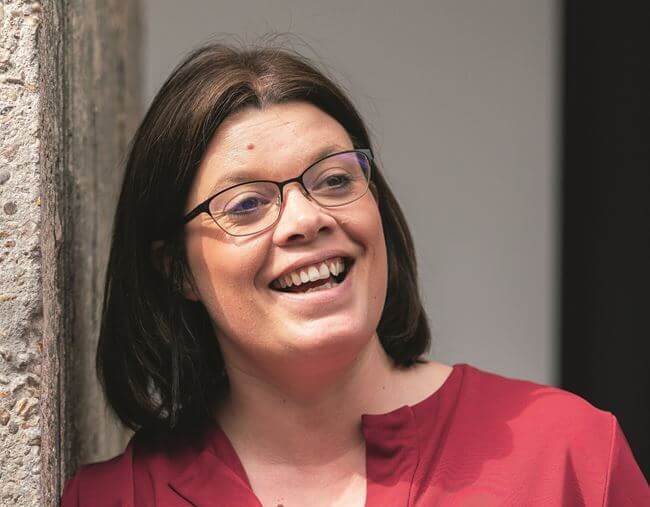
In November 2021, GPE (formerly Great Portland Estates) launched a social impact strategy setting out how it intends to create a lasting positive social impact in its local communities and generate £10m of social value by 2030. BE News caught up with GPE’s sustainability and social impact director Janine Cole (pictured) to discuss progress to date and its targets for this year.
What are GPE’s biggest achievements so far in terms of social impact and value?
At GPE we are committed to creating a lasting positive social impact in our communities. Our biggest achievements to date include: integrating diversity, equity and inclusion (DE&I) into our social impact strategy; we have created more than £1.2m of social value, and that’s likely to rise to more than £2m for this financial year; we launched a new partnership in 2022 with XLP and have raised £431,000 for Centrepoint (since April 2018); we have recruited our first two interns through the 10,000 Black Interns programme; introduced our executive committee training programme focusing on diversity, equity and inclusion led by Arrival; partnered with Purple, which has supported us in our efforts to make our spaces more inclusive for people with physical or hidden disabilities; and we have donated £30,000 to support survivors of modern slavery.
What’s the rationale behind your partnerships?
Through our partnerships, we’re helping to make our buildings more inclusive. Some of our most notable partnerships include the likes of SEND Coffee, where we support a local social enterprise to create better futures for disabled people through employment opportunities and our partnership with XLP, which includes an annual donation of £75,000 and fundraising activities that supports disadvantaged young people in London who are at risk of exclusion and potentially being drawn into gang-related activity.
We actively look to educate communities about the real estate sector. Our plan is to ramp up the efforts and continue to drive this cultural change internally and externally.
What are GPE’s future aspirations and targets in relation to DE&I?
When we included DE&I in our social impact strategy, we knew it had the potential to be transformational. The last year has seen significant progress for our business in our DE&I efforts, supported by our HR director Carrie Heiss and championed by the GPE executive committee. However, we want to continue to push the boundaries to make sure our culture continues to become more inclusive and diverse.
We have now set targets for representation to create a more diverse management team, which is essential if we are to continue to attract and retain the best talent in our business. We will also continue to develop our social impact within communities, ensuring that we support local issues such as employment, education, fuel poverty and biodiversity.
What is the biggest lesson GPE has learned to date?
I think for GPE the biggest lesson has been understanding how we create social value and social impact, which are not necessarily the same thing. Creating social value is about creating tangible outcomes that can be financially quantified.
However, you can have an impact that is not easy to quantify through building community relationships. Both are equally important. I think we have also found that the wider GPE team have leapt at the chance to get involved with the strategy, which has also been a learning opportunity for us more broadly on sustainability. After all, if we’re to tackle the climate crisis, we need to find ways for everyone to get involved and see what part they can play to make a difference. Our social impact strategy helps us support a just transition as we know that the most disadvantaged will be the ones most impacted by climate change.
What is the most significant challenge for GPE?
The biggest challenge is getting on and delivering our strategy as we get closer to our 2030 deadline to decarbonise our business to become net zero carbon by 2030. We are committed to working with our customers, supply chain and of course, the GPE team, joining the dots between D, E and I, social impact, health and wellbeing and climate resilience, so that our business, customers and London can thrive.



The demise of the REITs