

When Brian Bickell joined Shaftesbury in 1986, he thought he would stick it out for six months. He got many things right during his long and illustrious career, but that was not one of them.
Having been chief executive of Shaftesbury since 2011, Bickell only hung up his company boots this March – more than 36 years after joining – following the completion of its merger with Capital & Counties (Capco).
In an exclusive interview with BE News – his last interview as chief executive, conducted just two days before he retired – Bickell reflects on his trailblazing career, gives his verdict on the UK property market and drops some hints about what he plans to do next.
How does it feel clearing out your desk after so long at Shaftesbury?
All good things have to come to an end. We’re lucky because we’ve had jobs we’ve thoroughly enjoyed doing. We’ve never had days where we thought we’re not interested in this anymore, not once. It’s a nice place to work and it has been more of a vocation than a job.
You’re not the only lifer. What’s the secret?
We’ve had our ups and downs, but it’s like a family really. We don’t have any sort of blame culture here. We’re just trying to solve problems. The biggest sin you can commit is making the same mistake twice.
You joined Shaftesbury right at the start, didn’t you?
Yes. The business was set up by the Levy family, and for quite a few years, there were probably fewer than 10 of us here. I was the first employee. The Levy family set up Shaftesbury with £10m of the £40m they walked away with when Stock Conversion was taken over. I’d been the accountant at Stock Conversion for its last three years and was just a young whippersnapper in those days. They asked me if I fancied being the bookkeeper and the company secretary. I said I will do that for six months and then get a proper job. So six months turned into 36 years, four months and 21 days. I must be one of the longest serving FTSE directors, because we floated in October 1987, so I’ve been a public company director all that time.
How did you get into the industry?
I’m a frustrated architect. I always wanted to be an architect when I was a kid, but I was pretty good at numbers, which is why I ended up as a chartered accountant.
So, how many other jobs have you had?
I didn’t go to university. I did four years at a little firm in the City called FW Stevens, and then I moved on to what is now BDO (when it was Stoy Hayward) and I stayed there until the end of 1982. I was getting on alright there, but it didn’t interest me enough to stick around and go through the route of becoming a partner. Then I briefly took a job in Chelmsford working for GEC-Marconi and that lasted 10 weeks. That was a total career mistake. At least I did something about it. So I managed to get a job at Stock Conversion in 1983.
That was the predecessor to Shaftesbury, right? How did that transition come about?
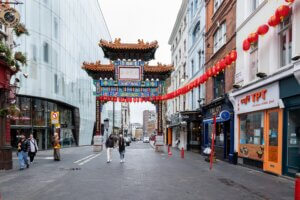
The business was past its sell by date. P&O took it over and basically broke it off. The Levy family walked away with £40m and had this idea of starting up Shaftesbury. They bought the block and property that Stock Conversion had in Chinatown. We started off with £13m worth of real estate in Chinatown, plus bits and bobs.
It’s come a long way since then. The last valuation for Shaftesbury was £3.1bn. That was down a bit on where it had been, though, wasn’t it?
Yes, it came down a bit because yields have been moving out a little bit. I think we had something approaching £4bn at one point, but the footprint has grown from 28 to 30 buildings in Chinatown to more than 600. Now, with the merger, [the value of the portfolio] is roughly £5bn.
Capco boss Ian Hawksworth is chief executive officer. How will it work with the slightly smaller entity coming in and running the shop?
We’ve got the majority of the seats on the board, so we’ve got the chairman Jonathan Nicholls and chief operating officer Chris Ward. More importantly, the principle behind the merger is to build on the best of the two cultures and strategies – that’s the best recipe for long term success.
Why did the merger take so much longer than anticipated?
We thought it would be quite straightforward, but because we were both public companies, the Competition & Markets Authority was bound to look at it. The conclusion is not surprising. It just took all that time to come to that conclusion. My initial plan was to go in September!
Will the two head offices become one?
I’m not part of those conversations anymore. There will have to be some rationalisation down to one office.
Going back to the start of your time with Shaftesbury, did you ever envisage being there that long?
I thought this would be a really boring job and that I’d go and get a proper job somewhere, but within the first couple of months, Peter Levy decided to step down as a partner of DE&J Levy. The ambition was to start growing the business. Of course, the only way in those days to raise any serious money was to get a get a listing on the Stock Exchange, so that’s what we did.
You didn’t float at the most auspicious time, did you?
It was an interesting time. The first day of trading was after Black Monday. We floated at £1.80 per share. Within a month, the share price was down to £1. That wasn’t a great start. Anyway, we recovered, but then we hit recession in the early 1990s. We were spread a little bit too thinly, so we were a little bit exposed. The thing that paid the bills was the little old block of property in Chinatown, which was never empty; the rents were always paid and the valuations were much more resilient.
So at that point, we decided we’d stick to the West End. Peter’s father Joe, a great name in post-war property, used to say to him ‘Don’t buy anything more than 15 minutes’ walk from Piccadilly Circus’ and he was absolutely right. We were totally honest with our lenders, as we were during the Covid pandemic.
What was your strategy during the pandemic?
We knew it was going to be difficult and these small businesses weren’t going to survive without a lot of help from us. We explained [to our lenders] that what we wanted to do was to support all those businesses.
How close are we to the old normal now?
We’re getting pretty close. Retail is still not quite there. I think our retail rents on average, certainly for the bigger shops, are down still about 10% to 15% on where they were in 2019.
Aren’t they still too high for some tenants?
There’s no shortage of demand here. Vacancies are back to normal level. Businesses come and go. Retailers don’t want long leases. We live in a world with five-year leases. When we started, 25 years was normal, but we try and keep this area different and interesting and you do need the opportunity to churn and bring new people in and keep refreshing the offer. So in this location, we can live with it. If this were a provincial shopping centre, I might be having a few sleepless nights.
How do rents compare with the rest of the West End?
Our rents are modest by West End standards. Our highest rents have never been more than two thirds of those on the prime streets around us. You can take shops in Seven Dials for £200 to £250 Zone A, whereas prime prime in Covent Garden was once approaching £1,000. If shops and restaurants are not making any money, we won’t prosper, so our job is to create a prosperous environment for them and drive footfall. We’ve never bought into prime; we’ve always taken the slightly forgotten, rundown areas, like Carnaby was.
How do the two portfolios sit together?
Capco’s portfolio is subtly different in terms of buildings and the size of the space they offer. We’ve always said it’s complementary to what we do.
Is the transformation of Carnaby Street your greatest achievement?
I think the whole thing is really. People forget Seven Dials; there was nothing around there. Helping Chinatown move on – the offer there was little bit stuck in a time warp. We take pride in the whole thing. You have to be sensitive about what was there to begin with. You have to look at the future, not always look backwards. Change or die.
What was the gamechanger moment?
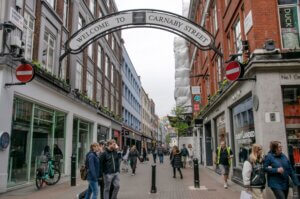
Buying Carnaby in 1996. It was put up for offers over £70m and little old Shaftesbury, which wasn’t very big at the time, came along and bid £90m for it. Everybody thought we’d lost our minds. What people didn’t really appreciate was that we did own a bit of Carnaby already at the south end and one or two buildings had actually been owned by Stock Conversion in the day, so we had a good idea of what the street could be. We had a vision. That was our second rights issue that year because we had already bought a chunk of Chinatown from the receivers of the Trocadero.
I was the finance director and had to go and find £70m worth of debt pretty quickly, because we had the bid accepted but didn’t have any money. Life was a bit easier those days.
Your departure is going to be hard for people, isn’t it?
I think it might be. One or two people have left us over the years, but it’s been a pretty stable team. People enjoy working here. It wasn’t quite meant to be this way. Obviously, we thought about succession for a long time. Several of us agreed we’d leave in an orderly progression with a couple of years between us. My original plan was to go in 2019 to 2020, but because we had these problems with Sam Tak Lee suing the board, I wasn’t going to walk out in the middle of that. Then, of course, Covid came along and I said to the board: ‘I can’t walk out in the middle of this chaos.’
Looking back at the whole Sam Tak Lee affair, what do you make of it?
It was unfortunate, really. I’ve never met Mr Lee. The story goes back a long way. He approached Peter Levy and Jonathan Lane in the early 90s and said he wanted to buy the business. Mr Levy was not minded to sell. Ever since then, Mr Lee had a bit of an obsession about owning Shaftesbury. Post Brexit, he started buying avidly and he was already a buyer for Shaftesbury shares, and that’s how the saga started. We did an equity raise in 2018 and he claimed that we did it just to dilute him, ignoring the fact that we offered him his pro rata share and that he took it, so he wasn’t diluted at all. All he wanted was to raise more debt. He said we didn’t need more equity. The irony of it all is that we got to 2020 and he was forced to sell his 25% stake at a knockdown price because he had some debt issues and had borrowed the money to buy the shares. So there’s a message there. Don’t borrow too much. We think it cost him £250m. So the banks stepped in and forced a sale of the shares, which is how Capco came on the scene.
Looking back at the last 36 years, do you have any regrets?
No, I don’t think I do really. One or two things didn’t always go quite according to plan, but we’ve ended up in a good place. We took few chances along the way, like buying Carnaby, but we always felt we knew what we were doing. They were calculated risks. Honestly, you don’t go too far wrong investing in the West End of London. It has some of the best real estate on the planet.
What was the worst moment in your career?
Well, I suppose the beginning of the pandemic; that was a pretty bleak time. There wasn’t a playbook. But the board were very supportive. We raised some money in 2020 to make sure that we could keep going because the cash drain was getting substantial. It wasn’t as if smaller businesses were going to pay up later on. So we did the right thing to protect the business to make sure we had sufficient cash resources, but also to stay on the right side of the covenants, because there’s no way to tell how property values were going to react to an extended period of lockdown. So it has been a remarkable turnaround in two years.
Looking ahead, what are the key challenges?
There are lots of challenges coming down the road. Sustainability is potentially a ticking time bomb. We need common sense from government. If you want us to preserve all these buildings and you want to have listed buildings and conservation areas, you’ve got to compromise. You can’t have that and brilliant sustainability. These buildings are never going to perform like new buildings, but it’s probably, on the whole, better that you keep them and try to make them as good as possible. There needs to be some flexibility in the planning.
Is that ever going to happen?
The penny’s starting to drop, but it needs a bit of buy-in from government. They want to raise the EPC levels for 2030 and can’t even get round to legislating for it. It’s over a year behind.
So, you favour retrofits over rebuilds?
Not in every situation. I’d be the first to say M&S on Oxford Street should come down; it’s not that interesting a building. It doesn’t deserve to be saved. I think it would help if the new building that was going in was a bit more interesting. But we’ve got to be realistic; not everything can be saved.
What are your parting thoughts about the property market?
When I look back to 40 years ago, we’ve moved on an awful lot, but there’s still a lot of catching up to do. The industry doesn’t sell itself very well to the general public or encourage young people to look at careers in real estate.
Were you always as open about being gay?
No, I wasn’t particularly, but Freehold came along and I became CEO, so I had to pitch in and do something. Freehold has made a big difference. There is a general discussion around diversity. But a bit of gender balance in the industry wouldn’t go amiss. Shaftesbury is two thirds female. It is not an aggressive rugby club male culture; it’s much more collegiate and cooperative and I think that does make a difference. We don’t have enough ethnic diversity in this business or elsewhere, and I’m still the only gay in the village.
Why is diversity still such a challenge?
Real estate is so fragmented. You’ve got the big advisory firms at the top, but there are myriad smaller businesses that don’t have the resources and are never going to be truly diverse. Frankly, that’s part of the industry’s problem. We could do with a bit more of a push from the RICS.
What do you make of the new regime at the RICS?
They have a lot of work to do in changing the way that people perceive the RICS. The other professions are a bit ahead. The fact is that still only 30% of surveyors are female and the ethnic proportion is well under 5%, that can’t carry on. It’s generational. Also, the vast array of skills you need to make real estate work now is attracting people in who are not from traditional backgrounds and they are making a difference as well.
Who have you been inspired by?
I’ve been lucky to work with some very good people. Jonathan Lane and Peter Levy were great mentors. They were property men through and through.
What’s your plan now?
I’ve never had a plan. Things have just happened to me. I’m not going to do anything boring in the public company or corporate world. I’ve had enough of that – there’s so much regulation the fun has gone out of it. We would never have achieved what we’ve achieved if with the rules have been like this 36 years ago.
What does your husband Kevin want you to do?
Stay out of the house as much as possible. It is 30 years ago since we met and we’ve done very well for 30 years by generally not seeing each other Monday to Friday!
So, no non-exec director roles?
Maybe, but in the public company world, it’s got too much. In a private company, you might get a little bit more done. But I’m passionate about the West End. I absolutely love it. So, whatever I can do around here to help, I’m happy to wade in. But I’m not driven by the need to make more money, frankly. We have done very well out of Shaftesbury over the years.
How do you think you’ll take to retirement?
It’s going be difficult. I’ll miss the people more than anything else. I always think the best way to stay young is to hang around young people, and the best way to get old quick is to hang out with old people. Really, I don’t feel my age. I don’t behave it either. We’ve all been here so long that we’ve all grown up together and are in total denial about our age – and that’s the best way to be.
Where do you see things going politically and economically in the next few years?
The UK is not in a great place now. It cut itself off from its partners, and the challenges are substantial. I think we’ve got to address these problems now because a lot of things are coming home to roost. We probably had these problems 40 years ago, but North Sea oil gas came along and actually papered over a lot of cracks for us as a country.
I started working in 1973 and there was a war in the Middle East, and we had strikes and inflation. There was a huge financial crisis in the 70s. Banks were going bust left, right and centre. We had to go to the IMF for a bailout – the first country ever to go to the IMF. It’s almost gone full circle.
Where do you think you’ll be in five years’ time?
I’ll still be living in Marylebone. They’ll carry me out of there. I didn’t really appreciate how nice it was until lockdown. There is so much on your doorstep; the West End has so much to offer. I say to people who work here during the week: you should come back at the weekend, or be a tourist in your own city. You’re never going to get tired of things or run out of things to do here – it’s just perfect.
What’s your advice to people starting out in their careers?
My advice is, if you’ve made a career mistake, just do something about it. Everybody makes at least one. You get a gut feel whether it’s going to work out or not. If it doesn’t, just move on to the next thing to do. Change always bring opportunity.
What’s your advice to somebody else coming from a different background?
People’s minds are much more open these days, but you need to accept that it’s not always going to be easy. You will find allies today who will want to help you.
What’s your mantra?
Try and find something you enjoy doing. Your life will be more fulfilled if it’s not just a job. That’s what we tried to do here at Shaftesbury.


Office connection is the dominant driver for workplace design