

In the US, Bridge Industrial is a property industry powerhouse. Having acquired and developed more than 44m sq ft of space since it was founded in 2000, it is big enough to be a global powerhouse. However, when the industrial real estate operating company and investment manager launched a UK division in November 2020, it was little known on this side of the pond.
The person tasked with changing that was Paul Hanley, formerly ProLogis vice-president. Hanley quickly got to work building brand awareness and from a standing start, has transformed the UK business into one with circa 734,000 sq ft of industrial and logistics assets within the M25 (see scheme list below).
BE News caught up with Hanley to find out how the business – whose motto is ‘first to lease, last to go vacant’ – has developed in the UK under his stewardship and where he sees the biggest challenges and opportunities in the years ahead.
Have things gone to plan since you launched and is the business where you envisaged it would be?
I think things have very much gone to plan. If anything, when I think about some of the milestones we’ve reached, we’re probably further ahead than we had hoped to be. In terms of growing the office, there are 10 of us now, which is fantastic, and is probably greater growth from a people perspective than we had perhaps first envisaged two years ago.
We formed a strategic joint venture with a funding partner in 2021, who have been a tremendous source of capital and investor in the business with us and that’s been a great alliance. And we’ve got six sites. They’re all inside the M25 and they’re all last mile, urban infill. It’s the hardest geography in which to buy land and get it through the planning process and developed, but it’s also the most rewarding from a supply and demand metric.
The other key milestone has been establishing the business and establishing the Bridge brand in the UK, which a couple of years ago just didn’t resonate, because it simply wasn’t here. Transacting gives you credibility. It’s great telling people what you want to do, but then you need to do it. So, I think that over the last few years, we’ve proven ourselves to be a business of action; we do what we say we’re going to do.
In terms of brand recognition, are people now approaching you with opportunities?
Pretty early on, if something was discreetly marketed to half a dozen of our competitors, Bridge was in that mix, and we’ve stayed there. There’s always more to do and we can always go further, but we’re certainly very well known now in the UK, particularly for being specialists in urban infill, last mile, inner M25, so it’s really pleasing that we’ve built that brand recognition.
You’ve got six schemes at the moment at various stages of delivery. Where are you in terms of leasing activity?
Barking is the scheme that is furthest along. It isn’t leased yet but we have had good interest. We’ve got three or four inquiries and, given the level of interest that we have and the lack of competition in that area, we’re expecting to lease the site in short order. Southall and Uxbridge are the next two. They complete in June and July respectively. Again, we’ve had good interest in those schemes and we’ve got great conviction in the product. We’ve stayed very disciplined about where we have bought and the type of building that we’re building. We really do lean into the functionality of these spaces as well as the core geography, so we’ve got great real estate. They are all EPC A rated, BREEAM Excellent, highly sustainable, grade A buildings, so we feel very good about the letting prospects of them.
Where is occupier demand coming from at the moment?
Part of what we like in particular about London is the occupier pool that you’re targeting, or that you’re working with, has a real depth to it. So for sure, there are online and e-commerce type businesses and traditional retailers and 3PLs and parcel delivery companies, but we’re also seeing interest – subject to power availability – from film and TV studios and data centres. We’re seeing more manufacturing type businesses come back in and we’re seeing urban farms.
There’s a real variety out there and that’s why we try to make the buildings as functional as we possibly can, so that they can appeal and can suit – subject to the fit out – such a variety of occupiers. When you develop these buildings on a speculative basis, you have to make them as appealing to as wide a variety of occupiers as you can.
You’ve got plenty on your plate already. Are you on the lookout for other development opportunities?
Yes, we are. We have got some other sites that we are under offer at the moment that look and feel very similar to the stuff we’re already doing. So urban infill, inner M25 – that continues to be the focus. We’re also looking at more assets in the wider South East and West Midlands. I certainly think 2023 will be the year where we do some business outside of our core M25 geography, because we are keen to do that and we’re seeing a lot of opportunities.
An important part of it is an expectation on pricing. We’ve been through such a bull market, but that really cooled off in the middle of last year, so there’s definitely a gap between where you can bid and where the vendors selling price might be.
But there are a lot of opportunities without a doubt and it does feel like things have stabilised, relatively speaking, compared to where we were in the summer when we went through a very rapid change – almost as rapid as the growth we saw.
It does feel as if we’ve had some stabilisation and what’s been a constant throughout has just been the level of demand that we’re seeing from occupiers. That hasn’t changed, which is good, and that gives us even more conviction in the uber core locations where we’re active.
Would you consider doing things like ‘beds and sheds’ or multi-storey industrial and logistics developments?
I think beds and sheds is a weird one. I think of beds and sheds as industrial on the ground floor and residential immediately above as part of the same scheme and I think that’s quite tricky to pull off. Beds and sheds as part of a bigger scheme – so industrial adjacent to or neighbouring residential – is already here really, particularly in London, and that is absolutely workable and sustainable with good design and the correct orientation.
Multi-storey is something that we as a UK office, and Bridge as a business, is absolutely embracing. We have a number of multi-storey projects that are coming forward in the US and we’re looking at it in the UK all the time. We do have a site in the UK that is suitable for it that we’re bringing through right now. The London plan is very much around intensification and pushing density, so I think it’s definitely something that’s coming.
I think build prices increasing at the rate at which they have has probably dealt a few blows to some multi-storey development plans because it just means that it’s even more expensive than it was to actually put those buildings up, but we believe in it as a thesis and we’re looking all the time at how we might accommodate it on certain sites in London.
I think multi-storey is going to work best in uber densely populated areas, so I think for the moment we’re only really thinking about it from a London perspective. To make it work you’ve got to have some very specific characteristics in terms of accessibility to A roads or motorway junctions and the ability to potentially build 35-40 metres up. So, there’s only certain locations where that’s going to work. The sites that we have today aren’t right for it – either they’re too small, or they don’t have all the right ingredients – but it’s certainly something that we are considering.
So far you’ve focused on delivering speculative new build projects. Would you consider buying existing assets and refurbishing them?
We have been very focused on just new build to date, but we are now starting to consider looking at some more stabilised assets – some income producing assets. But only as long as the geographies are complementary to where we’re building and the quality of asset is complementary. If we go into that space it might be natural that over time those buildings will need refurbishment, but I think that the core focus of the business at the moment is still very much around development and adding value through our expertise in new build products.
Is there still lots of competition for sites?
I think it’s less competitive than it was. There was a point last year where some of the sites we were bidding on, we were perhaps one of 15-16 parties that were chasing it. I think that has naturally cooled off, particularly for those developers who are very reliant on debt. So, it’s still competitive, but it’s probably calmed down a bit compared to where we were and that level of competition has just naturally started to soften since summer last year.
What’s happened with land prices? Have they cooled a little bit?
We saw an awful lot of growth in land prices that were driven by cap rates continuing to fall and record rental growth levels. When we track some of the assets that we bought, when we were putting things under offer in late 2020, early 2021, we went through a period where those values appreciated and they are now probably closer to where they were when we originally bought the sites.
So, I think there has definitely been a rebasing of what a sensible land value looks like for all sectors and it’s just something that sellers are going to have to come to terms with. History shows you that it can sometimes take longer for that level of acceptance to come in, but when you had potentially 100 basis points of yield spread it’s just a fact that land prices are going to have to go down. There’s no way to make development viable without it.
What about build cost? Are you starting to see inflationary pressure ease?
We went through a period where build costs felt like they increased by 25-30% almost overnight. But because we’re a US-owned business I felt like we saw that coming a bit sooner than maybe some of our competitors in the [UK] market because those inflationary pressures were very prevalent in the US before they came to the UK. It does feel like build prices are starting to stabilise and settle down and there’s a little bit more certainty coming back into the market.
I don’t necessarily think that pricing will reverse and go back to 2020-2021 levels. That’s probably not realistic because when you set a new base it’s harder for it to go back 30%, but the rate of growth has certainly slowed considerably and we’re forecasting much more measured and considered increases as we go forward. The increase in build costs has been a real challenge for every developer and on occasion it makes some developments almost unviable – particularly in the regions.
Where we develop in London, typically 60-70% of your overall cost would be the land, whereas in the Midlands now perhaps 50% of your cost is building the building, so it makes it more of a challenge in some areas where rents are lower, and cap rates are higher. But it just seems like something that developers have to contend with now that costs have gone up.
Some people are predicting rental growth will slow down this year. Are you seeing signs of that at the moment in the market?
No, not really. I think because of the supply and demand dynamic we’re still expecting rents to to grow and we’re not forecasting any particular slowdown in in rental growth. I think we did witness a real surge in rental growth for a year or two, particularly in London. But if you look at some of the regional markets I think there’s potentially quite a lot more in those rents. So we still feel very good and have a lot of conviction about rents and rental growth within the industrial sector.
And there’s been more of a flight to quality for highly sustainable buildings, so whilst the rental price might be higher, you’d expect to see some occupational and operational savings through the sustainability factors in buildings and perhaps it’s easier for occupiers to recruit and retain staff, etc. There are a lot of factors that make us think rental growth is still going to be prevalent in the sector.
How important is ESG to the business?
It’s very important to us as a business. We’ve got our own ESG goals and they are factored in right at the outset in order to allow us to reach certain levels of BREEAM certification. Bridge published its first ESG report last year and there’s a continued commitment now from the business to have more focus on that area.
When we’re coming into new locations and building within communities, it’s really important to us to get the message across that we want to be a good and considerate neighbour, and our long term approach that we have is reflected in that.
We are making a concerted effort to spend quality time in the communities in which we are active. Last year, we spent a day volunteering at a food bank in Hillingdon, we had a day out with the parks team in Ealing doing various outdoor activities and we volunteered at a local supermarket collecting donations and things like that near Canning town. That’s something that we’ve committed to as a business – to have at least three community service days a year in and around the communities where we’re active just to improve visibility and show we’re just normal people who are bringing positive changes to an area. Words are quite cheap, so you need action to back them up.
Looking ahead, what are the main short term challenges and opportunities you see for the business?
One of the main challenges for us is the planning process, which still takes a long time to navigate. Having to work through a nine- to 15-month period to get planning approval is a significant challenge, because everything has to be so forward looking all the time. Even when you start building a building, you can be nine to 12 months before it PCs.
Barking is a great example of how long things take. That building PC’d in February 2023, but is was an idea that was conceived in December 2020. Planning will continue to be a challenge and unfortunately I don’t think there’s any way around it. We also need to continue to monitor build costs because they have presented some real challenges to us in the last 12 months or so due to the rapid rate of growth.
In terms of opportunities, we still think there’s a lot of opportunity inside the M25. There’s a lot of older product that will need to turn over and we’re seeing a huge amount of demand and not a lot of supply, so that should naturally lead to opportunity. And as I said earlier, some of the competition in the market that was there a year or so ago, just isn’t there anymore, so that should naturally lead to more opportunity.
I think the fact that we do take a much longer term view and we do see ourselves as someone who is investing through the cycles, that naturally just means we have a different horizon. So I think we have a much more considered and long term approach to the locations where we’re building and the locations we’re investing in and the quality of the product we’re delivering and that gives us a lot of comfort and is definitely a great opportunity for us.
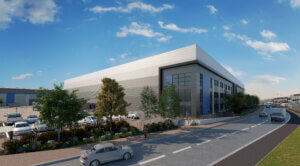
Bridge’s UK schemes
Uxbridge: the final touches are being put to this 50,315 sq ft scheme, which will be ready for occupation this month.
Enterprise East (pictured above): full planning permission has been granted for Bridge UK’s largest scheme totalling 339,504 sq ft. The scheme comprises 10 units ranging from 8,515 to 131,280. Construction is due to commence in Q2 2023 with completion in Q1 2024.
Croydon: full planning permission has been granted for this 62,925 sq ft scheme. Demolition has commenced and the scheme will be ready for occupation Q1 2024.
Southall: the scheme is currently under construction and the 15m tall, 50,315 sq ft development, is targeting completion in July 2023.
Barking: the 50,246 sq ft development is now complete. Bridge Point Barking goes above and beyond minimal compliance and delivers best in class for sustainability and energy performance, with BREEAM Excellent and EPC A+ accreditation to be net zero carbon in operation.
Weybridge: currently in the planning process. Approximately 190,000 sq ft will be delivered in 2024.



The demise of the REITs