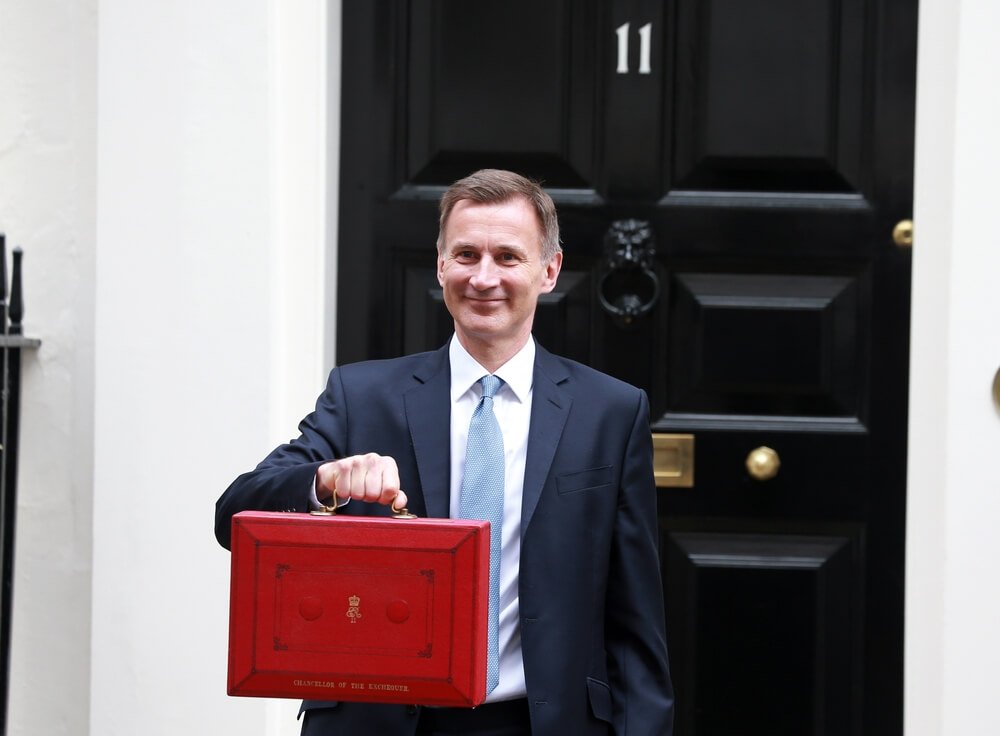
Senior figures from across the built environment industry have reacted with anger and disappointment to the chancellor’s Spring Budget.
Jeremy Hunt announced a 2p cut in national insurance, a fuel duty freeze and an increase in the VAT threshold for small businesses to £90,000. However, he failed to heed industry calls to reduce business rates or remove the ‘tourist tax’ and made no notable announcements in relation to the housing crisis, planning system or climate change.
Many in the business community were furious about the government’s decision not to cut business rates and instead let the standard multiplier rise in line with September’s 6.7% CPI figure instead of today’s 4.0% figure.
“The chancellor has squandered his last chance to keep his party’s manifesto promise to reduce business rates for retail,” said Vivienne King, chair of the Shopkeepers’ Campaign. “We are going to see more shuttered up shops up and down our high streets and in our town centres. Retailers across the country will feel betrayed as they continue to suffer under one of the most punitive property tax regimes in Europe.”
The current regime was driving would-be investors “into the arms of our European competitors”, she warned, adding that she was also “deeply concerned” about the decision to extend the reset period for empty property relief from six to 13 weeks.
“This measure will discourage short-term letting of empty properties and will bring down the curtain on pop-up shops,” she said. “The measure has been proven to not work in Wales and Scotland, so why repeat it in England?”
John Webber, head of business rates at Colliers, echoed King’s concerns and accused the chancellor of failing to “right the wrongs” of the 2023 Autumn Statement, describing the decision not to cancel the business rates rise as “massively disappointing”.
“It is outrageous that all but the smallest of UK businesses will be paying increased business rates tied to a multiplier that will increase from 51.2p to 54.6p in the pound in line with the 6.7% inflation figures of last September,” he said. “This planned increase will impact 220,000 businesses, who will pay an extra burden of £1.66bn in tax from 1 April 2024. Colliers has estimated that the businesses in the retail sector will pay over £360m more in business rates, the offices sector around £400m more and logistic/industrial sector around £450m more as a result of the increased multiplier. Such a policy puts the high street under even greater threat than it is already.”
Webber also expressed disappointment that the chancellor had not extended the retail, hospitality and leisure relief for small companies announced in November. “No pub, restaurant, café or small shop can realistically plan for the future if they are peering over the cliff edge of a 75% increase in their rates bill next year,” he said. “The chancellor should have given these businesses some confidence by confirming that the relief will be in place until at least until the next revaluation in 2026.”
Dee Corsi, chief executive at New West End Company, described the budget as “yet another missed opportunity”. She said: “Today’s announcement is incredibly disappointing and at odds with the real-world data which has been shared by businesses, airports and regional groups across the country. It also comes against the backdrop of what is already perfect storm for larger retail businesses in particular, who face both a costly end to business rates relief and an imminent increase to the national living wage in the months ahead.”
Commenting on the chancellor’s decision to ignore calls for the ‘tourist tax’ to be removed, she added: “It is concerning that, while our EU counterparts actively leverage tax-free shopping as a means to supercharge growth, we are unable to see the policy’s potential – not just for retail, but for hospitality, leisure and cultural attractions across the nation.”
Kay Buxton, chief executive of Marble Arch London BID, described it as “frustrating” that the chancellor had ignored widespread calls from industry experts to remove the tax.
“Independent research suggests that removing the tax on tourist spending would have led to an extra £3bn being spent on hotels, restaurants, retail, and visitor attractions by overseas visitors,” she said. “The introduction of taxing tourist spending has damaged the international appeal of the UK for international visitors, so this is another missed opportunity by the chancellor, which would have provided a much-welcomed boost for hospitality and the visitor economy.”
Other industry figures criticised the absence of housing and planning-related measures in the budget. Melanie Leech, chief executive, British Property Federation, said: “There’s little in today’s budget for the property sector to cheer about. Further devolution deals are welcome as are the announcements of support for delivering more homes in a small number of places, but this falls far short of a bold strategy for delivering the homes needed across the country.
“Abolishing SDLT multiple dwellings relief will hit the build-to-rent sector at a time when the government should be doing everything in its power to encourage more long-term investment into professionally managed rental homes. This will hinder rather than stimulate the efficiency of the housing market.”
Mark Buddle, head of residential development at Bidwells, described the lack of measures to address the housing crisis as “astonishing”.
“Financing pressures and an antiquated system have squeezed badly-needed housing delivery, with rents soaring across the country due to the chronically undersupplied market,” he said. “Whether or not we provide solutions to this problem could be the defining political question of this generation.
“Without support for housing delivery, the UK will be unable to attract workers in areas of high productivity, which will only serve to entrench stagflation, low economic growth and increase the tax burden in the long-term.”
Marc Vlessing, founder and chief executive of Pocket Living, was equally scathing: “The rapidly emerging consensus is that we need to deliver 500,000 new homes per year, yet we can barely manage 200,000 at present. We need action to save an SME house building sector in crisis, yet despite intense campaigning by the sector we haven’t received a penny of support in this Budget. This was a real chance, perhaps the chancellor’s last, to unlock 1.6m homes on brownfield sites. The other major question is: what has happened to Michael Gove’s big housing moment? Did it get stuck in planning or was it simply unviable to deliver?”
Olivia Harris, chief executive of Dolphin Living, criticised the government’s failure to address the need for more affordable homes. “Any measures to boost our key industrial sectors, such as life sciences and the creative industries, need to be matched by a supply of new, affordable to rent, housing to aid recruitment and retention of the supporting workforce,” she said. “We are therefore disappointed that the chancellor didn’t take the opportunity to shift the dial on housing delivery to meet this challenge head on.”
Brendan Geraghty, CEO of the UKAA, said: “The Spring Budget provided the government with a perfect opportunity to put housing front and centre, to invest in and simplify the planning system to deliver the new homes that the country is crying out for – but they did not take it.”
Jeremy Raj, national head of residential property at Irwin Mitchell, added: “It’s hard not to conclude that the government now feels that issues within the residential property market will not be a favoured battle ground for them in the coming general election, other than sloganeering about the green belt and commonhold.”
Paresh Raja, chief executive of Market Financial Solutions, agreed. “In his attempts to woo voters before the upcoming election, the chancellor missed a trick by not bringing forward more meaningful, positive policies for the property market. But we knew that was likely to be the case,” he said.
“Today’s budget would have been an opportune moment to bring about a string of policies and reforms to boost the property market. It feels like a missed opportunity.”
Summing up the view of many in the industry, Thomas Proctor, chief executive of NCG, said: “Another budget, another example of the government overlooking the commercial real estate sector. It’s time the government recognised the value of the industry – and, critically, actually took action to protect it.”
Further industry responses to today’s Spring Budget:
Daniel Austin, CEO and co-founder at ASK Partners: “It is positive that Jeremy Hunt is putting investment into new homes at the top of the agenda. Focusing investment into high growth business facilities such as labs and the housing needed to attract staff into these roles is crucial for economic growth. However, affordability is going to remain an issue until we have increased supply by much more than 300,000 homes per year.”
David Jones, principal and business group leader – rating and technology, at Avison Young UK: “The chancellor’s decision to extend the empty property relief reset period from six weeks to three months presents challenges for landlords and developers aiming to manage rates liability through intermittent occupation schemes. Despite our objections and consultations, the government has proceeded with this change, which we believe is unfair. We advocate for business rates to be linked to occupancy rather than vacancy. Moreover, there is a disconnect between the planning system and developers’ timelines for site assembly and readiness, particularly on brownfield sites. Encouraging intermittent use can bring vibrancy to these spaces and stimulate growth. Imposing empty rates on unused space contradicts efforts to foster sustainable development. Developers often face challenges due to under-resourced planning systems. If the government seeks to encourage more brownfield development, policies must support their evolution and reflect realistic timescales for delivering complex projects.”
Emily Roberton, head of rating at BNP Paribas Real Estate: “The ‘owners’ of empty property in England breathed a sigh of relief today, as the government’s latest changes to empty property rates could easily have gone further. The current ‘six-week reset period’ is to be extended to 13 weeks’ continuous occupation required in order to reset the 100% exemption period from empty rates. The exemption period is to remain at three months for all commercial property, except industrials that are entitled to six months’ exemption. The change is to come into effect on 1 April 2024. Empty rates were devised in the 1960s to encourage empty property into use. Today’s challenges are more complex than those faced back then, with matters like e-commerce and emerging environmental requirements rendering even relatively modern property obsolete. Taxing empty property further will not therefore, encourage empty properties back into use but instead make them more expensive to hold. On a positive note this may bring investment decision forward.”
Jeevan Thandi, associate director at Lambert Smith Hampton: “While the chancellor predictably failed to deliver a magic pill to cure the entire planning system’s malaise, he did unveil some incremental measures that will be viewed as broadly pro-development. The proposed consultation on an ‘accelerated planning system’ will likely be welcomed by developers, who are increasingly frustrated by the current lethargic process and will greet any solutions with enthusiasm. The extension of devolved powers to Warwickshire, Buckinghamshire, Surrey and the north-east has the potential to accelerate housing delivery and employment growth in these areas, as will long-term plans for a further 20 towns across the UK”.
Josh Myerson, partner and head of rating advisory at Montagu Evans: “This is an unprecedented intervention, but clearly the right thing to do. Subjecting film studios to as much as a 600% assessment increase under the revaluation was unsustainable and detrimental not only to the film industry but to UK plc given the wider economic and employment impacts. Notwithstanding interim assessment reductions that have been secured already since the revaluation, there is still more to do and discussions between the working group and the VOA continue. Today’s announcement is an important signal. Time will tell whether this intervention is sufficient to undo the damage caused by the revaluation but we welcome the steps now taken.”
Josh Bullard, director, smart energy and sustainability at Hydrock: “We welcome the chancellor’s spotlight on nuclear energy and the ambition to make it a cornerstone of the UK’s energy mix by 2050. However, true leadership in the global energy landscape requires a multifaceted approach. It’s well-known that nuclear power offers reliability and low-carbon benefits, however, a truly balanced energy landscape must be complemented by investments in renewable energy. Neglecting this risks missing opportunities for energy security, resilience, and long-term competitiveness. Allocating funds to the Green Industries Growth Accelerator is a positive step towards building robust supply chains for emerging technologies. To maintain momentum, we urge a holistic strategy that harnesses the strengths of both nuclear and renewables, creating a balanced portfolio that not only meets net-zero targets but also positions the UK as a frontrunner in the transition to a sustainable energy future.”
Scott Parsons, chief operating officer, UK at Unibail-Rodamco-Westfield: “Today’s budget is an utter disappointment for the retail and property sectors, with no significant announcement on business rates and no u-turn on tax-free shopping for tourists. These are clear missed opportunities especially in this all-important election year. It’s deeply frustrating that calls from over 500 sector leaders to halt the tourist tax have been ignored, despite the compelling data which demonstrates the critical importance of tax-free shopping for the UK economy. What’s more, the existing business rates system places our high streets at a massive disadvantage compared to those in other European cities, with UK retailers shouldering a financial load nearly 10 times more than brands on the continent. Permanently lowering rates is the most meaningful way to support the sustainable, long-term growth of the retail industry and show the world once and for all that the UK is open for investment. While Hunt has failed to deliver for the industry, in contrast, the Labour Party’s newly unveiled strategy to revitalise Britain’s high streets holds great promise. By pledging to overhaul the outdated business rates system, Labour is signalling a more encouraging future for the sector.”
Tom Bill, head of UK residential research at Knight Frank: “Anyone planning to get on the property ladder would have shrugged their shoulders following this budget. Demand-side incentives for first-time buyers such as stamp duty breaks or help for those with smaller deposits would have been welcome, particularly as mortgage rates and house prices are creeping back up. We may discover later this year if the government intends to offer more support to buyers, whose mobility around the UK is vital for an economy that is firing back up after Covid.”
Simon Green, head of business rates at Gerald Eve: “The changes to empty property rates announced by the chancellor are totally misguided and misdirected. No commercial landlord wants an empty property and this change will make it even harder for them to fill it, even in the short term. Instead, the government should have extended the three-month relief period to give landlords proper time to find the best long-term tenants possible. The government will fail to raise extra revenue as well-advised owners will simply adopt alternative rates mitigation schemes and, more importantly, this will lead to properties remaining vacant for longer periods. Commercial landlords have no reason to hold back vacant properties from the market and the three-month rates free period when a property falls vacant (six months for factories and warehouses) is a woefully inadequate period in which to find a new tenant, let alone undertake the upgrading and repurposing of older properties to attract new businesses.”
Richard Curry, partner and head of retail at Rapleys: “Another year, another budget without proper business rate reform, how disappointing but not unexpected. I would have liked to have seen business rates scrapped for all businesses that are taking existing high street space, no matter which use, to stop the decline on our high street and get existing properties repurposed more quickly.”
Simon Vernon-Harcourt, design and planning director at City & Country: “It is disappointing to see no mention by the UK government to encourage upgrading of old homes to higher energy efficiency, or the reuse of historic buildings. The UK has among the oldest domestic housing in Europe, but these homes are not energy efficient, and it feels like the government has no foot on the pedal when it comes to supporting the property industry by retrofitting our vast housing stock and rich heritage assets.
Paul Farrow, head of UK industrial and logistics at CBRE said: “The investment package for the UK manufacturing sector comes at a time of huge importance. In recent months, we’ve seen a notable increase in requirements from manufacturers for warehouse space, predominantly a response mechanism to Brexit, deglobalisation, geo-political risk and ongoing supply chain disruption. Measures such as these are essential to support growth, as the UK looks to reaffirm its foothold as a market of choice for manufacturing.”
Oliver Boundy, executive director of development at Anchor: “It is no secret that the UK is in the midst of a housing crisis, there is a huge shortage of affordable homes and while conversation on this often centre around younger families and first-time buyers, there is a risk of those in later life being forgotten. We have seen that the demand for appropriate housing is equally high for older people as younger. We were disappointed there was no reference to increased grant funding for affordable homes, as we feel this is key to increasing supply and meeting the high demand for older people’s housing.”
Mark Robinson, group chief executive of SCAPE: “While the tax cuts announced today may offer short-term relief, the chancellor’s decision to redirect funding from public services will have an impact on local authorities whose budgets are already under significant strain. The past year has shown the risk of under-resourced public departments, with the ongoing RAAC crisis highlighting the urgent need to take public funding and maintenance strategies seriously. This is vital to ensuring our public buildings can stand the test of time and continue to provide the spaces needed for communities to thrive. Clear policies for decarbonising public assets are also needed. As we move even closer to the 2030 net zero target, strategies for unlocking green investment for new and existing buildings are a must if we want to bring down the emissions and waste caused by the construction industry. Overall, greater efforts are needed to provide the necessary infrastructure for sustainable public building development across the UK.
Andrew Griggs, vice-chairman and non-executive director, Locate in Kent: “Badged a ‘budget for long term growth’, the chancellor delivered his last Spring Budget prior to the election. The announcement included the £360m package to support innovative research and development and manufacturing projects across the life sciences, automotive and aerospace sectors. We needed to see a budget for growth but also one that would give business investors the confidence to put their faith in UK plc, streamline red tape and deliver on planning reform. While it could have been more, it is welcome and helps us in our conversations with businesses in that sector. Today was more focused on pre-election sound bites and we look forward to hearing more detail as we near polling day about how the regions can be freed up and supported to really deliver for the UK economy.”