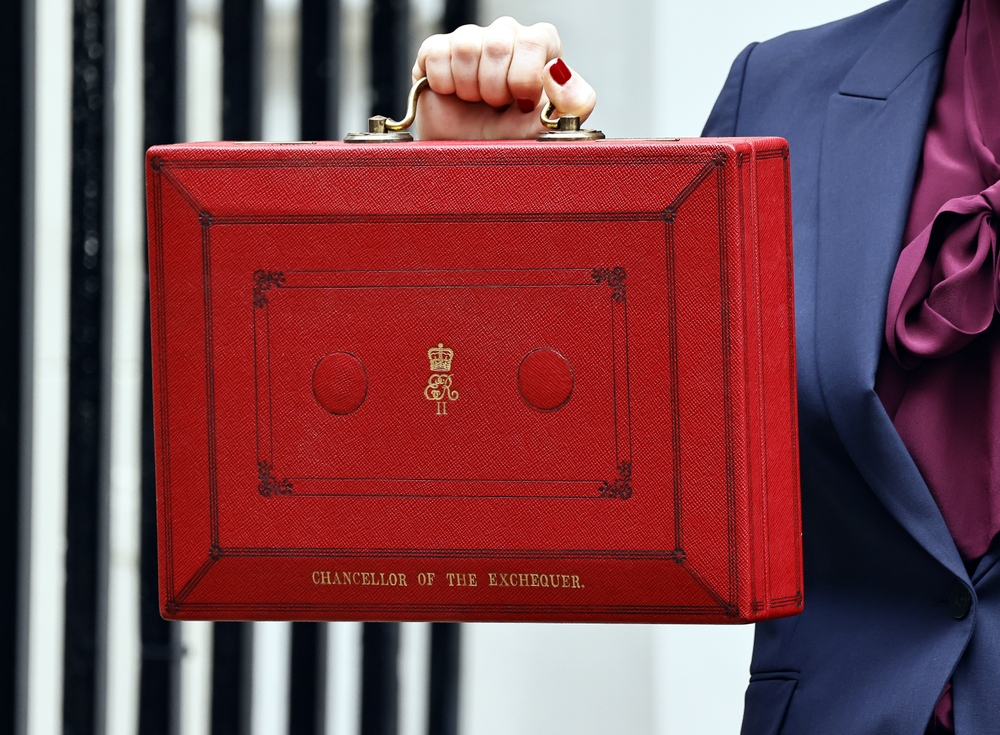
Chancellor Rachel Reeves’ Autumn Budget has received a mixed response from senior built environment industry figures.
The chancellor introduced a range of new taxes – including a ‘mansion tax’ on properties valued at more than £2m – proposed changes to the business rates regime and she unveiled additional funding would be made available to recruit more planners.
Responding to the Budget, Justin Young, chief executive of RICS, said: “There are positive moves, such as new support for apprentices under the age of 25, which should hopefully expand the pipeline of new talent into the surveying profession. It is encouraging that the government is prioritising necessary reforms to the business rates system, and we are committed to supporting this effort through our members’ expertise.
“Whilst these changes are welcome, there are several measures which may weaken the housing market, such as raising tax on dividends, property and savings income by 2%. Furthermore, it seems that commitments to sustainability are weakening. RICS is working with the government to mitigate these effects and help it deliver its objectives.”
Melanie Leech, chief executive of the British Property Federation, added: “There wasn’t a single thing said in the chancellor’s speech that wasn’t leaked in its chaotic build up. However, the lack of surprises doesn’t hide the disappointment that many in the development industry will feel after today. Whilst she spoke positively about the importance of business investment and maintained full expensing and the headline rate of corporation tax, there was little to cheer from an investor perspective. Indeed, confirmation of the large property business rates surcharge will impact critical national infrastructure like logistics businesses and priority sectors identified in the government’s own Industrial Strategy.
“While it was always going to be a challenge for the chancellor to both balance the books and support economic growth, it is disappointing that there was nothing introduced to alleviate acute development viability issues. Overall, no surprises, but nothing to cheer either.”
Industry response to the introduction of a ‘mansion tax’
Olivia Harris
Chief Executive, Dolphin Living
“The introduction of a ‘Mansion Tax’ on homes above £2m offers an opportunity to support affordable housing delivery across London, but only if local authorities have the ability to retain the revenue to spend on affordable housing delivery. As such, the government urgently needs to reconsider its position of directing this additional revenue back to the Treasury and ensure this tax on expensive housing is redirected towards delivering more affordable housing in locations where high value housing is prevalent and affordability challenges are greatest.”
Tom Bill
Head of UK residential research, Knight Frank
“Until the revaluations take place, buyers and sellers face years of uncertainty, especially around the £2m threshold. Even once completed, new valuations can be challenged, which would prolong the limbo. The policy may also raise less than expected, especially because it is deferrable. If opposition parties say they would scrap it, many homeowners will look at the opinion polls and wait it out. When you factor in the cost of carrying out the valuation and the potential lost stamp duty revenue from a stickier market, the sums raised could look like a rounding error for the Treasury.
“More properties will inevitably get dragged into the mansion tax net, which means the proportion of terraced houses, flats and semi-detached homes will grow over the years, particularly in the capital. The term ‘mansion tax’ will increasingly feel like a misnomer.
Angus Irvine
Partner, residential, Rapleys
“The chancellor’s measures on mansion tax will slow the market down in and around this bracket as people will hold on until a regime change. Anyone with a house over £2m will be particularly anxious with thousands more a year to pay. Some may want to sell, but will people want to buy and put themselves in that position? Whilst this may seem like an easy win for the government – as said, we need balance in the market and if people don’t sell at the higher end, it doesn’t filter down to other segments.”
Alexander Marcham
Managing director, Alvarez & Marsal Tax
“Current council tax bandings are still based on 1991 values, which often bear little resemblance to today’s market. Delivering this reform as planned would effectively require a full revaluation of every property in the country to 2026 levels – a huge administrative task that likely explains why implementation has been pushed to 2028.
“Even the OBR acknowledges the risk of widespread behavioural responses and a flood of appeals. One local council officer recently told me that a surge in appeals at this scale could ‘break the national valuation system’ – and that risk cannot be taken lightly. For a government seeking growth, a policy that could overwhelm the valuation system and further freeze a fragile housing market looks like a very high price for very limited gain.”
Simon Main
Partner, Cripps
“It is clear that the government’s ‘mansion tax’ will have a significant impact on the pricing, liquidity, and long-term ownership strategies in the prime central London market. From a legal perspective, much remains uncertain. Key questions, such as how properties will be valued, who will carry out the valuations, and who will bear the costs, suggest the application of any such levy will be fraught with difficulties.”
Adam Bovingdon
Managing director – property development, United Trust Bank
“After a long wait and an early glimpse from the OBR, the 2026 Autumn Budget statement is now behind us. Whilst it brought no major incentives for housebuilding, clarity is better than the uncertainty that has loomed over recent months. The so-called ‘mansion tax’ has grabbed headlines and would have created far less news without this emotive nickname. If it was called what it is, an increase in council tax for high value homes representing less than 1% of households in the UK, most people would have dismissed it as largely irrelevant to the general public.
“Hopes for a revised SME help to buy scheme and a stamp duty break for first-time buyers have faded, yet some form of stimulus would help to encourage the market and could be justified as an investment for growth.”
Daniel Austin
CEO and co-founder, ASK Partners
“The mansion tax announced in today’s Budget will likely soften demand for higher-end homes, especially those near the £2m threshold where the impact is greatest. While the super-prime market may absorb the charge, the wider upper tier can expect renewed price pressure and slower growth. We may see a brief pre-implementation rush, but just as many owners could delay selling to avoid the levy, reducing turnover and constraining supply. The burden will fall hardest on asset-rich, cash-poor households in high-value areas such as London.
“It is disappointing that stamp duty reform was overlooked. As one of the biggest barriers to market mobility, leaving it untouched will continue to create friction in an already subdued market. The OBR’s downgraded growth forecasts, as a result of the budget, prove that supporting transactions should have been central to today’s package.”
Andrew Lloyd
Managing director, Search Acumen
“The chancellor’s decision to add a surcharge to higher council tax bands signals a desire to redistribute regional mobility and bridge the wealth divide, rather than create transactional peaks and troughs like a stamp duty change would have likely had. Whilst this will be difficult to implement, the three years until it comes into effect will allow careful planning if managed correctly. Tinkering with property taxes was always going to divisive, but now that the chancellor has made her choice, the priority must be stability. No u-turns, no prolonged uncertainty: give homeowners the confidence to plan their lives.”
Fred Jones
CEO, Outra
“Now that the mansion tax is confirmed, the immediate risk shifts from speculation to adjustment. Our data shows the market stayed remarkably measured in the run-up to today’s announcement, and that gives us a strong indication that we’re unlikely to see panic-driven behaviour in the years ahead. Instead, what we expect to see is a gradual repricing of risk between now and 2028, with some softening at the very top end, greater sensitivity around key price thresholds, and a sharper focus on long-term holding costs from buyers. Between now and 2028, we expect the impact of the mansion tax to play out gradually rather than through any single market shock.”
Jason Tebb
President, OnTheMarket
“This will hit London and the South East hardest, where 80% of £2m+ homes sit. The market is now being faced with distorted buyer behaviour, price stagnation at the top end, and a ripple effect across the wider market. Ironically, it could even undermine the very tax revenue it aims to raise as transactions drop in response. Those who will be hit hardest are retirees or long-term owners who bought their homes decades ago. Their property value may have doubled or trebled, but their pension income has not. They could now be facing tax bills that exceed their disposable income.”
Sarah Conibeere
Partner, Fladgate
“In our experience levels of council tax have no real impact on people’s decisions to purchase a property and are just seen as a generic running cost, such as utility bills. Given the rating values were last reviewed in 1991 this does not seem a particularly unfair adjustment. On average council tax in London is around £2,500 per annum – now a higher level of council tax will be charged on properties valued over £2m from 2028. At this point, we do not know how the new property valuations will be calculated and what the new ‘high value council tax surcharge’ will actually be, but it will not act as a deterrent to HNW/UHNW clients purchasing in prime central London.”
Craig Hughes
Partner and head of private client services, Menzies
“While this measure is projected to raise approximately £0.4bn in 2029-30, it introduces further complexity into the property market and may have unintended consequences for homeowners and the wider economy. High-value properties often form part of long-term financial planning, and repeated changes to the tax regime create uncertainty for both current owners and prospective buyers. This uncertainty risks discouraging investment, which could slow activity in the upper tiers of the housing market.”
William Marriott
Partner, private client team, Charles Rusell Speechlys
“The announcement of the introduction of an annual charge of £2,500 for properties worth more than £2m and £7,500 for properties worth more than £5m (levied on owners and collected alongside council tax) will impact more than just the ultra-wealthy. Most obviously those with assets that have grown in value over the years. Given average property prices in London and the South East, this tax will hit a broad swathe of homeowners, including many planning to downsize or pass wealth to future generations. It will be interesting to assess the impact of the new tax (especially on values of homes at or near those thresholds) at a time when stability seems key.”
Nick Leeming
Chairman, Jackson-Stops
“Reforming the country’s property taxes was always going to be radical. Years of unprecedented house price inflation have widened the wealth gap across generations, and today’s Budget will define the very future of the Starmer administration. Since the Conservative Party announced its pledge to scrap stamp duty altogether; this tax was unlikely to be tweaked by the chancellor with a direct comparison of raising taxes verses abolishing them creating polarised optics. The stick we’ve received instead in the form of a mansion tax, or a council tax surcharge for properties priced above £2m, is one of the most significant changes to the UK housing market for decades.”
Jennet Siebrits
Head of research, Ringley Group
“The government’s proposed council tax reforms (‘mansion tax’) are set to affect around 100,000 properties, with homes valued over £2m expected to face charges of around £2,500 per annum and those over £5m facing bills of up to £7,500 per annum. But implementation will be fraught with difficulty. The logistical challenge of revaluing homes in the top three council tax bands (F, G and H) cannot be overstated: any valuation would need to be highly detailed to withstand legal challenge, and owners of properties near the thresholds will inevitably contest them. Higher-value homes are notoriously complex to assess because they lack uniformity, and placing a property just above a threshold could itself depress its market value. That dynamic risks destabilising the very top end of the housing market, where downward pressure is already evident, and could ripple through to wider market stability.”
Charlie Warner
Partner, Heaton & Partners
“The first thing to hold onto is that this is politics, not economics. The second thing to hold onto is that it could have been a lot worse. If it had truly been about balancing the books, the chancellor might have retained a fluid property market rather than creating bunching points at various stages between £2m and £5m. She would also have avoided yet another signal to the ambitious that they will be taxed for enjoying the fruits of their success. The policy, according to the Office for Budget Responsibility’s additional data, is cumulatively almost cost neutral over the next four years with an increase in tax take thereafter to £0.4bn annually.”
Elizabeth Small
Tax partner, Forsters
“The chancellor has promised to build roads and homes, getting ‘more spades in the ground and cranes in the sky’. However, today’s taxes targeting the property sector may well bring a number of unintended consequences at odds with the government’s own policy goals. The introduction of a high-value council tax surcharge (i.e. a ‘mansion tax’) could reduce property prices and thus decrease SDLT, CGT and IHT changes and liquidity, limiting sales and stalling an already stifled housing market. It may be possible to defer payment of this charge (in limited circumstances), and the government will consult on this in the New Year.”
Sanjay Joshi
Director, Lawsons & Daughters
“With so little in the Autumn Budget to stimulate the housing market, the uncertainty that’s been holding things back is likely to persist. Aside from the newly revealed council tax surcharge on £2m+ homes, there’s nothing here to boost confidence or give the market direction. There’s plenty of headline noise, but not enough clarity to genuinely reassure the wider market – especially buyers and sellers at the lower end of the scale, where confidence has been most fragile. Similarly, landlords remain unsettled too. Many are already planning to sell up, with new legislation coming in 2026, and the increase in tax rates on income from property will only fuel that sentiment.”
Idina Glyn
Partner, Mishcon de Reya
“Prime property sales have stalled for months amid uncertainty about how far the chancellor would go with a so-called mansion tax. The announcement of a capped charge on homes worth more than £2m is less punitive than many expected and should help unlock sales at the upper end of the market, particularly for properties above £5m. Wealthy property owners above this threshold will be prepared to stomach a relatively modest yearly charge, although those with homes valued between £2m and £5m may feel the pinch, particularly in London and the South East where house prices are steepest.”
Claire Van der Zan
CEO, Novus Strategy
“Landlords are the losers once again, alongside wealthy homeowners. Both have been hit with a higher tax burden and the subsequent impact on demand at all levels of the property market is now a known unknown. The mansion tax won’t come into force until 2028 but we can expect increased numbers of prime homes changing hands from now on, as owners in this bracket can find themselves property rich but cash poor. Meanwhile, landlords have faced an increasingly hostile environment for nearly a decade with the loss of mortgage interest relief, extra stamp duty on additional properties and a less favourable eviction regime under the Renters Rights Act.”
Industry response to business rates reform
Vivienne King
Chair, Shopkeepers’ Campaign
“We should not be dazzled by the new multipliers and transitional relief schemes announced today. For most retail, leisure and hospitality (RHL) properties, bills will rise because they will lose RHL relief. The Shopkeepers’ Campaign has been calling on the chancellor to introduce a permanently lower business rate for retail, leisure and hospitality (RHL) of 30p. While there has been movement in that direction, a standard multiplier of 43p in the pound for RHL properties is still far too high. We will continue to campaign for the lower rate to apply all properties in the RHL sector– we all lose without the footfall that larger properties generate for the whole sector.”
Tim Attridge
Head of ratings, CBRE
“The chancellor’s announcement on business rates is a welcome relief for some but not all. Small businesses in the retail hospitality and leisure (RHL) sector are to benefit from permanently reduced rates whilst large retail portfolios on the high street and in the grocery sector will pay less in 2026 than in 2025. Other sectors will fare less well as draft values for the business rates tax will be published in the next 24 hours. Privately owned infrastructure will see bills rise between 3-5 times with pass through costs to the consumer inevitable.”
Kay Buxton
Chief executive, Marble Arch London BID
“Retail, hospitality and leisure businesses make up over half of Marble Arch BID members, playing a vital role on the high street and in our neighbourhoods. Shops, restaurants, pubs, cafes, hotels, clubs and attractions are the beating heart of Edgware Road and the overall BID area. We are therefore delighted that the chancellor has recognised the pressure the sector is under, and has used the levers at her disposal to alleviate some of that pressure. By introducing a lower, permanent business rates multiplier for these sectors, the government has recognised the structural vulnerabilities and the essential role these businesses play in local economies and high streets.”
John Webber
Head of business rates, Colliers
“The chancellor’s announcements today concerning business rates constitute a dismal day for UK PLC and the high street. Together with rises anticipated in the 2026 revaluation, matters have been made even more costly for businesses, who overall will be facing higher business rates bills next April as business rates set to rise from £33.6bn to £37.1bn- a 10.2% increase. This is despite pre-election promises of business rates reform and ‘saving the high street’.”
Niki Fuchs
Co-founder and CEO, Office Space in Town
“The chancellor’s decision to overhaul business rates will suffocate investment, jobs and the future of our towns and cities. London’s flexible workspace sector is going to be strangled by an outdated tax policy that will reduce the city to Covid levels of decline. Introducing a higher rate of payment for offices worth over £500,000 will simply make high quality office space inaccessible to smaller businesses, entrepreneurs and start-ups – the very businesses that the chancellor claims to support. The move is clearly aimed more at boosting Treasury income and reducing administrative workload rather than supporting growth.”
Michael Shapiro
Commercial property partner, Spencer West
“It’s evident this is a ‘political’ budget without producing anything to stimulate the mantra of ‘growth, growth, growth’. Despite lowering business rates for many retail and hospitality businesses through higher rates on warehouses used by online retail companies, the fact remains that the local high street has many empty retail and hospitality premises. Speaking with many commercial landlords and tenants which make up my client base, the main driver is the level of business rates, and the way that the business rating system works. While an overhaul is scheduled for April 2026, this is something that needs to be addressed with urgency. Hospitality and retail businesses continue to struggle through the current system, which is further compounded by the rise in NI in the last Budget and the incoming rise to the minimum wage in January.”
David Parker
Head of business rates, Savills
“The reduction in the multiplier is marginally higher than most experts had predicted, although this is not necessarily a reason to celebrate as it indicates that the sum of all rateable values in the new 2026 rating list is higher than expected. However, the small print of the Budget reveals that the announced multiplier will potentially be 1p higher in 2026/27 to help to fund transitional relief, which makes the calculation of future liabilities even more complex. While the reduction could be presented as good news, the annual multiplier remains high and most businesses will still end up paying more in rates due to rising rateable values and new supplements added to the bills of larger properties.”
Simon Green
Co-head business rates, Newmark
“The long-awaited business rates measures announced today have been positioned as a means of supporting economic growth – particularly on the high street. While the package includes positive steps, the overall benefit for many occupiers is likely to be modest. Continued attention to broader structural reform will be important to ensure the system reflects current market dynamics and business realities.
“In reality, they offer only limited relief for many occupiers. The package includes positive steps, but it does not go far enough to address the structural issues that make business rates such a heavy burden for businesses. A fair and predictable business rates framework is vital for economic stability and investment confidence.”
Natasha Guerra
Founder, Runway East
“Once again Rachel Reeves has claimed to be on the side of start-ups – whilst revealing she doesn’t understand them. The decision to treat flexible and serviced offices as one large property rather than multiple smaller units means start-ups face higher costs. The business plans being written by aspiring founders across the UK just got more expensive.
“It’s simple – fast growing businesses choose flexible workspaces over traditional leases. But now changes to business rates mean they’ll no longer get small business rates relief if they work in a flexible space. Our spaces are not classed as individual offices, and we cannot apply small business rates relief for the businesses we host because our flexible workspace is treated as a single unit. We will have no choice but to pass this cost on, making flexible workspaces more expensive for SMEs to access – at the very time when getting people back into high quality offices is critical for driving productivity.”
Matthew Fanning
Director, rating, BNP Paribas Real Estate
“We are unsurprisingly disappointed by the UK Budget announcements this afternoon with very little announced in parliament. We now have confirmation that the new measures announced at last year’s Budget, the variance, and complications of multipliers; the new 2026 list forecast (and published in draft this afternoon) will increase this tax burden to record highs over the life of the 2026 list, through to 2029.
“Those within the retail, leisure and hospitality sector will have had some comfort, with the promise of a reduced liability within the range of £51,000 to £499,999 – these have been confirmed at 38.2p and 43p. Non-RHL will be 43.2p (below £51,000) and 48p (£51,000 to £499,999). All business needs certainty and the system have become even more complicated. We consider the government still needs to consider real reform and a roadmap to rebalance the system.”
David Jones
Head of ratings, Avison Young
“Big business has dodged a massive bullet, with the announcements saving around £1bn, versus the predictions. However, the government has not reduced the retail, hospitality and leisure sectors multipliers as far as expected, offering only £800m of help, rather than the £1.8bn of RHL relief provided in the current 2025/26 rate year. This means that rather than the government push for a 6p increase in the top rate multiplier, paid by all businesses over RV £500,000, the top rate differential is only 2.8p.
“We welcome the tempering of the top rate multiplier by government. Many industries are being severely penalised facing some of the largest 2026 valuation increases. This has been tempered through the restriction in the top rate multiplier, although at the expense of the extent that government was prepared to help the retail, hospitality and leisure sectors.”
Andrew Teacher
Co-founder, Lauder Teacher
“Anything short of a full-scale reset of business rates will do little to undo the decline of our high streets or to support hard-pressed SMEs struggling under the weight of national insurance of minimum wage rises. While the OBR figures on business rates look rosy, when you look at historic sums raised in recent years, there is a huge difference between predicted and actual sums collected.
“The system is far too complex with a web of reliefs and exemptions fuelling a whole network of advisors focused on mitigating the impact. It would make far more sense to reset the entire regime so that profits are taxed – all too often, rates tax businesses making no money and this is surely the epitome of regressive taxation? Meanwhile, dodgy sweet shops in the West End of London close down every three months and reappear with new Companies House entries, getting out of their rates bills. Little is done by the VOA or HMRC at the expense of hard-pressed businesses. This surely has to end.”
General industry response to the Budget
John Wilkinson
COO, BAM UK and Ireland
“The promise of streamlined planning and funding for new homes is positive, but homes do not exist in isolation. Thriving communities need schools, healthcare facilities, transport links and utilities. Building houses without the supporting infrastructure risks building homes without building and improving society. The government must take a holistic approach: development and infrastructure together, not one at the expense of the other.”
Desiree Blamey
Managing director, Considerate Constructors Scheme
“Speeding up planning approvals is welcome but speed must never compromise quality. We need reforms that deliver responsible construction, prioritising safety, sustainability and community benefit. The Budget announced £39bn for the Social and Affordable Homes Programme and £500m for planning departments to accelerate approvals, alongside VAT relief confirmed for fire safety, cladding remediation, and energy performance upgrades on existing housing stock. Delays currently cost the economy billions annually. CCS will continue to champion higher standards and transparency as the industry evolves.”
Adam Ross
Executive director, Nexus Planning
“Whilst referencing planning reform multiple times in her Budget speech, one of the only housing/planning related matters referred to by the chancellor was a financial commitment to boosting planning department resourcing. Additional funding for local authority planners is of course welcomed, however looking at the published details, the commitment is to 350 additional graduate and apprentice planners. This equates to just one additional planner per local authority – is that realistically going to change anything?
“More fundamentally, it is hard to see how the appointment of additional junior/inexperienced planners has any potential to achieve the claimed objective to ‘accelerate large sites stuck in the planning system’ or ‘supercharge’ the delivery of new homes.”
Chris Acton
CEO, Clancy Consulting
“Today’s Budget focused on stimulating growth through government spending when it comes to addressing the housing shortage and improving our communities. Clearly, growth and investment are central to this government’s economic plans – with a promise to deliver an ambitious 1.5 million new homes where they are most needed.
“The planning reforms proposed by the government aim to speed up development timelines and enable placemaking that stimulates economic growth. To achieve these long-term housing targets, any planning reforms must always promote quality and deliver wider infrastructure to create thriving neighbourhoods. Only by doing this will we encourage the tangible transformation and investment in our local communities.”
Matthew Scudamore
Planning partner, Gateley Legal
“It’s pleasing to see the government recognise that increasing resource for local planning authorities is crucial to unblocking delays in the planning system. Today’s announcement sees £48m of extra funding to boost capacity and the government anticipates there will have been 1,400 recruitments across the planning system by the end of its term. However, most developers will recognise that this will merely make a dent in the overall number of undetermined planning applications stacking up.”
Sarah Fitzpatrick
Head of planning, Norton Rose Fulbright
“The government’s commitment to accelerate planning approvals and unlock grey belt land signals a decisive push to meet housing targets. If these reforms deliver as promised, we could see housebuilding reach levels not seen in decades. The Budget confirmed mandatory local authority reviews of green belt boundaries by 2027, prioritising grey belt release for housing, alongside a £2bn fund for brownfield and grey belt infrastructure support.”
Conor Leyden
Managing director, LK Group
“Today’s commitment to devolve £13bn of funding to regional areas is hugely welcomed, and it’s fantastic to see the chancellor follow through on her earlier promises, including reinforcing the investment for infrastructure, transport and the Northern Growth Corridor. But this commitment must now be matched by practical planning reform and environmental clarity, otherwise shovel-ready projects risk staying on the shelf.
“We know regeneration works – the proof is in places like Altrincham in Greater Manchester, where sustained local investment and collaboration between councils and private developers have completely transformed the town’s fortunes. When decisions are made locally, regeneration succeeds. With the right mix of funding certainty, planning agility, and environmental guidance, regeneration can unlock jobs, homes, and long-term growth in every region. What we need now is consistency – not another cycle of stop-start policy and uncertainty.”
James Craddock
UK Managing Director, SEGRO
“We welcome the OBR’s forecast that inflation will come down next year, which will help improve consumer confidence, along with the chancellor’s announcement to fund additional planners to speed up the delivery of building and infrastructure projects. However, we are particularly concerned by the changes to the business rates system. This will levy an additional tax burden on businesses in large industrial buildings across the country, including our customers in retail, manufacturing, data centres, life sciences and other key industrial strategy sectors and will impact on inward investment and growth. It will add to the operational cost pressure employers are already feeling as a result of last year’s National Insurance increase as well as high energy costs.”
Elle Cass
Head of strategic built environment growth, SLR Consulting
“Today’s announcements show a clear intent to accelerate housing delivery, and that intent is welcome. But meeting the country’s ambitions will require more than isolated policy levers. The planning system only works when accountability, consistency and capacity move together. The requirement for councils to notify government before rejecting major schemes is a sensible step in that direction. If it encourages committees to pause, reflect and align decisions with national housing goals, it will strengthen rather than undermine local decision making. At the same time, efforts to streamline applications need to focus on the real causes of delay.”
DJ Dhananjai
CIO (UK), Edmond de Rothschild REIM
“More than anything, investors will be glad the Budget has been and gone. Nothing halts investment activity more than uncertainty, and we’ve had months of it. With the government recently doubling down on its housebuilding ambitions, today’s Budget was a missed opportunity to reinstate multiple dwellings relief (MDR), a policy which zero rated stamp duty on the bulk acquisition of apartment buildings – which previously supported large scale institutional investment. There is evidence that, since its abolition in June 2024, investment in sectors such as build-to-rent has slowed down, dropping by 22% during the first half of this year.”
Paul Rickard
Chief executive, Pocket Living
“As the OBR has pointed out in its budget response, the positive planning reforms will take time to materialise and a marked increase in housebuilding is only currently expected to take place from 2027/28. It is therefore imperative that all steps are taken to remove the current barriers to delivery, including tackling the issue of viability. This is especially important for the vital-to-delivery SME housebuilding sector which has the potential to deliver tens of thousands of extra homes across the country. While good progress has been made, now is the time to really pull every lever available to ease the housing burden and stop generation rent becoming generation debt.”
Mark White
Managing director, Bargate
“The Budget itself and the early leak from the OBR is utterly extraordinary. Such a wishy-washy Budget signals it’s almost time for panto season. The chancellor has totally ignored the housebuilding sector and fellow cabinet colleagues who say they want to ‘get Britain building again.’ This was the perfect time and opportunity to get the market moving and do something positive around stamp duty and a new version of help to buy.
“The additional hike to capital gains tax and the newly announced ‘mansion tax’ reoccurring annual charge for houses worth over £2m will skew the market and impact every rung of the chain. And yet this big policy announcement is forecast to bring the Treasury a relatively small amount. The £150 cut to the average energy bill per household per year is the only good news to cling onto.”
Sean Keyes
CEO, Sutcliffe
“I would ask how we will hit the 1.5m home targets that will ultimately improve health, education and financial inequalities in the UK? For those in the construction sector this is a major pillar of our future. The chancellor speaks of growth and stability, businesses are left wondering how we’re meant to deliver it when employment costs have just been substantially increased. The last budget saw a 1.2% rise in employer National Insurance, combined with a £4,100 drop in the threshold and a 6.7% increase in the National Living Wage, represents a significant hit to labour-intensive sectors like construction – precisely the industries expected to deliver the government’s ambitious housing and infrastructure targets.”
Brendan Geraghty
CEO, Association for Rental Living
“Despite our repeated calls this year for the government to ‘pull the build-to-rent lever’ to deliver the additional, good quality new homes in such great demand, the absence of direct support for the build-to-rent sector in today’s Budget is disappointing. The build-to-rent sector has now delivered over 132,190 new homes, an uplift of 14% nationally year on year, as reported by Savills, but it has the potential to deliver 2,000,000 additional new homes – a meaningful contribution to addressing the national housing crisis.
“Viability however remains a real issue for the build-to-rent sector. A triumvirate of stubbornly high development costs, convoluted planning processes and an increasingly demanding regulatory environment is slowing construction. The government has not yet grasped how, from an investor’s perspective, to make the UK a more attractive destination, and to make housing, and in turn build-to-rent, an attractive sector to invest in.”
Jonathan Layzell
Chief executive, Stonewater
“The chancellor has rightly focused this Budget on tackling the cost of living. It is the necessary precursor to improving economic growth. So often that growth begins at home, and we need to build many more. The announcement of £48m for 350 new planners is a welcome step to unblock the system.
“Taken with the £39bn Social and Affordable Homes Programme announced earlier this year, the sector is well positioned to support the government’s target of 1.5 million new homes. However, we would have liked to have seen the Warm Homes Plan published, as we know energy prices are one of the key factors impacting the cost of living for households across the country.”
Richard Steer
Chair, Gleeds Worldwide
“This was a Budget that had enough leaks to make Julian Assange blush, so frankly there were not many surprises for business. What we required was clarity and measures to promote confidence. Now uncertainty is removed, I am hopeful that the general housing market will start to grow in January ’26. However, an uptick in costs for employers hiring apprentices will do nothing to stimulate the construction jobs market and without workers we can’t build.
“Spending on 100 new health centres is good news, although the funding seems a little opaque, but keeping the £120bn in infrastructure spending and increasing resources to support the planning system is welcome despite the sparse detail. This was a Budget that raised around £30bn in additional taxes and its long gestation has stymied growth. The fact that it is now behind us is perhaps the best news for our sector.”
Richard Cook
Senior economics director, Pegasus Group
“Against a backdrop of low growth and economic challenges, today’s Budget was a critical opportunity to turn the tide and set out a new agenda of positivity. While continued funding commitments to support regional transport infrastructure and local regeneration projects are welcome, the fact remains that the construction sector – and housebuilding in particular – are still not set up to succeed.
“The government’s ambitious housebuilding targets that it set last year are now looking increasingly unlikely, with data from last week showing a 6% decline in new additional dwellings. Add to this low productivity growth, a tough graduate jobs market, labour shortages in construction and planning, and now today’s headline tax rises which will naturally have ripple effects onto the housebuilding sector, it is hardly surprising that a sombre economic mood persists in the sector.”
Nicola Riley
Senior director, Turley
“Today’s Autumn Budget reaffirmed the government’s intention to support major infrastructure projects, but the next step must be delivery with proper investment. Public funding plays a vital role in giving the private sector the confidence to get behind long-term schemes that can really move the dial. Whether it’s new towns or essential energy infrastructure, these are complex projects that require long-term commitment to get off the ground.
“For new towns, early investment is a real chance to meaningfully embed climate resilience, sustainable transport and future-ready infrastructure, rather than bolt them on later. When we consider energy infrastructure, and when it comes to clean energy growth, we can’t deliver without upfront investment towards strategic upgrades to the grid, expanding energy storage and building low carbon transport networks. If we get this right, we’ll not only unlock more sustainable and inclusive growth in our regions and nationally, but we’ll also show the world that the UK is a place that is deserving of serious, long-term investment.”
David Bentley
Head of residential, Bidwells
“Weeks of speculation over stamp duty reform have stalled the housing market, with buyers pausing as rumours of new property levies and changes to main-residence relief circulated. Clarity from the Budget should help unlock activity, but uncertainty around potential CGT changes, second-home rules and added pressures on landlords risks dampening momentum. With developers already delaying projects amid shifting policies, the sector urgently needs stable, targeted incentives to get supply moving again.”
Jodie Campbell
Partner and head of residential development sales, Winckworth Sherwood
“Following weeks of speculation around potential reforms to stamp duty, there will be disappointment today that more hasn’t been announced to support housebuilders in bringing more homes to market. Despite the government’s housing mission, the sector barely got a look in. While far from a quick fix to boost housing delivery, reducing the tax burden for buyers would have supported demand for new homes and given developers more confidence to put spades in the ground.”
Eddie Tuttle
Director of policy, research and external affairs, CIOB
“We’re glad to hear there are no immediate rises planned to National Insurance and pension contributions, as well as business rates, which will provide consistency for the industry. However, it should still be noted the construction industry continues to face significant economic challenges and many companies, particularly small and medium-sized enterprises (SMEs), face tough times. As a sector made primarily of SMEs, many companies are already struggling with rising costs and a dwindling workforce. In the 12 months to August 2025, almost 4,000 construction companies in England and Wales became insolvent, roughly 76 a week and the most of any industry.”
Peter Turk
Senior associate in corporate, Knights
“Today’s announcement that capital gains tax relief on disposals to Employee Ownership Trusts (EOTs) will be reduced from 100% to 50% marks a significant shift. EOTs were introduced to promote diversity and engagement in the UK economy, so curbing measures that support employee ownership may seem counterintuitive. That said, instances of abuse have occurred, and so reform is not entirely unanticipated.
“Since they were introduced, EOTs have become an increasingly popular succession route for owner-managed businesses, offering stability for businesses and rewarding employees. While there is no doubt this change will affect their attractiveness, even at 50% the relief is still substantial compared to other exit strategies.”
Ian Scott
CEO of Ocasa Homes
“Unfortunately, the chancellor has missed a trick by not reforming SDLT across both residential and commercial real estate. From a residential perspective, we have an abundance of families who are stuck in either their first purchased home who want more space, or older people with too much space – both demographics are not moving because of the SDLT bill. This has the effect of clogging the market with a lack of first homes available to purchase for a younger demographic.
“In commercial real estate, investment volumes are at their lowest level since 2009. Government stimulus in the form of more attractive entry costs would contribute to boosting demand from institutional investors – this could also be targeted to promote ESG and sector specific investment.”
David Gudgeon
Head of external affairs, Reconomy Connect
“It’s encouraging to see the government respond to industry concerns by stepping back from converging the two rates of Landfill Tax and instead committing to prevent the gap between them widening in the years ahead. However, the planned uplifts to the lower rate – forecast to raise an additional £420m in revenue over the period to 2030/31 – underline the need for a balanced approach. Policy must continue to drive circularity and reduce incentives for waste crime, while also supporting essential sectors like construction as they transition toward more sustainable models in a challenging economic climate.”
Allison Thompson
National lettings managing director, Leaders
“Today’s Budget brings more change for the lettings sector, touching everyone from accidental landlords to long-standing investors and the millions of people who rent their homes (according to the ONS, 19% of households are in the private rented sector). The new measures arrive at a time when landlords are already adapting to the most significant regulatory shift in more than 30 years, and when tenants are managing rising living costs.”
James Dickens,
Managing director, Wavensmere Homes
“This Budget has done nothing to instil confidence in the market to help the government with it’s highly ambitious target to deliver 1.5 million new homes. The inertia is not just down to planning, there is no confidence from prospective house hunters to move onto or up the chain.
“The economic cost of Reeves’ £26bn tax increases will lead to retailers and hospitality operators going out of business, be felt by the pockets of all those looking to move onto or up the property ladder, and by the housebuilders vying to deliver energy-efficient new homes. In order to significantly increase welfare spending, working families will be £1,600 out of pocket due to tax rises. Rachel Reeves’ attack on middle income households will penalise anyone who works hard and saves prudently. Meanwhile, the newly announced ‘mansion tax’ will cost far more to administer than the tax receipts it’s projected to bring in.”
Neil Sansbury
Managing Director UK & Ireland, Ramboll
“This Budget comes at an important time for the UK. Over the past year, the government has laid out its vision for growth, backed by long-term infrastructure ambitions, planning reform, and a substantial national pipeline. But vision alone will not deliver the growth the UK needs. The priority now must be turning these commitments into real progress on the ground.
“Infrastructure is fundamental to economic renewal, and this Budget rightly commits significant investment across transport, energy and regional growth. But while it is encouraging to see recognition that infrastructure is the backbone of economic growth across the UK, the Budget still leaves a gap between the scale of the challenge and achieving the right pace of delivery.”
Ruth Kerrigan
Chief operating officer, IES
“The decision to progress plans for a third runway at Heathrow, including substantial national infrastructure changes such as moving the M25, underlines the scale of the economic pressures facing the UK. Major projects like this are often seen as signals of growth, and looking at today’s Budget announcement, it is clear that construction-led stimulus will be a central theme going forward.
“But as we look to support jobs, competitiveness, and long-term prosperity, we must also be honest about the environmental implications of decisions taken now and be responsible in the way we deliver against them. The built environment already accounts for 39% of global energy-related emissions, and without stronger measures to manage whole-life energy and carbon performance, we risk locking in avoidable environmental and financial costs for decades. We’re urging the government not to lose sight of the environment in the drive to deliver growth. With better uptake of emerging technologies, the UK can pursue the economic benefits of major projects like Heathrow while still making meaningful progress towards its climate goals.”
Peter Hawley
Director, SOWN
“It was disappointing, but unsurprising, that the chancellor did little to change the status of shared ownership within the government’s housing policy. For many of the first time buyers, shared ownership is the only route onto the ladder. Today’s first time buyers are paying almost a third more to get on the property ladder than they were five years ago, while the number of private renters moving into home ownership has fallen by nearly a quarter. 83% of renters say rising rents make them more motivated to buy, yet three quarters do not believe they can afford a home on the open market without help from a scheme. Shared ownership should be the obvious answer.”
Simon Toplass
Chief executive officer, Pagabo Group
“While the release of the details was somewhat chaotic with the accidental early release of the OBR’s report, this year’s Autumn Budget has provided some desperately needed clarity on anticipated changes to divisive issues such as tax, pensions and wages. Now we know the lay of the land, our collective attention needs to turn towards pushing forwards and delivering important outcomes. The hope is that renewed clarity will inspire an increase in decision-making, commitment and stability across the public and private sectors. While some areas of our economy will feel they’ve missed out on financial support from the government, and others have had their existing support scaled back, we see two solutions that must be prioritised to drive growth – these are new public-private partnerships and improved investment deployment.
Paul Dolan
CEO, Riverside
“Over the past 15 years child poverty has grown and now almost one in three children are living in relative poverty with 60% of Universal Credit claimants affected by the policy in work. Scrapping the two-child benefit cap will help to prevent homelessness and improve the lives of hundreds of thousands of children by lifting them out of poverty.
“We are pleased to see the financial boost for the Warm Homes Plan which will create warmer, energy efficient homes and improve the health and wellbeing of residents. Riverside has been able to deliver energy efficiency improvements to thousands of homes across the country, and we’re keen to continue this work with government.”
Andrew Reynolds
RLB UK & Europe chief executive
“The business community has been waiting a long time for this Autumn Statement. The chancellor has navigated the last few months walking a very delicate political tightrope whilst also putting on her fiscal straitjacket. In today’s budget, Rachel Reeves claimed to ‘rebuild our economy’, and that the government has ‘over the last 16 months overhauled our planning system to get Britain building’. She has set the built environment a clear challenge as an industry – to respond with a combination of delivering to the opportunities presented and creating our own opportunity where headwinds may persist.”
Simon Vernon-Harcourt
Design & planning director, City & Country
“The government needs to get the economy moving again – and the quickest way to do that is by unlocking the housing market. Right now, confidence has stalled amid talk of higher taxes, and people are hesitant to move. We need a clear plan and decisive policy action to help buyers take that next step. We’ve seen what’s possible before. In the 1950s and 60s, the UK was building around 200,000 homes a year, driven by ambitious councils and smaller builders, yet we’re still falling short of that today.”
Paul Silver
CEO, Dorchester Living
“My hope is that housing remains a genuine priority for the government following today’s Budget, not just in words, but in action. Housing and infrastructure are fundamental to the strength and stability of our economy, we need clear, consistent incentives that genuinely support delivery across the sector. As for the wider economic landscape, we desperately needed a balanced but deflationary Budget to bring down interest rates and stimulate investment and growth. Time will tell whether the measures announced will be enough, though stronger income restraint would likely have been a more effective route.”
Omar Al-Hasso
CEO, SimplyPhi
“The Autumn Budget was a golden opportunity for the chancellor to continue to progress Labour’s housing ambitions beyond simply building new homes. Earlier this month, the MHCLG released guidance on the Social and Affordable Homes Programme which included a major focus on building new affordable homes – 60% of which will be targeted for social rent. While new build delivery is undoubtedly an important part of the picture, this approach fails to address the diversity of housing required to meet existing needs, especially the critical demand for temporary accommodation.”
Jane Sartin
Executive director, Flexible Space Association
“It’s alarming that the Budget has left in place an avoidable and unproductive double-whammy tax on serviced offices. The VOA’s approach is already inflating rateable values, and the super multiplier then adds another layer of cost. Together, they create needless pressure on a sector that underpins thousands of small businesses.
“Operators are now facing bills based on valuations that simply don’t reflect how flexible workspaces operate or the value they provide. The impact is already clear. These combined measures are pushing costs to unsustainable levels and putting many centres at serious risk. Unless this is fixed, the UK stands to lose a vital part of the small business ecosystem that depends on accessible and adaptable workspace.”
John Gravett
CEO, Cluttons
“The government’s main priority is finding economic growth, and we need to pull all the policy levers for businesses to deliver it. This Budget, with a smorgasbord approach including more charges on pension contributions and coming so soon after the National Insurance rise for employers, risks creating a landscape where it is harder for businesses to expand and to recruit new talent. The OBR has revised down its forecasts for economic growth from next year, raising the prospect of more speculation around additional tax changes, potentially creating inertia as businesses delay strategic decisions.
“There is an argument for the chancellor to have been bolder around income tax, to silence all questions around the fiscal black hole and create a workable buffer that would then create a landscape offering policy certainty which would generate momentum for business growth across the country and much-needed investment in national infrastructure.”
Josie Parsons
Chief executive, Local Space
“Scrapping the two-child limit is a welcome step that will ease pressure on many families, yet the wider picture for councils remains largely unchanged. Local authorities are still managing rising homelessness and higher temporary accommodation costs, but without the long-term funding certainty needed to plan realistic solutions. The Budget recognises the pressure in the system but provides no new settlement for housing or homelessness and local authority borrowing continues to rise. This makes partnership models even more important. Bringing existing homes into use quickly and at lower cost is one of the most practical ways to reduce temporary accommodation and give families a settled home.”
Tarry Depledge
Head of ESG, Moda Living
“We welcome the Autumn Budget’s focus on long-term investment in the UK’s energy future, including support for measures that contribute to a lower-carbon, more resilient economy. Clear commitments to energy infrastructure and efficiency are vital in helping households, businesses, and developers transition toward net zero. These priorities align with Moda’s ESG strategy, which places energy performance, renewable integration, and carbon reduction at the centre of the neighbourhoods we create. Policy stability in this area provides confidence for continued innovation and long-term investment in sustainable technologies.”
Grant Leggett
Executive director, Boyer
“In the context of today’s announcement, the pledge to deliver 1.5 million homes this Parliament sadly feels more unrealistic than ever. That said, we have a revised NPPF to look forward to this side of Christmas as well as the Planning and Infrastructure Act coming into force imminently. So more potential change is to follow soon. Watch this space.”
Clare Andrews
Partner and head of the residential property team, Moore Barlow
“The chancellor has faced pressure to stabilise the housing market and this Budget focuses on raising revenue and boosting supply. The concern will be a lack of attention given to helping first time buyers and that higher taxes on property wealth may weigh on activity throughout the market.
“A two percentage point increase to property, savings, and dividend income tax from 2027 will reduce the profitability of rental investments, possibly driving landlords to sell their portfolios. Over time, this leads to fewer rental properties available on the market, tightening supply and pushing rents higher, although may bring new properties to the market suitable for first time buyers. Additionally, a council tax surcharge ‘mansion tax’ for homes above £2m will increase the cost of holding prime assets.”
Terry Woodley
MD of development finance, Shawbrook
“The road to 1.5m new homes has been paved with good intentions, but there’s still a long way to go if the target is to be met within the next five years. The lack of announcements at the Budget was the elephant in the room, especially following the recent news from the housing secretary that developments near train stations will receive a default yes, and the chancellor’s recent appointment of an infrastructure and planning adviser.
“Wider industry issues such as the training of additional planners, planning red tape, and a lack of support for first time buyers have all contributed to waning activity levels this year, leaving developers feeling apprehensive about what 2026 will bring. If the government wants to truly embody its ‘build, baby, build’ call to arms, then prioritising a similar scheme to help to buy and enhancing infrastructure capabilities will need to be top of the list.”
Julie Palmer
Partner, Begbies Traynor
“The construction sector and property market has been almost downing tools in the run up to the Budget, and many are likely to be disappointed to see more tax rises and another hike in minimum wage. We have seen the large housebuilders, property developers, agents and landlords being able to weather the storm of the past few years, with many seeing growth and record profits despite ongoing challenges. What will be difficult to avoid is the impact on the smaller businesses in their supply chain, and while the impact of the tax increases and minimum wage rises will take longer to filter through, there could be rises in restructuring, refinance or exits in the pipeline. For the larger players in the market their main concern must be skills shortages and supply chain disruption from businesses collapsing, now and in the future.”
Phil Hooper
CEO, Close Brothers Property Finance
“It’s extremely disappointing that the government has missed an opportunity to support the housebuilding industry through a new equity loan scheme. The government is holding up the Mortgage Guarantee Scheme as its flagship policy to support first-time buyers, but the numbers tell a different story. Since launching four years ago, the scheme has accounted for just 1% of all new mortgages. The downturn in the new homes sales market is the single biggest issue for SME housebuilders at the minute and it’s preventing them from being able to scale up their output..”
Georgina Lynch
Managing director, PJ Livesey
“Empowering mayoral authorities with greater autonomy and additional funding will help to accelerate housing delivery and provide a major boost to regional economies. The commitment to speed up planning decisions – supported by £48m to recruit more planners – is welcome, if overdue. After years of discussion around planning reform, it now just needs to happen.
“Proposals to review VAT rules to encourage land use for social housing are also encouraging, but reform should go further by including heritage buildings which are the catalyst for unlocking many brownfield sites. The big thing missing in this Budget is meaningful support for first-time buyers. New government incentives would stimulate demand, drive new housing supply and, in turn, lead to more genuinely affordable homes.”
Nancy MacDonald
UK&I regional business lead – infrastructure, Stantec
“In a challenging fiscal climate, the government’s continued focus on the sector shows strength of conviction that good quality development can deliver economic growth. Clarity over additional investment to boost planning capacity and a clear commitment to major infrastructure projects across the county demonstrates the chancellor’s intent to get Britain building – spending now to save in the long term.
“But capital spending only delivers if the design is right, and projects need to be planned with long-term economic and social value outcomes in mind. The delivery of neighbourhood health centres and integrating other essential services into the places people live is a step in the right direction to ensuring that projects not only bring strong returns but create sustainable communities that are fit for the future.”
Mairi Laverty
Director and architect, Collective Architecture
“Support for household energy bills in the budget is a welcome step for lower-income families. However, with the on-going national housing emergency and the cost of living continuing to spiral, far more must be done to address the urgent pressures facing so many. The construction industry will continue to have a critical role in tackling fuel poverty by delivering high quality, energy efficient homes, by embracing passive design principles and by meeting the housing targets set out in the new Affordable Homes Programme.”
Stephen O’Malley
Chief executive, Civic
“The chancellor’s backing of the Northern Growth Corridor and Thamesmead DLR extension are powerful examples of how strategic investment can unlock growth and opportunity. By delivering new homes, creating jobs and cutting commute times, these projects lay the foundation for stronger local economies and more inclusive communities.
“Today’s Budget announcement takes this ambition nationwide with a significant commitment to fiscal devolution. By granting metro mayors and local leaders the ability to introduce a visitor levy and devolving £13bn through integrated settlements, government is empowering regions to shape their own economic futures. This control will enable targeted investment in climate-resilient housing, nature-based infrastructure and sustainable transport links where they’re needed most.”
Frances Brown
Partner and global workplace sector lead, Cundall
“Although the OBR forecasted 0.3% slower growth of GDP, the chancellor reiterated the ambition of beating the projections ‘by increasing the investment, not cutting it’. London’s commercial market is not shy of opportunity, and the city remains home to the best talent. What we want from the government’s future policies is to make investing into the UK an attractive prospect. We hope to see more detailed measures to unlock investment going forward, so that the built environment can deliver on decarbonisation of existing buildings and deliver high quality office spaces that businesses need to thrive. This is important for places like London where occupier demand is high, but also valuable to other parts of the UK that are working towards growing their local economies.”
Matthew Robertson
Co-founder and CFO, Valouran
“It is regrettable that the government has seen fit to increase the tax burden yet further on property owners as part of a budget that should have focused on stimulating much-needed growth in the UK economy. Nonetheless we welcome the fact that several other rumoured property tax hikes have not come to pass and we anticipate that the market will breathe a sigh of relief and that we will see a rapid increase in transaction activity now that this much delayed budget announcement is out of the way.”
Mark Robinson
Group chief executive, SCAPE
“Today’s Budget sends a clear signal that the government is prioritising efficient infrastructure delivery, empowering regions and embedding skills development into project work. The chancellor’s commitment to maintaining £120bn spending on transport, energy and housing builds on a strong foundation already laid by planning reforms – but real progress will come down to effective implementation. Successfully delivering major public infrastructure projects like Northern Powerhouse Rail will require a consistent, collaborative approach to procurement such as via SCAPE’s Gold Standard verified frameworks in order to deliver at pace – and in a way that benefits local communities through skills development.”
Rob West
Managing partner, Clearbell Capital
“With £26bn in tax rises and growth forecasts downgraded for the next four years, today’s Budget does little to boost investor confidence in the UK market. The business rates changes illustrate the challenge. While supporting struggling retail and hospitality businesses through lower multipliers sounds positive, funding this by introducing a new high-value multiplier simply redistributes the tax burden rather than genuinely reducing it. This creates winners and losers across the commercial property market and adds complexity for investors trying to make long term decisions.
“The three-year transitional relief scheme provides some breathing space, but the underlying message is one of continued cost pressure on higher-value commercial assets. For property investors, this approach – combined with the new mansion tax on residential properties over £2m – signals that valuable real estate will be increasingly seen by the government as a source of revenue rather than a driver of growth.”
Asim Shirwani
Managing director, Hilco Real Estate Finance
“Although there is some good news for landlords since National Insurance has not been extended to rental income, the over-arching sentiment is one of caution. The chancellor has raised tax rates on property, savings and dividends by two percentage points, measures that are estimated to raise £500m a year in revenue. This, along with the Renters Rights Act will almost certainly see a reduction in supply of rental stock and consequently higher rents with investors looking to exit the sector.
“Furthermore, the so-called ‘mansion tax’ will come into force from April 2028 on properties worth £2m and higher. The amount owners will have to pay will ratchet up with value – from £2,500 to £7,500 a year. This is not likely to have a meaningful impact on transaction levels and we may see more properties changing hands at a smidge under those thresholds.”
Amir Firdaus
Chief financial officer, Offa
“It is not hard to see why property is the asset class of choice for Muslims, and increasingly for many British people hoping to invest in their future. The chancellor’s double-whammy of a £2,000 cap on salary sacrifice pensions before national insurance applies and an £8,000 cut in the cash Isa allowance for people under-65 years old means that more people than ever will be choosing now to invest in property. So this is bad news for savers and all of us contributing to our pensions, but good news potentially for the property market.”
Dr David Crosthwaite
Chief economist, BCIS
“There’s little in this Budget for the construction sector. Plus points include £900m additional capital for the Lower Thames Crossing scheme, free training for under-25 apprentices for SMEs, and steadfastness on spending review investments in infrastructure and housing. Yet the chancellor’s celebration of the government’s planning overhaul to ‘get Britain building’ seemed misplaced.
“Construction output and housebuilding data tell another story – one of slow demand and a shrinking workforce. The chancellor called private investment the lifeblood of economic growth. But as we found out first from the OBR’s leak, the threshold for employer National Insurance contributions (NICs) will freeze from 2028-29 and NICs will be charged on salary-sacrificed pension contributions.”
Tim Heatley
Co-founder, Capital&Centric
“This is a budget that puts real money behind regeneration. For too long Britain’s towns, cities, and regions have had to come begging to Whitehall every time they wanted to get something done. Devolving more power and funding to mayoral city regions feels like a proper attempt to put decisions in the hands of local leaders. What matters now is ensuring the money is spent in the places where it’ll have the most impact. It could be transformative for projects like the Littlewoods Project in Liverpool – turning a derelict 1930s landmark into a major TV and film campus – exactly the kind of high-impact scheme these growth funds should support.”
Justin Faiz
CEO, Pluto Finance
“Today’s Budget rightly recognises the need for greater planning capacity to deliver on the government’s promise of 1.5 million new homes. We also welcome the commitment to strengthening skills across our sector. This is an encouraging step to address a key issue in housing deliver but more must be done to encourage and unlock private sector investment and lending. It is crucial that the public and private sector work together to meet Britain’s housing needs at this critical moment.”
Paul Bennett
Sales and marketing director, Chase New Homes
“After today’s Budget announcement, the outlook for the housing sector feels disappointing. We were hoping for meaningful measures to be announced for the housing industry, to drive real change in our sector. It seems that the current situation will continue due to a lack of vision from the government, which is preventing affordable homes being built for hardworking people. I was looking forward to hearing about a potential change in stamp duty land tax – I felt this could have rejuvenated the property market slightly, yet that opportunity has been missed.”
Marco Previero
Co-founder and head of research, R3Location
“The new ‘mansion tax’, renamed as ‘council tax surcharge’ is an exercise in pointlessness. This could dampen demand at the specific price points, and for prime and super prime markets in London generally. It will do little to encourage investment in London, and it is possible that the loss in income from stamp duty land tax will outweigh the benefit of this new tax. What’s more, a 2% point increase in tax rates on property income will directly reduce the yield for investors and individual landlords renting properties – this in turn will make investing in property less attractive and lower transactional volumes.”
Geoff Potton
Chief executive, Sigma Homes
“Today’s Autumn Budget was a missed opportunity to support the housing market at a time when many homeowners are feeling cautious. A large proportion of our customers are upsizers or downsizers making lifestyle-led moves, and while they tend to be resilient, confidence remains fragile. The Budget should have gone further in helping people feel more secure about taking the next step, particularly given wider economic pressures. One positive note is the government’s decision, for the time being, to shelve plans to increase landfill yax. On this point at least, it is encouraging to see the government listen to the concerns raised by smaller housebuilders.”
Will Hunnam
Managing director, Forza Doors
“As an ambitious and growing UK manufacturer, we welcome the certainty delivered by today’s long-awaited Budget, unfortunately some of the detail will mean new pressures for businesses like ours. At Forza Doors, we have always paid above both the National Minimum Wage and the Real Living Wage because attracting and retaining the best talent underpins the quality and service our customers rely on. However, a 4.1% minimum wage rise – above current inflation – adds further cost pressure at a time when many inputs are still increasing. This impacts margins and forces difficult decisions around what we absorb and what must be passed on.”
Claire Reynolds
National head of sales, Strutt & Parker
“The speculation alone around the Autumn Budget has made the property market feel as though it’s been holding its breath. Buyers have stayed cautious, sellers have been waiting for signals, and transactions have trickled rather than flowed. Today’s Autumn Budget has shifted the mood almost instantly and the exhale of relief was audible. It feels that we’ve been handed a landscape that’s far more encouraging and stable than expected. Confidence doesn’t usually return overnight, but this feels different; we’ve seen instant signs of a ‘recovery’- I’ve already seen a number of enquiries landing in my inbox from people ready to give the green light on their sale or purchase.”
Holly Lewis
Co-founding partner, We Made That
“It’s brilliant to see the Budget backing bold plans for new towns with serious infrastructure investment – a huge win connectivity and opportunity. The £13bn of flexible funding for mayors is another milestone, giving local leaders the power to invest where it matters most. At We Made That, we’ve seen how regeneration driven by local priorities creates a lasting impact for the people who need it most. What we need now is for local authorities to lead with robust, inclusive engagement grounded in genuine grassroots approaches so that every voice is heard. Let’s keep pushing for even deeper devolution and bigger ambitions, so every place can thrive on its own terms.”
Sean McGinness
Head of VAT, Saffery
“It was announced in the budget that HM Treasury will consult on potential VAT changes to expand the zero rate of VAT to encourage and accelerate the construction of social housing. Saffery has been involved with housebuilding industry groups and large housebuilders on this matter for a number of years and it is good to see HMT agreeing to consult further. As we have previously commented ‘golden brick’ – the point at which the VAT zero rate is available in respect of the construction of new homes – has an impact on the timing of the transfer of sites to registered providers of social housing.
“There is a tension between some social housing funding schemes, including some of the large schemes operated by Homes England, that require the RP to own the land before funding is released, and VAT law that requires housebuilders to have partly constructed each unit, before the favourable zero rate can be available. If the zero rate is not available, or funding is not available at the correct time, certain sites are not viable for social housing. This consultation is welcomed, and a favourable outcome to the consultation should assist in the government’s ambitious housebuilding targets.”
Bradley Harrison
Associate director, EDGE
“There is cautious optimism following the budget. The continued commitment to the Affordable Homes Programme is vital to achieving the government’s 1.5 million homes target. However, questions remain over deliverability. Significant planning delays persist, and while investment in additional planning resource is a positive and necessary step, it must be targeted to ease current bottlenecks – particularly those linked to the Building Safety Regulator.”
Mark Dewhurst
Partner, Ridge & Partners
“The 2025 Autumn Budget sets the stage for a challenging but crucial period for the construction and property sector. The headline is clear: UK GDP growth is expected to average 1.5% in the coming years, but inflation will stick around longer than we’d like, and public sector borrowing is set to drop from 4.5% of GDP in 2025-26 to 1.9% by 2030-31. Despite this, both tax and public spending will stay at record highs, with national accounts taxes climbing to 38% of GDP by the end of the decade.
“For those of us in construction, this means we’re operating under sustained fiscal pressure, with compliance costs rising and a sharper focus on value for money in every investment decision – public or private.”
Chris Grose
Rating director, Hartnell Taylor Cook
“The big winner in all this is the chancellor, who has successfully offloaded RHL relief from the government books by making properties with higher RVs pay for it. Yet again, pleas to reform business rates and bring lasting relief to businesses already burdened by high bills have fallen on deaf ears. New multipliers will indeed come into force, with RHL businesses receiving a 5p discount on their rate in the pound, while properties with RVs of over £500k are seeing theirs increase by 2.8p. It will be little comfort for such businesses that their rate in the pound is ‘only’ increasing by that rather than the full 10p.”
Ian Jones
Director, Backhouse
“While today’s announcement could have been worse, it remains a missed opportunity for the housing sector. There was no mention of targeted support for first-time buyers or adjustments to stamp duty, both of which could have provided a meaningful boost to the market and wider economy. Overall, the government’s reluctance to harness the economic power of housebuilding is disappointing.
“Without measures to stimulate demand, supply will inevitably suffer, leaving SMEs particularly exposed as build costs rise and margins are squeezed further. The rental sector also faces further pressure, with additional taxation discouraging investor activity, risking reduced supply at a time of high demand resulting in consequential higher rents to tenants.
Sheetal Smith
Sales and marketing director, Pennyfarthing Homes
“If I were to use an analogy on the budget, I would say it’s like fruit tea – you wish tasted better, but in the end, you are just left with coloured water. The housing industry hoped for the return of a help to buy style initiative. While we would certainly welcome it, it was clear it wasn’t going to reappear at this budget.
“That said, there are some positives. Increased support for backing apprentices through small businesses and SME’s is encouraging and will help strengthen the construction workforce for the future. Investment in high streets, infrastructure and local schools is also welcome.”
Katy Davis
National head of planning, Carter Jonas
“Measures such as additional affordable housing funding, new AI growth zones, clarification on the VAT treatment of land for social housing and reforms to the lifetime ISA are welcome steps. However, questions remain about whether they go far enough to deliver 1.5 million homes in the remaining three and a half years of this Parliament.
“The Budget states that the new NPPF will increase annual housebuilding by around 30% by 2029-30, taking net additions to a 40-year high, and resulting in an additional 170,000 homes over the forecast, adding £6.8 billion to the economy. These are ambitious projections, and the sector will be watching closely to see whether they translate into delivery on the ground.”
William Scoular
Head of business development, Investec Real Estate
“While the Budget’s non-inflationary stance reinforces expectations of falling interest rates, the commercial real estate lending market is already showing clear signs of renewed momentum. In our recent survey, conducted ahead of the Budget, investors reported a material improvement in funding conditions, with just 22% now viewing access to finance as a barrier to growth, down from 45% two years ago, and new lending in the first half of 2025 rising by 33% year-on-year.
“Against a market backdrop where the Budget has delivered mixed reactions from institutional investors – with some concerned about further pressure on smaller landlords, shifting liquidity, and potential drag on returns – a clearer rate trajectory provides welcome stability. As borrowing costs ease and confidence rebuilds, conditions are set to strengthen further, supporting continued activity across the living sectors.”
Katie Wyle
Managing director, customer and retail operations, Northern Europe, URW
“The retail industry – one of the biggest generators of jobs for the UK, attracting billions of pounds of international investment – has long suffered this outdated and unfair rates system, the abolishment of tax-free shopping and, more recently, hikes in national insurance and now the minimum wage. Whilst the news is good for smaller businesses, it is questionable whether this goes far enough with so many challenges. By pushing ahead with a higher multiplier for larger retailers, albeit at a lower rate than feared, the chancellor is effectively taxing success and future growth.”
Michael Cook
Chief executive officer, LRG
“Well, Rachel Reeves has hit the market with a Budget that lands with impact, hasn’t she? Today’s Budget reaches into every part of how people live, move and make decisions about their homes. We knew there would be little in the way of good news, and in many respects, it delivered exactly what had been signposted. This comes at a time when the UK is already carrying the highest tax burden in 70 years, and growth remains flat, with GDP rising by just 0.2 % last quarter.
“With interest rates still elevated and real household disposable income up by only 1.2%, households were already feeling the strain. And with income tax thresholds frozen since 2021 and remaining unchanged for the rest of the decade, people will continue to pay more tax each year even if earnings only rise with inflation; by 2028, someone on £40,000 will be paying around £900 more annually as a result of that freeze alone.”
Marion Baeli
Partner – sustainability + transformation, 10 Design
“The Budget announcement to devolve £13 bn to local mayors for investment in skills, business support, and infrastructure is exactly what the industry needs to tackle the urgent challenges resulting from the significant skills gap. According to The Retrofit Academy, the UK will require around 200,000 competent retrofitters by 2030 to remain on track for achieving net zero by 2050, which this investment can help drive forward. The reduction in energy bills through green levies is also welcome, offering short-term relief for households.”
Faraz Baber
Chief operating officer, Lanpro
“The Chancellor set out to fix an economy that is not working well enough for working people, talking about high bills, squeezed living standards and the need to ‘get ahead’ again. That is the right diagnosis. But from a planning and development perspective, the cure still feels partial.
“The government has made some positive moves, particularly on planning reforms and proposed muscular interventions to help speed up consenting with newly proposed call-in powers, yet the big structural issues that hold back housing delivery remain untouched with no fiscal stimulus or relief to restart a stagnating economy which is seeing sustained low business and consumer confidence.”
Anna Moynihan
Co-founder, TaskHer
“The Budget is a reminder that Britain won’t fix its construction crisis by recruiting from only half the population. Women are ready to enter the trades, we just need to open the door. Right now, too many women are still being shut out of an industry that desperately needs their skills. Until we take gender imbalance seriously – not just in speeches, but in funding, training and recruitment, we’ll keep fighting a crisis with one hand tied behind our back.”