
It is not often – indeed, it is as rare as a cold day in hell – that business rates experts respond positively to a fiscal event, be it a full-blown budget, a so-called ‘mini-budget’ or an autumn statement.
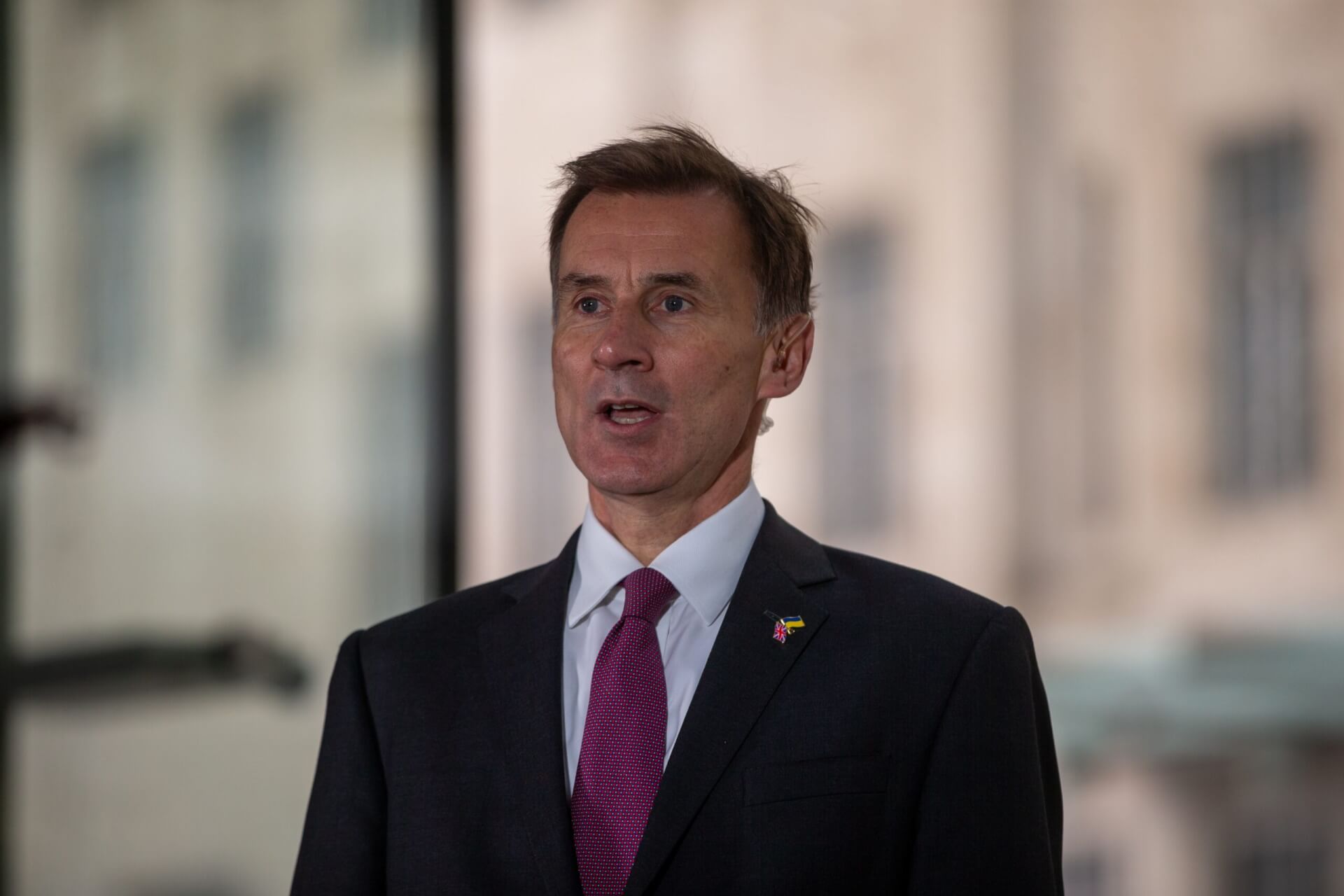
However, they cautiously welcomed the measures on business rates announced by chancellor Jeremy Hunt in the recent autumn statement, albeit with caveats. In his speech to the House of Commons and in supporting documents, Hunt announced that the planned business rates multiplier increases will be scrapped and the multipliers, which set out how much rate payers will be charged for every pound in rateable value, will instead be frozen between 2023 and 2024 at 49.9p and 51.2p, thereby preventing them from increasing in line with inflation. According to the government, that amounts to a tax cut worth £9.3bn over the next five years.
Hunt also announced that transition measures for rate payers who see their bills fall at the next revaluation, due in April, will be abolished. Instead, ratepayers will see reductions to their rate bills immediately. Previously, the rates collected from downwards transition were used to limit the increase for those seeing their bills going up. That will now be funded directly by HM Treasury.
Furthermore, the current relief for the retail, hospitality and leisure sectors will be extended and increased, from 50% to 75% with relief available of up to £110,000 per business in 2023 to 2024. The government said that around 230,000 properties would be eligible to receive this increased support, worth around £2.1bn.
Experts were quick to praise the plans. “It is a massive relief that the government has finally listened to us and other industry bodies about out-of-control business rates rises following the next revaluation,” says John Webber, head of business rates at Colliers. “By removing any downward transition, the government has finally recognised that the business rates system cannot be revenue neutral without causing significant hardship.”
He adds: “Rates bills for those in the troubled retail and hospitality sectors should now reflect the economic situation and drop in rents that we have seen in the market. Freezing the multiplier is a big positive. Businesses now will be able to sensibly plan ahead for 2023.”
Mike Flecknoe, head of rating UK at Cushman & Wakefield, agrees. “The decision to freeze the multiplier and abolish downwards transition in the upcoming revaluation of business rates are the early Christmas presents many businesses needed, easing the overhead pressures facing struggling occupiers, particularly those in the retail and hospitality sectors,” he says.
“Abolishing downwards transition will ensure the companies that are due to pay less business rates next year will feel the benefit straight away, rather than phasing in their reduced liability in stages. In the past, downwards transition has meant that struggling businesses have effectively subsidised those expected to pay more.”
Some experts are more circumspect, however. James Shorthouse, Colliers’ head of alternative markets, welcomes the extra relief for retail and hospitality, but adds that the autumn statement as a whole failed to address the wider crisis facing the sectors post-pandemic. “While the business rate relief promise will be a welcome relief to those in the hospitality sector, that is only one of the many challenges that the industry is facing,” he says.
“The cost of energy is also a significant pressure point – and the government gave no indication of any support being made available for those facing eye-wateringly high energy bills. Recruitment remains an ever-present problem, and whilst the increase in the National Minimum Wage may put more money in customers pockets, it also adds to the operating costs of a hospitality business.”
Others note that the government had no choice but to act. Jerry Schurder, business rates policy lead at Gerald Eve and one of the government’s most acerbic critics, acknowledges the upsides of the government’s announcements, but points out that inaction would have led to high street Armageddon. “Until today’s intervention, businesses were worried their rates bills would be going up 10.1% next year in line with inflation – the biggest jump in 32 years – so, they will be delighted that this won’t happen,” he says.
He also argues that the autumn statement failed to live up to the Conservatives’ 2019 manifesto promise to “cut the burden” of business rates. “Instead – as the OBR [Office for Budget Responsibility] forecasts reveal – rates revenues are going to rocket from £31.7bn in 2019/20 to £35.2bn in 2024/25,” he says.
“While a one-year freeze is better than a fully [inflation] linked increase, businesses will be appalled that the chancellor presents this as a ‘cut’ in business rates. It is plainly nothing of the sort; it is just a smaller than possible increase in an already grossly excessive tax. The government has broken its 2019 manifesto promise to reduce business rates and if the chancellor hopes to fill the [fiscal] ‘black hole’ he will need a thriving high street and not a derelict one.”
So, while the government has, to an extent, listened to the howls of anguish from high street businesses, the consensus is that it has been cute in using the word ‘cut’ and that it could, and should, have done a lot more to address more fundamental issues relating to business rates – not to mention many other challenges facing the leisure and hospitality sector.


Building climate resilience into office conversions