
This Christmas will be a make-or-break trading period for some retailers. In November, the sector received a shot in the arm with the publication of the new rating list for England and Wales, which will slash business rates by 10% come 1 April next year, but it will be too little too late for some. As we approach the end of what is usually the most profitable time of the year for retailers, there is mounting evidence that the sector’s woes are far from over. So, what’s going on?
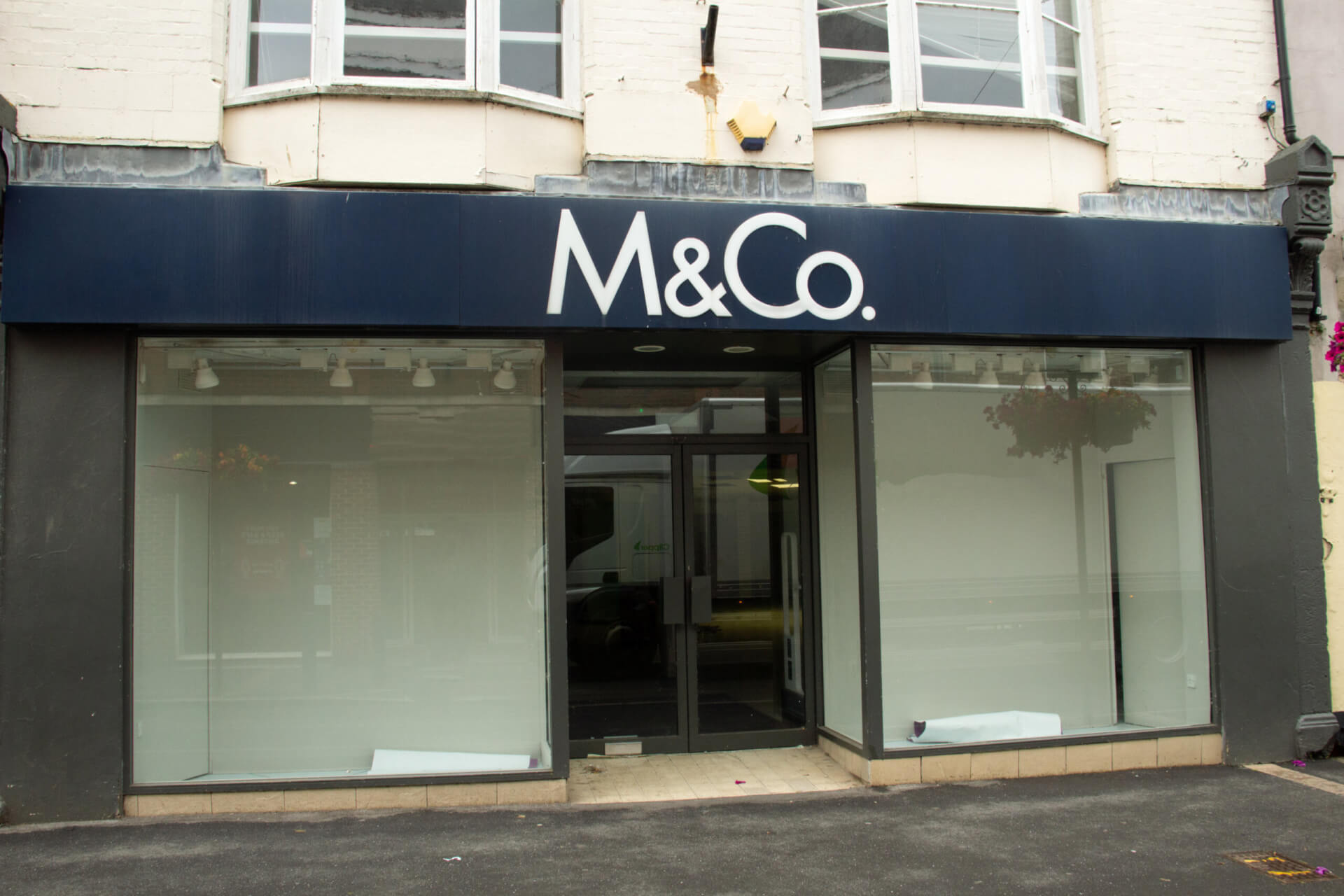
Earlier this month, clothing retailer M&Co appointed administrators after collapsing for the second time in as many years, putting at risk some 1,910 jobs. In a statement, administrator Teneo said: “Despite a very loyal customer base, particularly in local markets, and a well-recognised brand, the current economic outlook has placed increasing pressure on the company’s cash position.”
The news came after discounter Wilko reported a loss of £36.8m for the year to January 29 2022. “Last financial year was tough for retail and that has continued into this year,” said Jerome Saint-Marc, the company’s chief executive. “We’ve remained focused on cost control and driving sales, as well as making some material changes to the way we operate in the face of difficult trading over the past two years.”
Unfortunately, they are not the only ones struggling. Just last week, the Retail Think Tank (RTT), a partnership between KPMG and Ipsos, reported that retail continued to decline through the so called ‘golden quarter’ this year. It said that the health of the retail sector fell by a further two points in Q4 2022, putting the latest Retail Health Index (RHI) at 71 points in the final quarter of this year – a drop in Christmas trading not seen since 2011.
Despite consumer confidence growing throughout the quarter, RTT members concluded that conditions across the three drivers of retail health – demand, cost and margin – had continued to deteriorate from Q3 2022 into Q4 2022 as inflation and interest rates continued to climb, household incomes were further squeezed by rising utility costs and labour costs remained high. RTT added that the deterioration was set to continue into 2023.
“It has been a weak Christmas period so far for many retailers, particularly in the food sector which accounts for more than half of retail, and where high inflation and bad weather has not led to the uptick in grocery volumes that we would usually see at this time of year,” says Paul Martin, UK head of retail at KPMG.
“Margins have been under increasing pressure and for some retailers, such as those selling big ticket items, this has been unavoidable as consumers tighten their belts, whilst others with excess inventory have been forced to start promotions early and some are choosing to sacrifice margin to capture market share.”
He adds: “We can expect more consolidation and high street casualties as we head into the new year. It will be yet another tough year for retail and a case of survival of the fittest, but we expect to see demand increase as 2023 progresses.”
Challenging Q1 2023
Joe Marshall, managing director, customer experience and channel performance at Ipsos Retail Performance, agrees. “Off the back of weak Christmas trading, the sector is facing a very challenging opening quarter to 2023, with retail health expected to slide further, putting it on par with the opening of 2021 but without the business and employee support that was available in the Covid years,” he says.
“Despite inflation hitting lower income households the hardest, consumers across the board will become more considered with their spending as the year opens, which will have an impact on demand – the key driver of retail health.”
Speaking off the record, one industry insider suggests it will be wise to keep an eye on brands such as Matalan, which has faced debts of around £500m and whose founder John Hargreaves is currently in the midst of a battle to retain control of the company, and Peacocks. “It’s the sort of retailers that don’t mean anything to anybody – there’s no loyalty there – and that are easily replicable and just competing on price,” he says.
“It’s also about those companies that have got a lot of debt. Matalan is the obvious candidate for that – they’ve got a wall of debt. Getting [debt] refinanced at the moment is incredibly expensive, if indeed you can get it at all.”
He predicts that some of the more generic chain restaurants will also suffer as the UK heads into recession. “People will pull back on their spending and restaurants’ own costs, especially energy costs, are really starting to squeeze them,” he says. “With those chain restaurants, it’s not a special occasion, it’s not a birthday thing, it’s more about getting something after shopping or before the cinema. It’s highly discretionary.”
Of course, retailers and restaurants located in city centres especially can look forward to lower business rates in the near future and in some areas the savings will be substantial. London’s Oxford Street will benefit from a fall in rateable value of around 30%, while in Newcastle, the rateable value for stores on Northumberland Street, the city’s traditional retail centre, will see rateable going down by 36%.
However, the same cannot be said for local high streets, especially in wealthier areas, which experienced a surge in popularity during the pandemic and consequent rise in rateable values. In some areas, local businesses are actually facing increased business rate bills at exactly the same time as spending is expected to fall. Jonathan De Mello, founder and CEO at JDM Retail, worries that could hit smaller businesses hard.
“We’re starting to see fewer and fewer people using them again,” he says. “They’re seeing falling demand in relation to the fact that people are going back to the offices and spending less locally. On average, they’re facing a 4% increase in rates and they’re seeing rising input prices. The term ‘perfect storm’ is used too much but that’s what we’re seeing.”
The question is: how long will the storm last, which retailers will survive it – and which will not?



The demise of the REITs