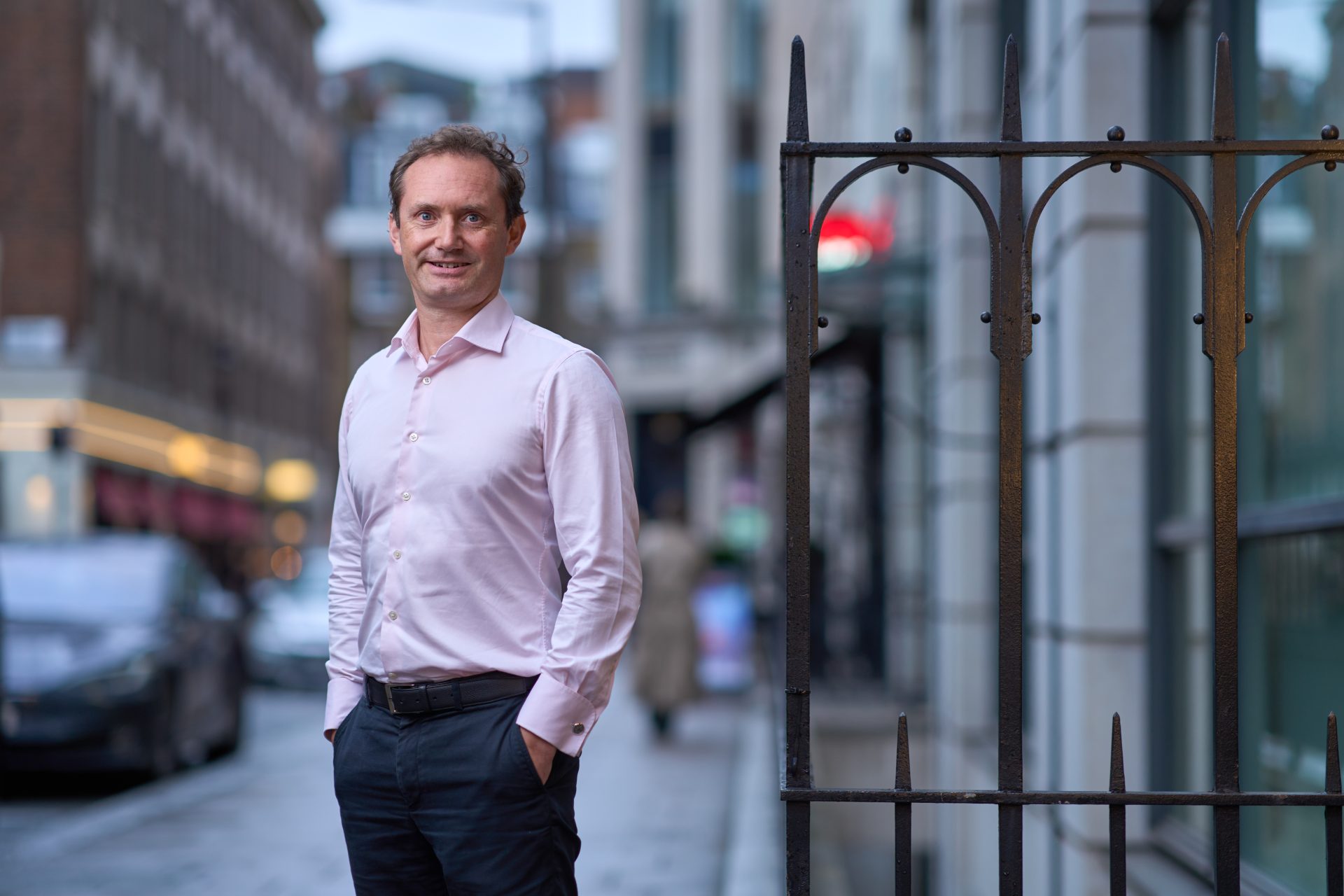
Name: Mark Kelly
Job title: Partner and chief operating officer, PLP Architecture
What I do: In my role as COO, I am responsible for shaping the business wide strategic direction of our global architecture and urban design practice, managing an incredibly talented and diverse team across our headquarters in London, and studios in Amsterdam, Tokyo and Singapore. I am also personally involved in the approach and design direction for a number of projects.
Why I got into the property industry: I wanted to be an architect from a very early age. My parents carried out a small extension to their house and I was fascinated by work that was carried out by the architect they hired. My father, who had nothing to do with the building industry, then encouraged my curiosity and at the age of 10 or 11 we spent a lot of time visiting buildings and I read everything I could about architecture in books and magazines.
How I did it: I focused on recommendations from the RIBA for O level and A level choices and also started working part-time for a local architect. I continued working part-time throughout my A levels and my first university degree at North London Polytechnic, where I was taught by a great architect called Florian Beigel. I then did my masters at the Bartlett School of Architecture at UCL, where I was lucky enough to be taught by Peter Cook, who I later went on to work with.
My first proper job: I completed my Part 2 in 1992 and there wasn’t much work in the UK, so I headed straight to Berlin where I stayed for almost three years. I was lucky enough to work for a young exciting practice called Becker, Gewers, Kuhn and Kuhn. We were all very young, but through lots of hard work won a number of very important competitions in Berlin, Leipzig and Dresden.
My first big break: After working in Berlin I came back to London and started working for KPF. I got to work with Lee Polisano who was running the London office and then I moved with Lee when he set up PLP.
My inspiration(s): I really enjoyed my time at the Bartlett – it was all about design with Peter Cook. He really encouraged you to explore your ideas and to draw everything. I was really into architects like Holt Hinshaw Pfau Jones, Lebbeus Woods, Hani Rashid and Mike Webb.
The biggest challenge I’ve encountered to date: PLP is on the cutting edge of architecture and urban design and in an increasingly challenging and competitive market we’re constantly innovating to keep ahead of the competition. Our focus on sustainability and technology is continually evolving to anticipate the needs of tomorrow and we’re investing in and encouraging the use of AI across our practice. We also set up PLP Labs, our in-house research and innovation group, to explore everything from AI and equitable cities, to mycelium blocks and automated vehicles.
My greatest achievement/proudest moment to date: I have had the great fortune to work on some amazing schemes and with some incredibly talented people. While it has been hugely rewarding to work on such high-profile PLP projects as One Bishopsgate Plaza and Cleveland Clinic, London, I would say that I am most proud when helping colleagues to develop their careers in architecture. It is incredible to witness a work experience student go through five years of architectural school and then develop their own flourishing career.
The biggest misconception people have about the property industry: That it’s resistant to change. The tide is really changing on issues such as diversity, environmental responsibility and behaviours. But as is the case with a lot in the built environment, things have moved slower than in other sectors and we have a lot of catching up to do. I am optimistic though and I think that the next generation of architects and designers will find themselves in a much more inclusive, responsible and ultimately resilient industry.
My biggest bugbear about the industry/the one thing I would change about the industry: There’s a lot to be done to improve the built environment sector – two big ones being that it lacks diversity and it’s a major polluter. But I think we need to start with increasing diversity to help us tackle this second more existential issue. As architects and designers our remit is to solve problems. We need more openness and a wider range of voices in the discussion to help us come up with more creative and innovative solutions. We also need greater cooperation and breadth of discussion within the wider industry between professionals, contractors, local authorities and the communities that we’re designing for.
Why I’m so passionate about DE&I: We live and work in some of the most culturally diverse cities in the world and as a global firm we are proud that, out of our 150 strong workforce, over half of our team is female, and we have people from 43 different nationalities, speaking more than 34 different languages. This diversity allows for a more inclusive approach to our design that recognises our global reach and respects cultural sensitivities. It allows us to be more creative through our approach to problem solving and, we believe, gives us business advantages as well. DE&I is essential for us to create spaces that are well designed, functional, beautiful and accessible to all. I’m incredibly proud that PLP has been recognised as one of the top three UK practices for diversity and inclusion. But we understand that there’s much more to do. As part of this, we’re engaged with groups like Real Estate Balance and have one of our team on their NextGen committee helping to drive positive change for the industry.
Where I’d like to be in five years’ time career-wise: We have a global reach that we want to extend and grow. Our ambition is to drive that global growth through our approach to architecture and urban design that encourages technological innovation and a better relationship between people and planet.
Who I’d invite, living or dead, to a dinner party: Nicholas Hawksmoor, Vitruvius, Le Corbusier and Peter Cook.
What I do in my downtime: I like to think I am fairly active. I play the piano very badly and I also cycle and horse ride. There is barely a day that passes where I am not wearing some form of head protection!
The job I’d be doing if I was not doing this: I am pretty good at DIY. I think I might have ended up as a painter/decorator.
My advice for someone just starting out: Be passionate about your chosen career path and keep working hard to achieve your goals. This industry is in desperate need of people who are passionate, creative and who have the tenacity to succeed.
My motto/mantra: There is always more to learn.