To celebrate International Women’s Day 2026, which takes place on 8 March, BE News is running a series of interviews with inspirational women who work across the built environment sector
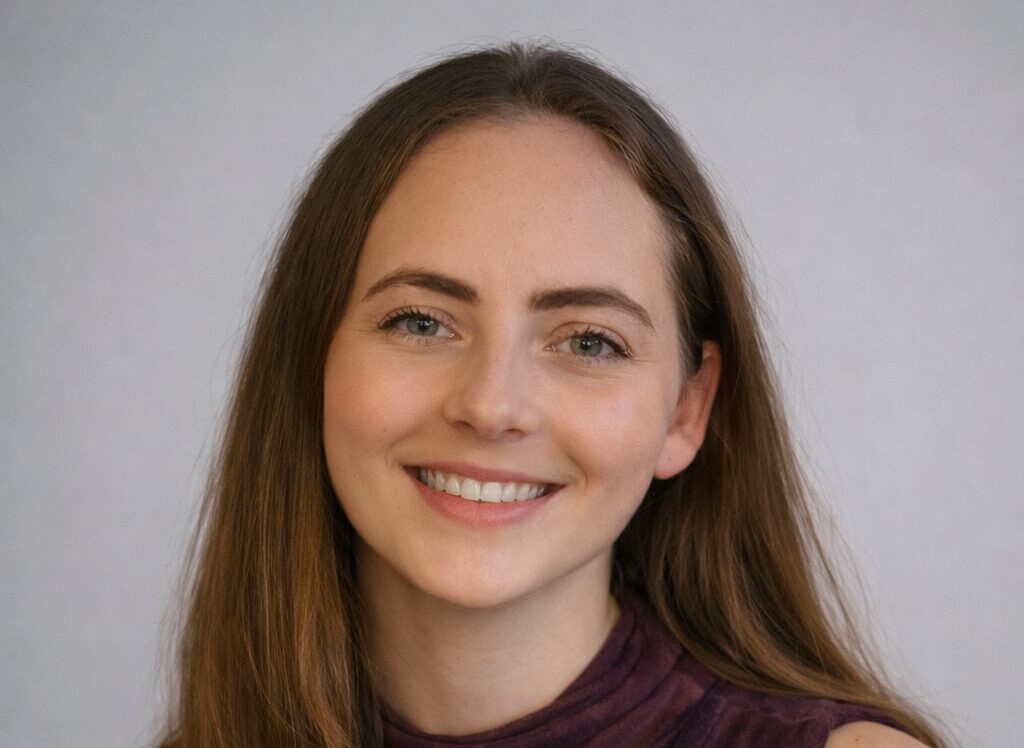
Name: Sophie Simpson
Job title: Associate director for the sustainability team at Cundall
What I do: I help clients create better, more sustainable buildings, better for both people and the planet. When I first started in the industry, my work focused primarily on building physics: helping design buildings that complied with regulations and performed well operationally. Since then, the sustainability agenda has expanded dramatically.
Today it spans operational energy, certification, whole-life carbon, climate resilience, circular economy principles, health and wellbeing, and ESG. I now lead a multidisciplinary team that supports projects across all of these areas. Our role is to help clients design buildings that perform well for occupants while reducing environmental impact and remaining resilient long into the future.
Why I got into the property industry: I originally studied product design engineering at the University of Glasgow and the Glasgow School of Art. During my degree, I was introduced to early sustainability thinking through authors such as Viktor Papanek (Design for the Real World) and William McDonough (Cradle to Cradle). Their work made me realise that design carries responsibility. The things we create influence how resources are used and how people experience the world around them.
Through my final year project, I also became interested in the health implications of the environments we inhabit. That shifted my focus from product design towards buildings. Given that we spend up to 90% of our time indoors, the spaces we create have a huge influence on wellbeing, productivity and environmental impact. That felt like a meaningful place to focus my career.
How I did it: I started my career as a building physicist within an engineering consultancy and gradually expanded my focus as the sustainability agenda evolved. Over time I’ve worked across industry and academia, which has given me different perspectives on how research, innovation, policy development and real-world projects interact. Latterly, I’ve had the opportunity to build and lead a multidisciplinary sustainability team in Scotland, supporting projects across operational energy, whole-life carbon, climate resilience, circular economy and health and wellbeing.
My first proper job: My first proper job was as a building physicist. At the time, the role focused heavily on compliance and making sure buildings performed as intended. I’m still grateful I got the job, particularly given that during the interview I managed to mispronounce the majority of the projects the company had worked on (sports venues clearly weren’t my area of expertise). Fortunately, they seemed to appreciate the effort I’d put into researching the company and how keen I was to work there and decided to take a chance on me anyway.
My first big break: As the sustainability agenda began to expand across the industry, I had the opportunity to help grow and lead a sustainability team in Scotland. It meant moving beyond traditional building physics into a much broader range of services – from operational energy and whole-life carbon to circular economy strategies and climate resilience. That shift was a defining moment in my career because it allowed me to help shape how sustainability is delivered across projects rather than focusing on a single technical discipline.
My inspiration(s): I’ve been influenced by a mix of thinkers and people I’ve had the privilege of working alongside. Writers such as Viktor Papanek and William McDonough shaped my early understanding of responsible design. More recently, I’ve found the work of Hannah Ritchie particularly refreshing. At a time when conversations around climate can feel overwhelmingly negative, her work highlights the environmental progress we often overlook and reminds us that meaningful change is possible.
I’ve also been fortunate to work with some brilliant mentors. Professor Gabi Medero in particular showed me what is possible as a woman in engineering while balancing a demanding academic career alongside family life.
The biggest challenge I’ve encountered to date: One of the biggest challenges has been making the case that sustainability is not a “nice to have” or a variable to consider relative to the geopolitics of the day, but a fundamental part of how buildings remain viable in the future. Energy is a finite resource and the price volatility we’ve seen in recent years, particularly following the Russia-Ukraine crisis, has made that very clear. At one point, UK electricity prices almost doubled and today our commercial electricity costs remain among the highest in Europe.
Despite this, projects are still often judged on short-term capital costs rather than long-term performance. In reality, improving the energy efficiency and resilience of buildings is an investment in capital maintenance. It helps protect asset value, attract investment and occupiers, and reduce exposure to risks such as volatile energy prices and the growing impacts of climate change. The challenge is shifting the conversation from upfront cost to long-term value.
My greatest achievement/proudest moment to date: During my time working at Heriot-Watt University, I had the privilege of being involved in several fascinating research projects. One that particularly stands out is the early development of the K-Briq with Gabi Medero and Sam Chapman. My involvement was only a small piece, very early in the journey, but it was incredibly interesting to see how a completely new construction product moves from research through to certification and commercialisation.
Most of my career has focused on buildings themselves, so it was a rare opportunity to step back into my product design roots and think about the materials and manufacturing processes that sit behind construction. Watching the K-Briq go on to achieve industry recognition and begin to be used at scale has been fantastic. It’s exciting to see an idea you encountered early on evolve into something that could genuinely change how we build.
The biggest misconception people have about the property industry: That sustainability is an optional extra or something that can be added at the end of a project if budget allows. In reality, the performance of a building, in terms of energy use, resilience and occupant wellbeing, is shaped by decisions made right at the start. When sustainability is considered early and properly integrated into the design, it becomes part of how a building performs and retains value over time, rather than an additional ‘bolt-on’ feature that costs extra and brings limited value.
My biggest bugbear about the industry/the one thing I would change about the industry: One of the biggest misconceptions is that sustainability requires an “all or nothing” approach, that everything must be replaced immediately to meet new standards. In reality, that isn’t always practical, affordable or even environmentally beneficial. Many buildings contain systems that still have useful life left in them, and replacing them prematurely can create unnecessary waste.
A more effective approach is to take a considered, long-term view. By aligning sustainability improvements with facilities management plans, systems can be upgraded at the end of their natural lifecycle and replaced with more efficient solutions. These step changes may not feel dramatic, but they are often the most realistic and achievable way to make meaningful progress. With careful planning, buildings can gradually transition to better-performing systems while managing cost, disruption and environmental impact.
Why I’m so passionate about DE&I: I’m passionate about DE&I because inequality often becomes embedded in systems in ways we don’t immediately notice. A well-known example is healthcare research, which historically focused largely on male physiology because it was seen as “simpler” to study. We now know that this has had real consequences, from differences in how medications affect women to heart attacks and strokes sometimes presenting with different symptoms that weren’t widely recognised.
It’s a reminder that when certain voices or perspectives are missing, the systems we design can unintentionally fail the people they’re meant to serve. The built environment is no different. Diverse teams bring different experiences and ways of thinking, and that ultimately leads to better decisions and better places for everyone.
Where I’d like to be in five years’ time career-wise: In five years’ time, I’d like to be helping shift the conversation around sustainability in the built environment. Too often we still treat it as a separate discipline or a compliance exercise. In reality, it sits at the heart of how buildings perform and retain value over time. Energy, health, climate resilience and asset performance are all connected, yet we still tend to address them in isolation.
What excites me is helping clients step back and look at the bigger system. When those connections are made, sustainability stops being a constraint and starts becoming a strategic advantage – shaping buildings and places that are better for people, more resilient to future risks, and ultimately more valuable in the long term. (And that’s my pitch to get us on board as a sustainability champion on your project.)
Who I’d invite, living or dead, to a dinner party: This question has been the hardest to answer because there are several people I would love to meet and share a meal with. Probably David Attenborough, Sanna Marin (or Jacinda Arden), Ada Lovelace and then Emma Thompson (or Olivia Coleman).
What I do in my downtime: My two boys are full of energy and keep me very busy, so a lot of my downtime revolves around family life. That said, I love being outdoors and going for long walks. As much as I love my family, I’ll admit that child-free walks at my own pace are a rare and much-appreciated luxury.
The job I’d be doing if I was not doing this: Probably something involving data analysis. I enjoy the logic and pattern-finding that comes with working with data, and I’m fascinated by people who combine analytics with visual storytelling, such as Federica Fragapane. Anyone who knows me will also know that I’m quite happy disappearing into a spreadsheet for hours (yes, it’s my happy place).
My advice for someone just starting out: There are no wrong decisions on your career path. Every decision is made with the best information you have at the time, and every experience contributes to your development. Many of the moments that feel uncomfortable or uncertain are actually the ones where you’re learning the most. Feeling outside your comfort zone doesn’t mean you don’t belong, it often means you’re growing.
My motto/mantra: Make the best decision you can with the information you have – and keep learning.