
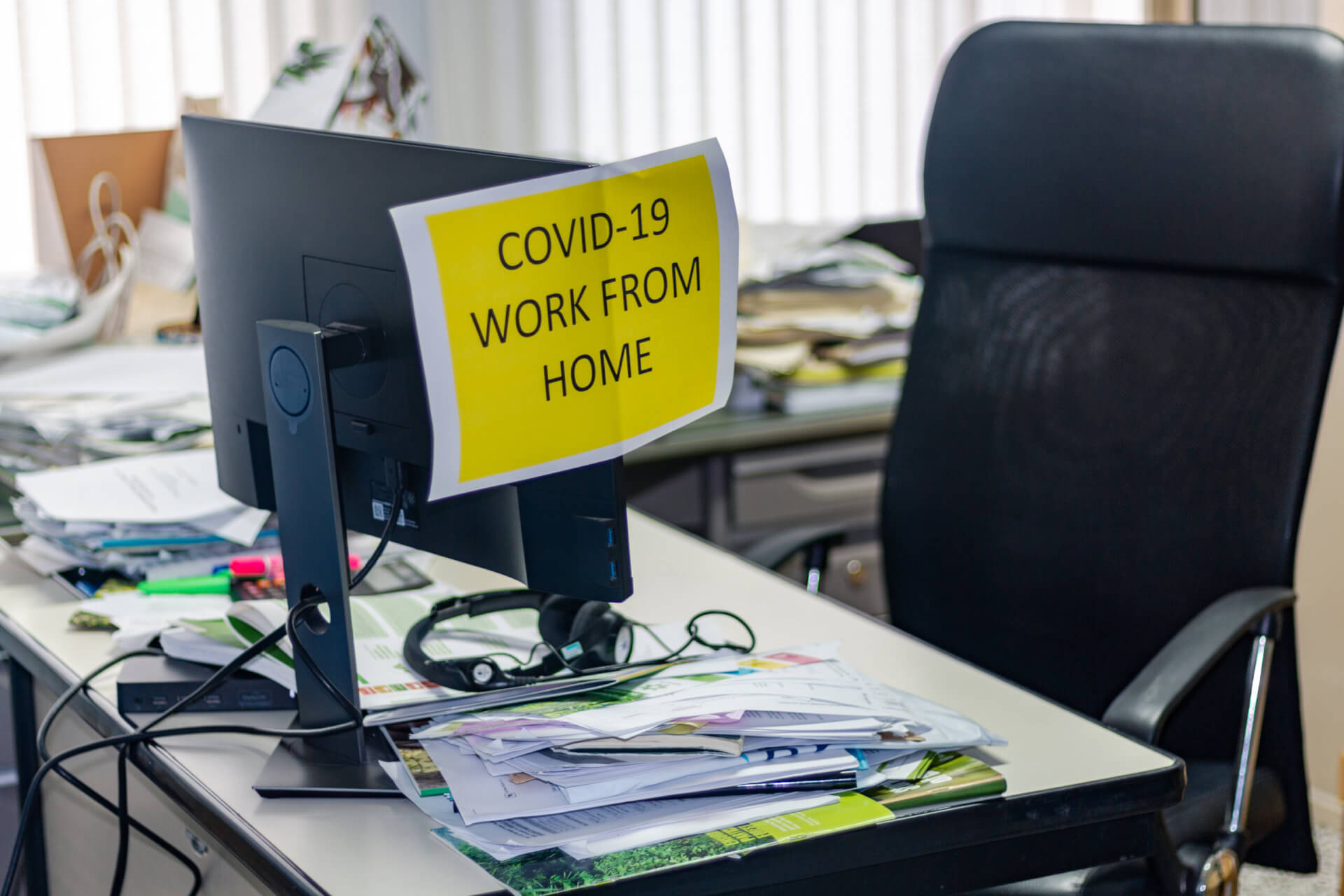
“Go to work if you must, but work from home if you can.” So declared then prime minister Boris Johnson in December 2021 as the Covid-19 Omicron variant swept across the country. Little more than a month later, on 19 January 2022 – a year ago today – the “work from home” guidance was abolished in England.
Many political and business leaders hoped everyone would forget the experience of the previous two years and head straight back to the office. Famously, Jacob Rees-Mogg, the now former minister of state for Brexit opportunities and government efficiency, left passive aggressive notes for civil servants, stating: “Sorry you were out when I visited. I look forward to seeing you in the office very soon.”
In the private sector, meanwhile, Goldman Sachs CEO David Solomon had long made clear his distaste for remote working, describing it as an “aberration”. Yet, here we are, 12 months on from the guidance being dropped, and many people are either only working Tuesday to Thursday in the office, or not going in at all. Very few have reverted to the old five-days-a-week norm. So has the world of work changed for ever or will the three days soon enough turn into four and even into five?
At the height of the pandemic, for every office zealot like Solomon, there was a “doomster and gloomster” predicting the death of the office, if not entire cities. The reality of the situation – at least for now – is somewhere in-between, with most white-collar workers heading into the office for a few days a week and working remotely for the rest of the time.
For the most part, this seems to have been accepted by managers. JLL’s latest poll of more than 1,000 “corporate real estate decision makers” found that prior to the pandemic, 45% of employers refused to offer any form of hybrid working, compared with just 9% now.
It also revealed that most companies have no intention of forcing their employees back into the office five days a week, with 53% of decision makers saying they will make remote working permanently available to all employees by 2025 and 77% agreeing or strongly agreeing that “offering remote/hybrid working will be critical to attracting and retaining talent”.
Of course, these are only the headline numbers; attitudes vary across different sectors of the economy. In property, for instance, there is a sense that people need to set an example by getting themselves back into the office and into city centres. Many firms, after all, have a vested interest in the office market bouncing back.
But even within property, the situation varies remarkably. BE News, for instance, recently visited the Scottish HQs of two of the UK’s biggest advisory firms within the space of a couple of hours. One was a hive of activity, the only person in the other pretty much was the boss.
Others are openly embracing a mixture of office and remote working and don’t see any reason to return to pre-pandemic norms. “We’ve settled easily into a hybrid pattern, with more flexibility and time for focused work on Mondays and Fridays and the middle days set for meetings and collaboration in the office,” says Victoria Thompson, HR director at Montagu Evans.
Hybrid challenges
The new hybrid way of working hasn’t been without its challenges, but it allows most employees to enjoy the best of both worlds, she adds. “It has meant more discipline around workloads and calendars, but by and large we have a sociable culture and people have been enjoying working together in person again,” says Thompson.
“Workwise, those most affected by lockdown have been our younger generations. At that stage, everyone progresses more by seeing and hearing what’s happening around them and they have missed that interactivity with their peers and partners during a crucial time.
“Home working may be here to stay, but our teams want to be back in the office too and we’ve worked hard to try and help everyone achieve a balance that’s right for them.”
Elliott Sparsis, head of UK at meetings, events and workspace provider Convene, which recently launched a new venue in 22 Bishopsgate in the City, agrees. “Individual work can be done anywhere, but to get the most out of working within a team requires face-to-face interaction and purpose-built meeting and social spaces with the tools and amenities that inspire collaboration,” he says.
“There is a kind of magic that happens when you bring people together that can’t be replaced by technology or Zoom.”
It is a message that resonates with David Cuthbert, principal at Hanover Green, who adds that most of those in the firm’s retail group have also returned to the office to be close to their clients.
“I think there are a lot more people back in the office now, at least some of the time,” he says. “But it’s probably quite a small percentage that are there nine to five, five days a week.”
So, the broad-brush picture is that most people are once again working in the office, but not all week. The new norm has already had – and will have for the foreseeable future – a big impact on the office market. According to Cuthbert, it is common when clients come to the end of their lease or reach a break clause to find them wanting to downsize, albeit normally to higher quality, more ESG-compliant premises.
“We’ve seen a lot of people who have, say, 20,000 sq ft and decide that they only need 10,000 sq ft because they haven’t got everyone in the office all the time,” he says. “Rather than have 20,000 sq ft at [their current] location and rent they move everyone to a better location and take a better building with better sustainable credentials. They’re happy to pay more for it because their overall costs are still roughly the same.”
Cuthbert speculates that some companies may yet decide they have overdone the downsizing. People could get back into the habit of working in the office and start increasing the amount of time they spend there, not least to avoid the ruinous costs of heating their own home 24/7.
“I’m just waiting for people to ring up asking: ‘We took 10,000 sq ft off you last year, but is there any chance we could have a bit more because we’re a bit tight?’,” he says. “I think employees might think: ‘Actually, I quite like being in the office, especially if I can get some company and I don’t have to run the heating and lighting at home while the costs are high’.”
That is if they can get into the office amid the ongoing train strikes. This year could see a tug of war, with factors like the strikes and appeal of WFH weakening the pull to the office, while the cost-of-living crisis and soaring energy costs strengthen it.
A year from now, people might be working three days a week in the office or four. Then again, a resurgence of Covid or some other crisis could push them back to WFH. The workforce will adapt quickly. Landlords and employers will need to as well – and, in the meantime, they will need to plan for every eventuality.



AI’s biggest opportunity in housebuilding isn’t the brochure, it’s the build