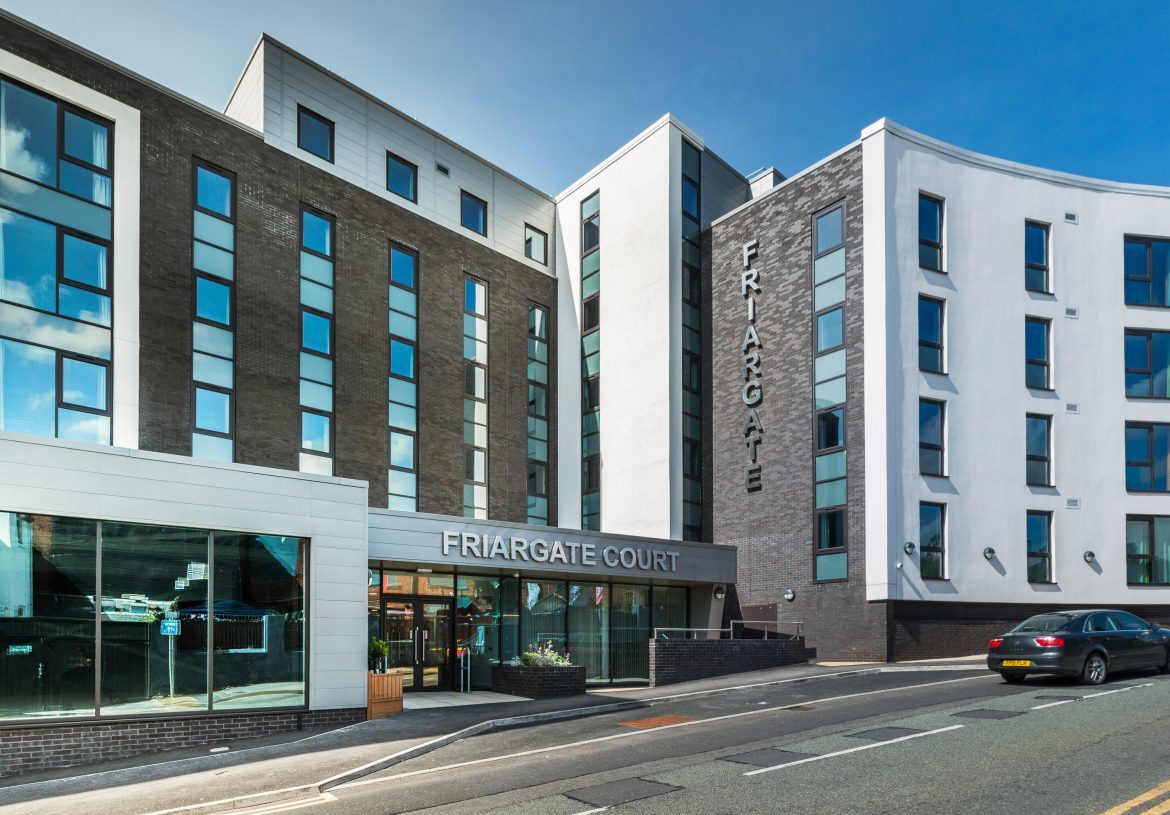
BE News asked industry leaders to share their thoughts on the challenges and opportunities for their businesses, sectors and the wider built environment in 2023

Vivienne King
Head of real estate social impact
The Good Economy
The built environment is inextricably linked to the people in its communities and the current level of social turmoil is serving as a stark reminder that we can’t operate in isolation to what’s happening outside our front door.
Yet there are reasons for optimism. Last year saw sharply rising social awareness within our industry, with a sense of people-centred responsibility extending beyond asset boundaries to build healthier, safer and more inclusive communities.
Related Argent launched a new neighbourhood park at Brent X Town, Grosvenor published its social impact strategy and Lendlease published its first social value report – just three examples demonstrating that what was once a trickle of interest in social value has increasingly become a surge, as the industry defines success in terms of social and environmental outcomes, alongside financial performance.
Maintaining this momentum in 2023 and beyond isn’t necessarily straightforward. Integrating social and environmental impact considerations into strategy and real estate development and management requires leadership commitment and a culture in which non-financial outcomes are considered as important as financial outcomes by boards, management and delivery teams. Common frameworks struggle to fully define and measure social impact, but rigorous policies, processes and systems must be in place to legitimise claims or ‘impact washing’ is a real risk.
Nevertheless, the will is there and by applying ourselves today – positioning outcomes for local people and planet as business critical to healthy and sustainable places – we can create a more inclusive and resilient built environment for tomorrow.

Oscar Brooks
Founding director
Moda Living
Last year shone a light on the dismal state of the UK’s private rental market, with dwindling supply and rising prices stopping people across the country finding the homes they want and need. In 2023, high quality, institutionally funded rental markets such as BTR and single-family rental will take another step to closing this gap in the market by supplying modern, sustainable homes at a range of price points to meet the spectrum of requirements across the UK. Operators will also continue to monitor the effect of the cost of living crisis on both residents and team members. Continuing to monitor health and wellbeing around the rising cost of living will remain crucial even as we leave the winter months behind.
The cost of living increases have also put energy efficiency in the spotlight, with consumers more aware of this when choosing where to live. The UK’s housing stock is woefully unprepared for this shift, with just 60% of homes expected to meet an EPC “C” rating by 2028. This will be at the forefront of the minds of the residential sector this year and beyond as we strive to hit our own sustainability targets and the government’s net zero ambitions for 2050.
For Moda specifically, this year we look forward to working with new partners and investors to continue to diversify our rental living portfolio, in a market that still has so much untapped value and potential. We are excited to keep growing our 20,000-home pipeline and amazing team to create best-in-class homes, which put well communities, leading technology and exceptional service at their heart to deliver an outstanding rental experience across the UK.

Jo Cowen
CEO
Jo Cowen Architects
2023 will be a difficult year as we await stabilisation of interest rates later this year following the impact of ‘Truss Tumbles’ at the end of 2022. We are teetering on a shallow recession in the UK, with similar trends emerging in Europe. Whilst there remains a high demand for the best quality housing and office space, the land market hasn’t moved to accommodate the base rate rises and subsequent impact on viability, slowing acquisitions. This is further coupled with the ongoing issues within the construction industry due to the impact of labour shortages and price inflation.
This will be a year of ‘specifics’, with particular assets and sectors likely to outperform the market. The ESG credentials of buildings and developments will become increasingly more important, especially in targeting lower cost of capital. The conversion market and adaptive re-use of brown to green assets will no doubt outperform the whole market and provide interesting opportunities.
While BTR rental growth remained strong in 2022, this is likely to continue only in London and key prime sites across the UK. Major regeneration and long-term development plays will ride this out, with singular re-line assets most at risk. Those investors will need to be flexible to re-appraising sites as potentially different asset classes. If we see a relatively quick reversal of policy within the Bank of England and the central banks, we will hopefully see a swift growth in the real estate arena. What we need most is the whole market to remain positive, avoid the knee-jerk reactions seen in Q4 2022, and continue cautiously, flexibly and creatively.

Guy Windsor-Lewis
Chief executive and founder
Locale Group
At company level, we need to learn to adapt to the ways of working and doing business differently. The commercial real estate sector has changed from the traditional Mon-Fri, nine-to-five working patterns to a now-established flexi Tues-Thurs office days. Our clients are working differently, our staff are working differently and our platform has adapted over the last three years to reflect this shift. It’s time for real estate to wake up and smell the roses. It also means achieving more than simply surviving another period of economic uncertainty.
With 90% of real estate relatively untouched by any kind of digitalisation, demonstrating that tech can deliver tangible value for multiple stakeholders at different stages of a property’s lifecycle and not just those with huge service charge budgets is vital to the future success of proptech.
Shiny, expensive nice-to-have products won’t cut it. We are making it our mission to demonstrate that tech is affordable, accessible and a necessity. There is no need to charge the earth in a recession especially when occupancy rates are low. There is more than enough innovation already out there for the vast majority of real estate.
As with tech, the noise around the importance of ESG has reached fever pitch. The issue is that adoption is sluggish in both. While it’s difficult to implement long-term change when the government has a spinning door on housing ministers, the built environment is the foundation of communities and steers so much of the way we live, so it’s time to stem the policy haemorrhaging and create those connected communities we deserve.

James Sparrow
Chief executive
Savills UK & EMEA
Despite rising interest rates and the cost of debt suppressing volumes and returns in late 2022 and early 2023, continued occupier demand for prime high quality, highly rated sustainable offices and warehouses should still deliver rental growth.
UK commercial prime capital values are likely to reach their nadir early summer, as opportunistic buyers call the cycle; investors following structural trends will become comfortable that the UK’s occupational dynamics have not materially changed.
A weak consumer environment will soften logistics occupier demand from previous peaks, but long-term structural trends support future demand for logistics and manufacturing space. Investors in prime mid-box logistics development delivered into an undersupplied 2024/5 may reap rewards.
Retail capital values were adjusting pre-2020, and therefore need less correction to reflect current base rates. H1 will be tough, but retail vacancy rates are expected to fall in H2, with rental growth in some sub-sectors.
Suburban and commuter high streets are likely to outperform given higher footfall. Retail warehousing is more exposed, given its dependence on big-ticket sales, but it should deliver some of the best total returns long term.
Lower office occupancy levels may see rising office subletting. However, given the lack of space with high environmental credentials, and a fall in speculative development, prime office rental growth remains deliverable.

Brigit Gerritse
Head of research & strategy
Redevco
Dwindling consumer spending power due to the energy crisis and runaway inflation mean retailers will need to focus more than ever on offering experience and entertainment – preferably free – to their customers in 2023 to maintain a positive connection with their brands. Bricks-and-mortar stores play a vital role in fostering that experience, but the digital space is equally important and a combination of the two remains essential.
Hospitality and leisure draw people to physical locations and, as an asset manager with a long history in retail, we are constantly on the lookout for opportunities to add new functions to the mix to create vibrant urban destinations.
We think there will be less of a need for big department stores in the future and are already re-purposing some of our own large retail assets. For example, we are transforming our former department store in Hamburg in Germany into a climate-neutral building offering a lively mix of functions including retail in the basement and on the ground and first floors, a restaurant on the ground floor and two complementary hotel concepts from the second to eighth floors.
Adding residential is another way of making our cities more sustainable and liveable. We are doing exactly that at a former department store in Groningen in the northern Netherlands where we are adding a timber construction on the top level of the building that will offer affordable rental apartments. As in Hamburg, we expect this mix of functions will have a positive social impact on the surrounding neighbourhood.
We think the changed economic environment following the recent spate of interest rate hikes will lead to repricing across all property sectors in 2023 including the retail estate industry. Rising borrowing costs will create stress among some leveraged landlords and generate new opportunities to buy obsolete properties that are ripe for redevelopment. Redevco will accelerate its mission in the coming year to transform our urban centres, to make them more inclusive and to carve out spaces for truly local brands, not just the big, international players who can normally best afford inner-city locations. There is plenty to do and we are open to new partnerships and forms of collaboration in 2023 where we can share our experiences, knowledge and expertise.

Gerald Kaye
CEO
Helical
I am going to stick my neck out to say that I do not believe this year will be half as bad as the gloomier pundits are suggesting.
We are now seeing inflation beginning to edge down and, assuming this trajectory continues, interest rate rises will tail off in the US and other central banks, including the Bank of England, will follow the Fed’s lead. A further fillip to confidence will come from some sort of settlement being reached in the horrendous situation in Ukraine as both sides become exhausted.
London remains a leading destination for overseas capital and I expect little further movement in yield for the best in class offices. Likewise, strong occupational demand for these assets will lead to rents continuing to rise .
On the other hand, yields will expand further to reflect the real value of poorer quality offices, which will be close to unlettable upon lease expiry. These buildings will be tomorrow’s opportunity.
Mark Allan
Chief executive
Landsec
Although we are still faced with challenges, we enter 2023 with optimism and ambition. New challenges provide opportunities and, as a business, there are three key areas where we can grasp them and drive positive progress. These are cities, carbon and communities. Bolstering the health and wellbeing of citizens will be essential in ensuring people feel proud of their local areas. Creating destinations of choice, which attract new families and talent, will ultimately fuel economic growth.
We need urgent but sustainable action to drive down built environment carbon emissions. Landsec has set out its progress to date and [outlined] how we are employing innovative new technologies to build a greener, fairer society that works for everyone. We now need government support to accelerate the net zero transition.
Strengthening communities is key for us as a business. We invest in, contribute to, and ultimately benefit from, the success of our cities. It is essential for us to create places that offer real opportunities for residents and visitors alike.

Dr Bonahis Oko
Head of sustainability
Soben
With the built environment accounting for 39% of global energy-related carbon emissions, there’s an urgent need for industry-wide transformation. A host of agreements made at COP27 in November, as well as the historic Global Biodiversity Framework agreed at COP15 in December, promise a year of optimism and transformation, but against a backdrop of uncertainty. In post-Brexit UK, the built environment will be watching with interest as the Retained EU Law Bill comes to an end, risking hundreds of environmental laws; as well as anticipating the impact of March’s net zero strategy review, following a High Court ruling in 2021.
Until all that is settled, businesses should already be preparing for mandatory TCFD reporting, requiring the largest firms to disclose climate-related financial information from April. Finally, October will see the introduction of new EU legislation on the import of high embodied carbon materials including cement, steel, aluminium and iron.
With so much change on the horizon, the challenge will be twofold: innovative collaboration, across the supply chain, and rapidly closing the green skills gap. It is imperative that in 2023 we come together as an industry to ensure we build the knowledge, skills and ways of working to shape a sustainable future.

Brian De’ath
Managing director of residential sales
Canary Wharf Group
In London particularly, the residential market is starting to feel the effects of projects that were delayed over the past three years due to the pandemic. Fewer building completions have limited the availability of high-quality new apartments, meaning where stock is available, demand has been, and will continue to be, high. This is a great opportunity for Canary Wharf, as our residential buildings have progressed as planned and these homes are available for people to move into now.

Susan Freeman
Partner
Mishcon de Reya
In terms of the challenges, judging by how long it has continued post lockdown, the debate around the future of the office is likely to carry on for some considerable time as we continue to adapt to ever-changing circumstances. It’s fascinating that Mark Dixon started Regus in 1989, to provides flexible workspace because he could see, at a time before mobile phones and the internet, that the property industry was inefficient and there was a really big gap in the market for the rentalisation of space. But it takes time for things to change. Covid has acted as an accelerator and shown us that we can work from different places, but it is 30 years since Dixon predicted people wouldn’t need to commute to an office to work, so we could be waiting some time for things to plateau.
As for the opportunities, there is an exciting renewable energy opportunity for the UK in offshore wind. The Crown Estate are leading the way in innovation in this area with their marine portfolio. CEO Dan Labbad recently described the UK’s offshore wind story as ‘the sustainability equivalent of creating a vaccine’. I believe we are second only to China in terms of offshore wind deployment, so this could be a real success story for the UK and one to watch in 2023.
Mark Dixon
Founder and CEO
IWG
It is 33 years since I started IWG in Brussels and in the life of every business, there are watershed moments that define the future. We are at a watershed moment today.
The biggest and most transformative growth we have ever experienced is starting to unfold as more companies move to hybrid working and this shift is having an equally transformative impact on the broader real estate industry. As we look ahead, here are three of the key themes that will continue to grow in importance:
Small towns boom, cities rethink
Studies increasingly show that people want to work near to where they live.
A recent IWG poll of Gen Z workers (who are set to make up more than a quarter of the global workforce by 2025) found that 85% want to be able to use an office close to home. In a separate IWG survey, 77% of workers said a place to work closer to home was a must-have for their next job move.
Companies are increasingly responding to employee demand for local working and adopting a ‘hub and spoke’ model – downsizing their main office and utilising satellite offices or flexible workspaces closer to workers’ homes. The trend is mirrored by the growing popularity of the 15-minute city, a sustainable planning concept in which work, home, shops, entertainment, education and healthcare are all within 15 minutes on foot or by bicycle from where we live. The growth of the neighbourhood office is in turn causing a tectonic shift in urban geography and demography.
The rise of the green lease
Sustainability is high on the agenda for companies worldwide, and hybrid is helping them to mitigate their real estate emissions. It’s been shown that buildings account for 40% of societal energy use and 33% of emissions, so real estate is a prime target when it comes to ways to reduce a company’s carbon footprint.
More and more property owners are upgrading their facilities to offer best in class sustainability features and more businesses are seeking to sign ‘green leases’, which allow owners and occupiers to work together to make buildings more sustainable and less environmentally harmful. Provisions in the lease typically cover issues such as carbon emissions, compliance with energy efficiency regulations, waste reduction strategies, and green transport measures.
The increased role of AI
Data analysis and AI are increasingly playing a role in making workplaces more efficient and solving the challenges thrown up by the new world of hybrid working.
Companies are gathering insights from multiple sources such as employee productivity and environmental data, which includes heat, noise, humidity and power usage to shape the office of the future, while minimising environmental impact.
Spatial intelligence platforms that use AI and intelligent sensors have been developed to help companies optimise the use of their space. By understanding which areas are being used and which are lying empty, workspaces and policies can be adjusted accordingly.
UK company GoSpace AI, conceived by an architect and a computer scientist, offers “the world’s first AI-powered connected workplace platform” that intelligently and automatically adjusts office space allocations to meet individual and team needs. Workers can use the app to see who is planning to go to the office and nudge others to join, and GoSpace automatically ensures there is space to work together.
AI is also improving the practicalities of remote working, and all the leading work and collaboration platforms have begun to utilise its benefits. Cisco’s Webex platform now uses ‘audio intelligence’ to make sure only relevant speech is heard on a video call, rather than barking dogs or leaf blowers, no matter how far the speaker is from the microphone. Webex also features real-time translation and closed captioning, allowing users to converse in more than 100 languages.
Advances in conversational AI are powering a new generation of chatbots that can offer IT help to remote workers. Gartner has predicted a 100% increase in implementation of the technology in the next couple of years.
Scott Harkness
Partner and head of commercial
Carter Jonas
The recessionary forces of the next 12 months will see increasing demand for optimum value extraction from real estate. As a number of corporates review their capital and income accounts they will need expert advice to unlock the opportunities found within their portfolios.
While the impact of new working methods will only add fuel to the need for a robust future proofed real estate strategy. The warmest year on record illustrated the impact property can play on our climate and our expertise in how we produce, use and can save building energy will prove itself invaluable.
I see the life science and innovation sector continuing to shine with occupational demand strengthening as new development product comes online. We can help facilitate the sector’s growth by providing the specialist property advice that is required as new firms emerge and expand.
At Carter Jonas itself there is also an opportunity to continue to grow our transactional capability while our strategic advisory business is well placed to inform on value/cost commitments at corporate decision making level.