
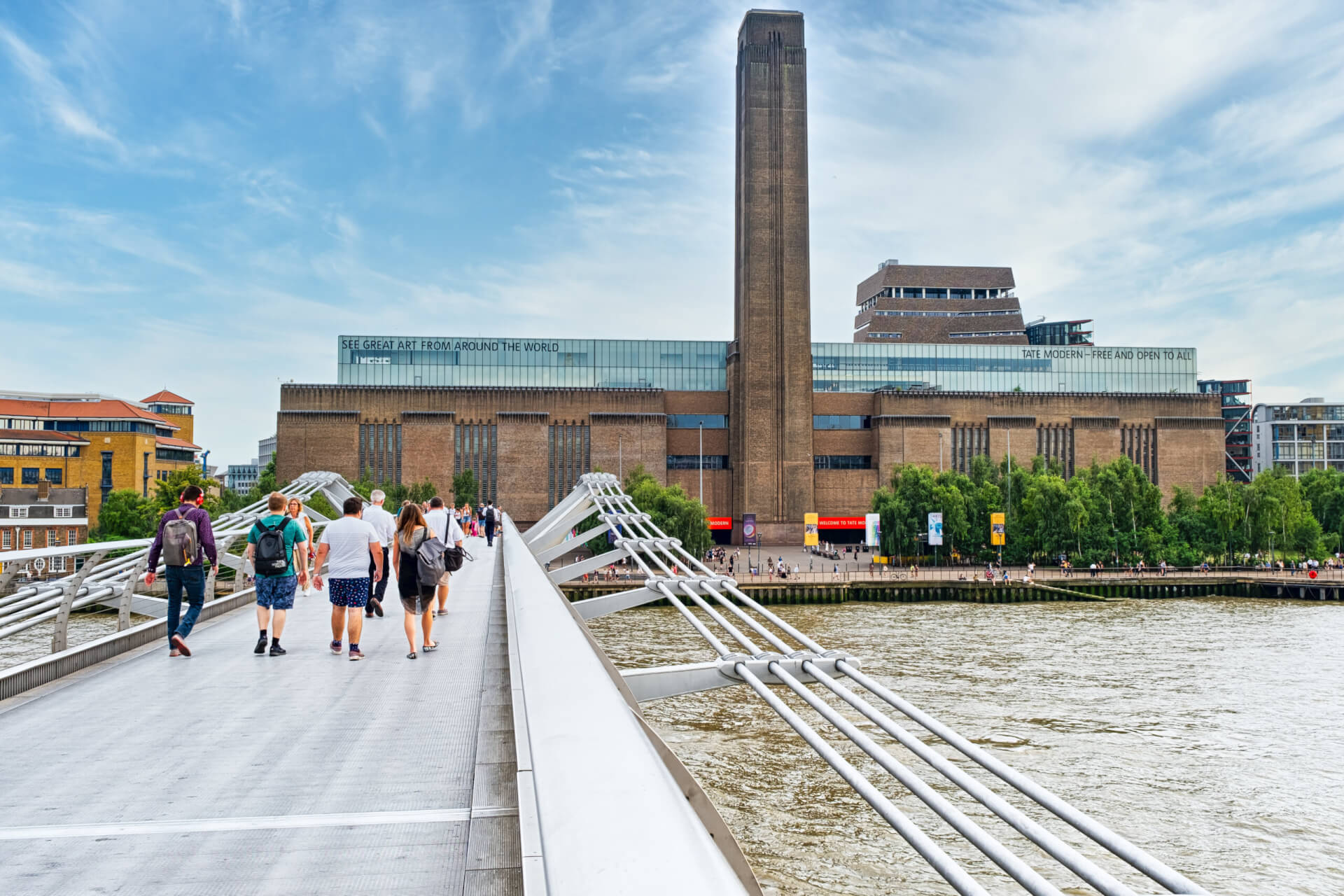
The Supreme Court has today found in favour of flat owners who complained that a viewing platform at the neighbouring Tate Modern art gallery created a ‘nuisance’ by allowing visitors to see directly into their homes.
In a case that could have major implications for development in dense urban areas, the trial judge found that a very significant number of visitors “display an interest in the interiors of the claimants’ flats”.
The Supreme Court added: “Some look, some peer, some photograph, some wave. Occasionally binoculars are used. Many photographs have been posted online.”
The dispute dates back to 2016, when the Tate Modern on the South Bank in London opened a 10-storey extension known as the Blavatnik Building, which has a viewing platform on its top floor that offers panoramic views of London.
The claimants in the case own flats in an apartment building neighbouring the Tate Modern that are around the same height as the viewing platform and have walls constructed mainly of glass, allowing visitors to see directly into the claimants’ flats.
At the time of the original trial in 2019, the viewing platform was open every day of the week and was visited by 500,000 to 600,000 people each year.
At that trial, the claimants were seeking an injunction requiring the Tate to prevent its visitors from viewing their flats from the viewing platform or alternatively to be offered an award of damages based on the common law of nuisance. Their claim was dismissed by both the High Court and the Court of Appeal.
Today, however, the Supreme Court, by a majority of three to two, allowed the appeal after considering the case for well over a year – a much longer than usual period of time.
“A nuisance is a use of land which wrongfully interferes with the ordinary use and enjoyment of neighbouring land,” the Supreme Court said. “To amount to a nuisance, the interference must be substantial, judged by the standards of the ordinary person.
“Even where there is a substantial interference, the defendant will not be liable if it is doing no more than making a common and ordinary use of its own land. What constitutes an ordinary use of land is to be judged having regard to the character of the locality, eg. whether it is a residential or an industrial area.”
Ultimately, the court ruled that the viewing platform did not constitute “common and ordinary” use of the land. “The benefit of land use to the wider community may be considered in deciding what remedy to grant and may justify awarding damages rather than an injunction, but it does not justify denying a victim any remedy at all,” it said.
The court concluded: “There are hundreds of thousands of spectators each year and many take photographs and post them on social media. The ordinary person would consider this level of intrusion to be a substantial interference with the ordinary use and enjoyment of their home.
“By contrast, inviting members of the public to admire the view from a viewing platform is not a common and ordinary use of the Tate’s land, even in the context of operating an art museum in a built-up area of south London.”
James Souter, partner at Charles Russell Speechlys, said: “Residents can throw away their net curtains after all. Today’s judgment is a landmark moment extending the law of nuisance to protect against visual intrusion.
“We’ve waited over three years for this decision and, having lost at the High Court and Court of Appeal, against all odds the flat owners have won the right to safeguard against an invasion of privacy in their homes.”
He added: “Looking ahead, it will be interesting to see whether this case triggers more property owners to make similar claims where they feel they are being over-looked. The Supreme Court has made it clear that the circumstances where the new law will be applied will be rare, but it did highlight issues around CCTV and sharing of images from camera phones on social media.”


