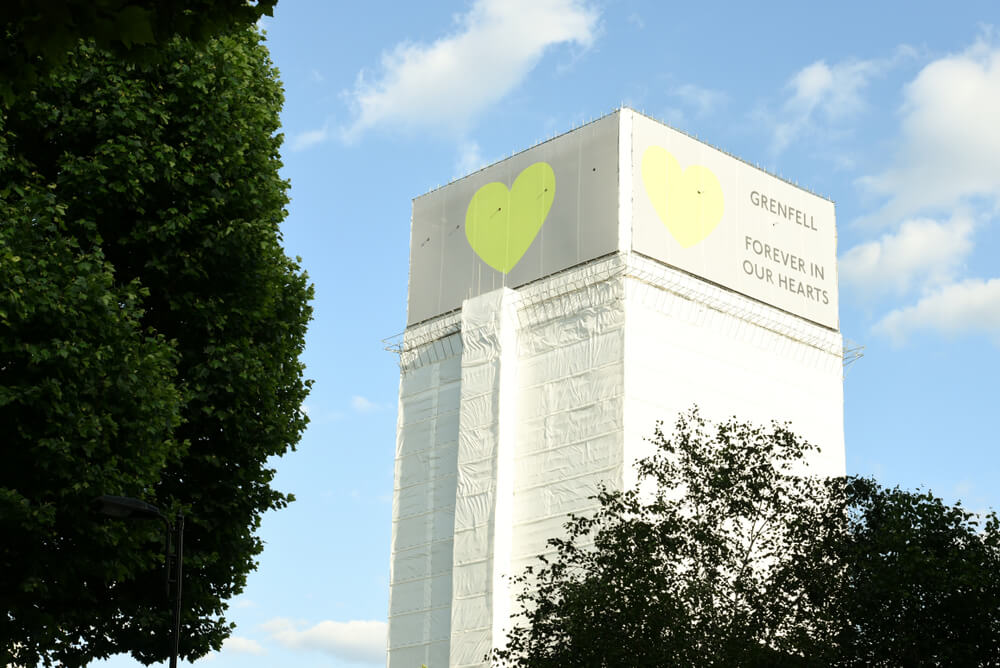
Eight years on from Grenfell, the government still does not know how many buildings have dangerous cladding, how much it will cost to remediate these buildings or how long it will take, reveals a damning report by the Public Accounts Committee (PAC).
In the report, which was published today (21 March), the House of Commons PAC said it was “appalled at the continuing emotional and financial impact of the crisis”, which may have affected as many as three million people.
The government published a plan at the end of last year, with a completion date for remediation work on all buildings over 11m, by 2029 – 12 years after the Grenfell fire. The PAC said it shared campaigners’ concerns that the plan, which will rely in part on new legislation, was both “insufficiently ambitious” and at risk of not delivering what had been promised.
Up to 7,000 unsafe buildings are yet to be identified, and the government has yet to find a way to secure financial contributions from manufacturers of dangerous cladding. The report also warns of insufficient capacity and skills across regulators, local authorities and the construction sector which risk undermining the plan.
The PAC is seeking a clear update from government on what is being done to address the gaps between its plan and what will be required to deliver it. It is also seeking a formal impact assessment of cladding remediation policy on housebuilding from government by the end of the year.
Sir Geoffrey Clifton-Brown MP, chair of the Public Accounts Committee, said: “The Grenfell tower fire will forever be a badge of shame for the nation. Residents were let down by failings at every level. A community was traumatised, and 72 lives were lost. Rightly, all in positions of responsibility have vowed to do everything in our power to prevent such a disaster ever happening again. But eight years after Grenfell, it is still not known how many buildings out there have dangerous cladding, and when it will be removed. That vow remains unkept for every day that is still the case.
“As a chartered surveyor, I take a deep personal interest in building safety. I was utterly appalled by the evidence given to our inquiry, showing residents still mired in the national cladding crisis, with no immediate solutions at hand. Leaseholders with modest financial means can often be left with potentially large financial liabilities, effectively rendering their property unsaleable.
“There are two main reasons for this – one, the non-cladding defects in buildings such as non-cladding defects, and two, where leaseholders also have a share in the freehold. That crisis shows signs of having a chilling effect on housebuilding overall, with social housing providers forced to divert resources to remediation rather than badly needed new homes. Despite longstanding promises to make industry pay, government has yet to find a way to secure this outcome.
“It would have course been the committee’s wish that this report carried better news for all affected. Unfortunately, we are united with campaigners in deeply regrettable scepticism that current remediation plans are capable of delivering on what’s promised. We would therefore urge government to look to the recommendations in our report, to help close the gap between their current plans, and the reality on the ground.”