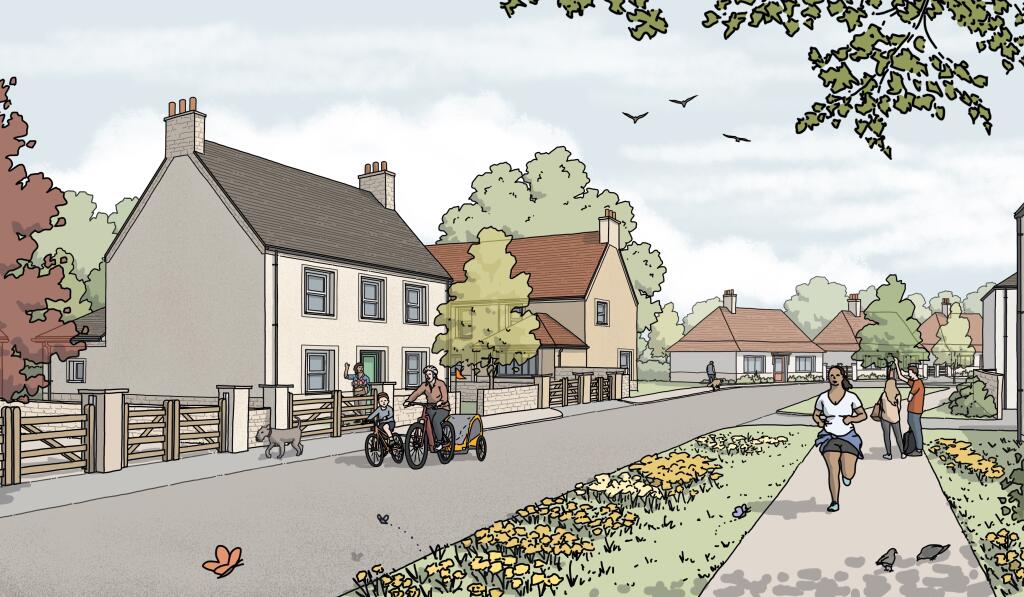
The government has introduced new, “simpler” rules as part of a range of measures to help smaller housebuilders deliver more homes.
By streamlining the existing “complex planning rules”, easing “onerous regulatory burdens” and providing additional financial firepower, the government said SME builders would be able to deliver “thousands of homes” faster on smaller sites across the country.
The proposals include faster decisions for small sites of up to nine homes, which will benefit from streamlined planning and eased biodiversity net gain (BNG) requirements, with faster decisions being taken by “expert planning officers”, not planning committees.
The government has also introduced a new ‘medium site’ category for sites of between 10 to 49 homes, which will face simpler rules and fewer costs, including a proposed exemption from the Building Safety Levy and simplified BNG rules.
As part of the proposed reforms, Homes England will release more of its land exclusively to SMEs, and a new National Housing Delivery Fund, which will be confirmed at the upcoming spending review, will support long-term finance options, such as revolving credit facilities and lending alliances.
The government is also launching a new Small Sites Aggregator pilot in Bristol, Sheffield and the London Borough of Lewisham, to unlock sites that would otherwise not have been developed, while attracting private investment to build new social rent homes. The pilot builds on a model developed by Lloyds Banking Group’s Social Housing Initiative.
Deputy prime minister and housing secretary, Angela Rayner, said: “Smaller housebuilders must be the bedrock of our Plan for Change to build 1.5 million homes and fix the housing crisis we’ve inherited – and get working people on the housing ladder. For decades the status quo has failed them and it’s time to level the playing field. Today we’re taking urgent action to make the system simpler, fairer and more cost effective, so smaller housebuilders can play a crucial role in our journey to get Britain building.”
Charlie Nunn, CEO of Lloyds Banking Group, added: “We strongly welcome the government’s announcement today that it will pilot the Small Sites Aggregator in Bristol, Sheffield and Lewisham. Through the Social Housing Initiative, we’re proud to have helped ignite this innovation in housing development and finance – unlocking the small, brownfield sites in our communities which are lying empty yet have immense potential to provide good quality homes in our towns and cities. This exciting partnership between the public and private sectors will increase investment at pace into the new, genuinely affordable homes that are needed across the UK.”
Senior property industry figures broadly welcomed the government’s announcement. Paul Rickard, chief executive of Pocket Living, said: “For the first time in many years, we’re seeing clear signals that an administration recognises the critical role SME housebuilders play in tackling the housing crisis. We’re delighted to see several of the recommendations we’ve worked with the government on reflected in today’s announcements. SMEs can be disproportionately affected by policy and support targeted specifically at SMEs will help to reverse the decline of our sector, help level the playing field, and once again make SMEs the backbone for high quality local housing delivery across the nation.”
Melanie Leech CBE, chief executive of the British Property Federation, added: “To get anywhere near 1.5m new homes by 2029, reversing the decline of SME builders must be a key objective for the government and ministers should be commended for acting. But solving the housing delivery challenge is bigger than SMEs alone, which is why we also need the volume builders, housing associations and build to rent developers to play their part, as well as a pragmatic approach to tacking the viability challenge.
“Therefore, we are pleased to see government considering targeted exemptions from the Building Safety Levy and biodiversity net gain requirements. We recognise the importance of funding for building safety and biodiversity standards – but know that the cumulative impact of the various charges imposed on new developments is creating a viability crisis.
“Government is right to reconsider them where they are hampering new housing delivery and also explore the benefits of proptech in identifying and unlocking opportunities. Likewise, the potential for smaller scale schemes to be determined by planning officers will free up planning committee time, allowing council decision-makers more time to focus on larger, more complex planning applications, hopefully leading to better decisions.”
Neal Moy, Paragon Bank development finance managing director, said: “Whilst the devil will be in the detail, this is a positive step and will be welcomed by SME developers that find themselves caught up in a highly bureaucratic and under-resourced planning system that favours larger developers. Planning has been the number one barrier identified by SME developers for years, preventing them from getting spades in the ground, with costs and time soaring, so action needs to happen sooner than later to ensure they can accelerate housing delivery.”
Jon Di Stefano, chief executive of Greencore Homes, added: “Simplifying the planning process and introducing more targeted land and funding opportunities for SME housebuilders should have a transformative effect for housing delivery, not just in terms of volume but quality and sustainability too.
“As someone that has made the jump from a larger housebuilder to an SME, I have seen firsthand how attracting diversity of scale to the housebuilding industry creates more innovation and a broader mix of tenures. Like many smaller developers, Greencore wants to build more and we are passionate about increasing delivery of our low energy, low carbon homes which are quicker to build, healthier for people to live in and designed with nature and wildlife in mind.
“Unfortunately, delays in the planning process have slowed down how quickly we can deliver these homes to date. We fully support these measures that will unlock smaller sites and help SME housebuilders to flourish and play their part in increasing housing delivery to meet the government’s targets.”