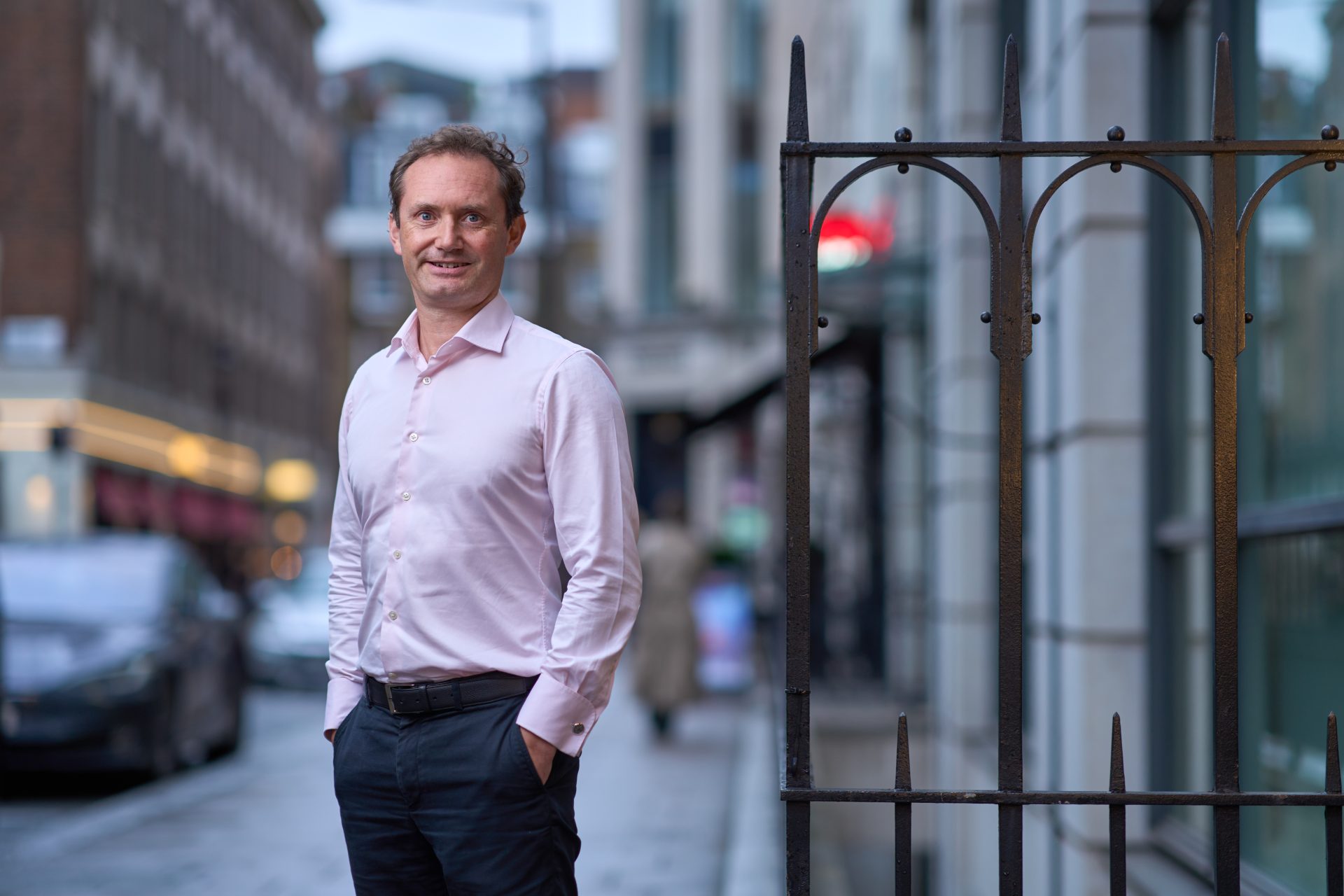
Name: James Townsend (JT)
Job title: CEO, Kontor
What I do: I set the strategic vision for the business, work on client relationships and drive new business opportunities. I like to make sure we’re growing in the right direction; commercially, culturally and creatively. I spend a lot of time with clients, helping shape projects and partnerships that push the industry forward while making sure the Kontor team has everything they need to deliver their best work.
Why I got into the property industry: If I’m honest, I fell into it. I didn’t know what I wanted to do when I left school because I was lacking in direction and influence, so I ended up working for an estate agency in Ipswich. Three months in, my boss told me I was “wasting my time” which I assumed meant I was about to be sacked. Instead, he introduced me to the world of being a chartered surveyor, which I’d naively underestimated, until he explained the commercial side and the scale of opportunity.
How I did it: I found a place through clearing on a property degree in Essex and I discovered how tangible property is – the fact that you can see and shape the spaces people spend every day in. I had found something I was really passionate about and enjoyed studying.
My first proper job: Before my graduate role, I worked at a small surveying firm in Framlingham, Suffolk. We valued pig farms and sheep farms. Hardly glamorous, but that was probably my first real introduction into the industry and it gave me a solid grounding in how property works in the real world.
My first big break: My big break was landing a place on the graduate scheme at Matthews & Goodman in London. It was 2007, right before the financial crash, and within months, half the company had been made redundant. There were 12 grads when we started, but only two stayed on. I managed to hold onto my role. It made me realise that survival in this industry isn’t luck, it’s about graft and adaptability.
My inspiration(s): My dad has always been my biggest influence. He lost his own father when he was 13 and had to become self-sufficient early on. He didn’t have the chance to go to higher education, but he worked hard to create opportunities for me. He was very influential in how he went about things and I learned a lot of tricks of the trade through his influence.
The biggest challenge I’ve encountered to date: The property industry moves painfully slowly. It’s full of middle managers who are scared of making decisions and that lack of agility is frustrating. Early in my career, I felt like I was wading through treacle trying to make things happen. It’s still an industry that can be overly cautious and that’s one of the biggest challenges for anyone trying to innovate within it.
My greatest achievement/proudest moment to date: Walking away from a secure, well-paid role at CBRE at 28 to start Kontor. It was daunting at the time. I had a great salary, mentorship and a clear path ahead of me. Especially at 28, when serious life responsibilities are coming up quickly. Fast-forward to today, and we’ve built a team of more than 20 talented people who genuinely care about what they do. Seeing them thrive and knowing I helped create the platform for that is easily my proudest achievement.
The biggest misconception people have about the property industry: That it’s “stale, pale and male.” There’s truth in that stereotype, but things are shifting. Throughout my career, some of the strongest and most influential leaders I’ve worked under have been women. My last three bosses before founding Kontor were all women and they had a huge impact on how I lead today. The industry doesn’t always give female leaders the visibility they deserve, but they’re there, shaping, influencing and making things happen every day.
My biggest bugbear about the industry/the one thing I would change about the industry: The lack of risk-taking. So many great ideas never see daylight because people are too afraid to back them. Some of the models we still use are archaic; they stop creativity before it starts. If landlords and investors were braver, we’d have more dynamic buildings, more meaningful community spaces and far stronger assets overall.
Why I’m so passionate about DE&I: I believe people need to see the industry to believe they can be part of it. For most, real estate feels out of reach, with faceless corporations, inaccessible pathways, and no visible role models. That has to change. It’s not about ticking boxes or hitting quotas; it’s about broadening access and showing people from all backgrounds that property is a career where they can thrive.
Why I’m so passionate about ESG: As a B Corp-certified business, we take pride in working on projects that make a measurable impact. For example, Xylo, the UK’s largest cross-laminated timber building. Not only is timber more sustainable, but it is believed to improve human wellbeing and productivity by reducing stress, lowering blood pressure and increasing focus. Likewise, it is great to see the industry starting to rethink how existing spaces can work harder for people and the planet.
Where I’d like to be in five years’ time, career-wise: There’s a fundamental shift happening in real estate that revolves around hospitality-led, income producing assets and providing amazing experience for occupiers of real estate. We are seeing it from a demand-led perspective of occupiers and what they want. And we’re seeing it from a supply side of working with amazing asset owners and what they need to produce. And both are trying to cater and learn, and provide that space. Kontor sits right at the centre of that change. In five years, I want us to be recognised as the authority in that new landscape, the team that helps landlords, developers and occupiers understand what great looks like and how to deliver it.
Who I’d invite, living or dead, to a dinner party: Sir Stirling Moss. I had the privilege of going to his memorial service at Westminster Abbey last year, because he couldn’t have his funeral during Covid. I find him such a fascinating character. He was one of the most successful racing drivers of all-time, but gave up his chance of winning the world championship in the name of fairness and integrity. Not to mention he was an absolute scallywag with the gift of the gab, so I imagine he had a lot of interesting stories. It would be an amazing insight into motorsport in the ’50s, 60s and ’70s.
What I do in my downtime: Downtime is a bit of a luxury. Between a young family and a passion for motorsport, there isn’t much of it, but both give me balance. Racing gives me adrenaline and excitement, while family gives me perspective (and sleepless nights). It’s chaos, but it keeps me grounded.
The job I’d be doing if I were not doing this: There was a time, when I did my A-levels, that I was considering a future as a psychologist. I quite like learning about how people think. But now, I’d probably say motorsport team principal. It’s all about strategy, management and performance, so not dissimilar to being a CEO, really.
My advice for someone just starting out: Say yes to everything. Go to every event, meet everyone and talk to people who are a step ahead of you. Don’t just stick to your peer group; learn from those who’ve already done what you want to do. This industry rewards curiosity, effort and initiative. The more visible you make yourself, the faster you’ll grow.
My motto/mantra: “Principles are expensive.” Doing the right thing isn’t always the easiest or most profitable route, but integrity pays off in the long run, in relationships, reputation and results.