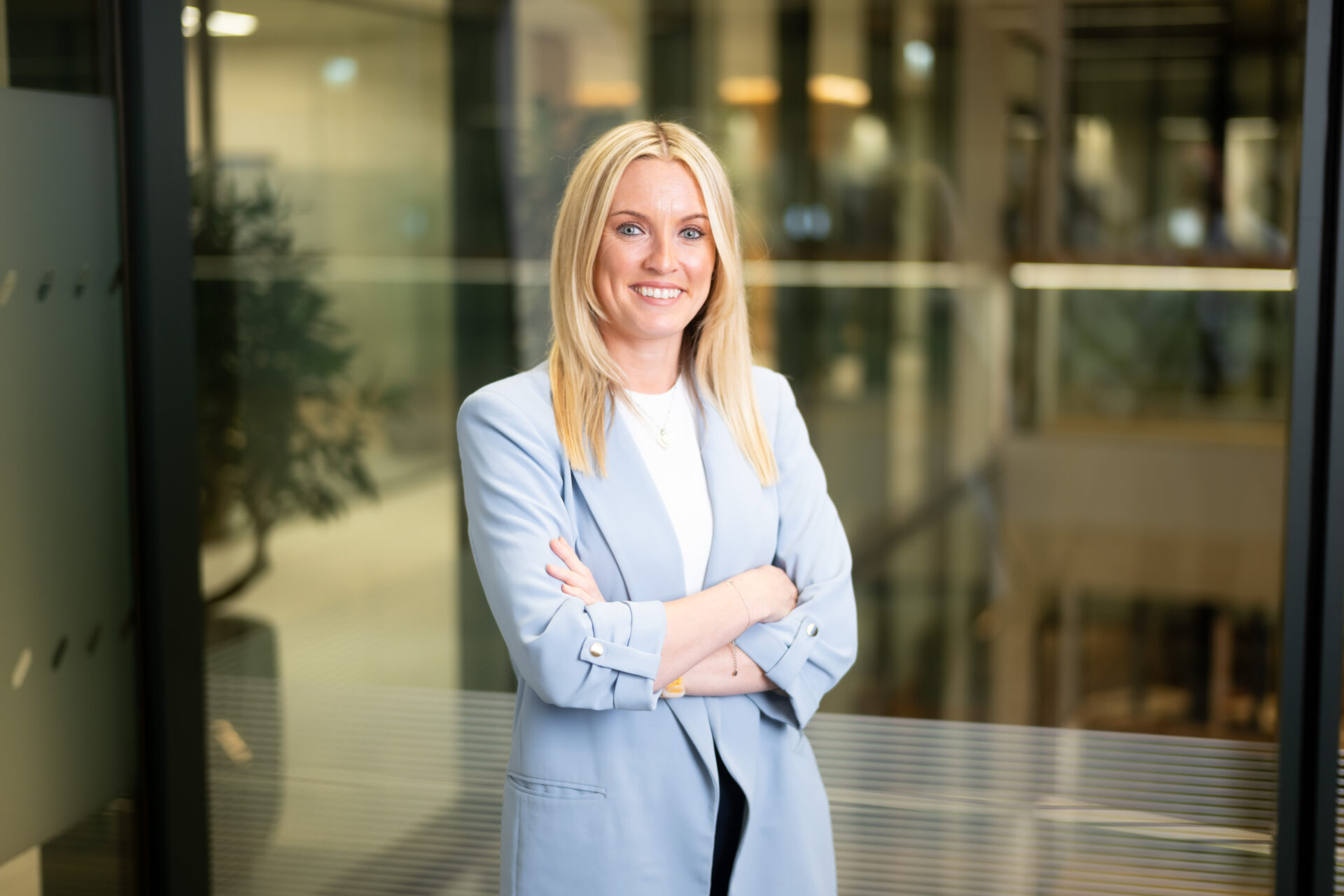
Name: Emma Collings
Job title: UK marketing and communications director, Colliers
What I do: I lead marketing and communications across Colliers UK, a 1,200-person advisory business sitting within a global footprint of 70 countries. In practice, I sit in the gap between what the business is and what the market understands it to be. That gap is where value is either lost or created, and most organisations underestimate it.
Why I got into the property industry: I came from consumer brands and social enterprise. Property wasn’t the plan, but staying in it was a decision. It’s one of the few industries where what you decide becomes physical and endures for decades. You cannot hide behind a campaign when the outcome is still standing 50 years later. At Colliers this challenge is even more complex – how do we create these meaningful touchpoints across asset classes, through a huge range of client relationships and build upon the value our advisory teams bring to existing assets. It is the changing nature of this question which is what attracted me to the organisation.
How I did it: Not linearly. Studied languages with international business. Worked in law, social enterprise, consumer brands, global partnerships, listed real estate. The thread running through all of it has been one question: how does an organisation become known for what it actually is? I have spent my career answering that.
My first “proper” job: The question assumes some jobs are more proper than others. A job is a fair exchange, your skills for their money to do something they need done. On that basis my first job was a leisure centre during my secondary school summer holidays, working with children. I quickly learned I would never cut it as a school teacher, it is one of the hardest jobs there is! That respect for what people do has stayed with me.
My first big break: Uría Menéndez, a Spanish and a Portuguese law firm in the City of London, just before the financial crash. It shaped how I think professionally. I learned what rigour looks like and what happens when markets move faster than institutions. Then Victoria Silver at Volunteering Matters taught me that communications is not about visibility, it is about consequence. If nothing changes, it is not strategic. Both of them are still in how I work today.
My inspiration(s): People who close the gap between what they believe and what they do. My parents. Public figures willing to speak, be criticised, and in time be understood. And the teams I have worked with who find ways to make something extraordinary out of limited resources. I am only a few weeks into Colliers and already I could sit and talk to the people here for hours, they know property with a depth and specificity that is genuinely rare. That kind of expertise is its own form of inspiration.
The biggest challenge I have encountered to date: My career background in consumer brands and social enterprise made me an unusual hire into this industry. The assumptions that come with that have followed me into rooms throughout my career. My answer has always been the same: do the work, let it compound, and let the results correct the narrative. Don’t underestimate those who have a non-linear career background, they bring different ideas and innovation into the sector.
My greatest achievement / proudest moment to date: Watching someone I have developed walk into a room and outperform me. That is when you know the work is compounding. Building teams where that is possible is the part of the job I care about most, attracting strong talent, creating real pathways for growth and giving people enough space to challenge your thinking. The best teams do not reinforce your view of the world, they expand it.
The biggest misconception about the property industry: That it is about buildings. Actually, it’s about decisions, the ones that shape where people live, where businesses grow and where communities form. Moving into Colliers, being part of a business that has more than 20 transactional and specialist advisory teams you can see how many people are involved in influencing and making these decisions, and that’s one company, not even all the other advisors involved in getting a project completed. The buildings are the output – the decisions are the work.
My biggest bugbear/one thing I would change: We do too much in real estate marketing and communications. Too many channels, too many campaigns, too much content, and not enough honest interrogation of why. The analogy I use is that real estate is late to the social media party, and for the large part when we join it, we ruin it. It’s too easy to confuse activity with strategy and visibility with impact. The real job is to change the mind of the person making the decision. Everything else is noise. And when we get that wrong, we lose attention and we lose talent to industries that worked out how to make their work meaningful for the next generation. That is the part that frustrates me the most. This industry has everything, scale, complexity, longevity, and genuine consequence. The brightest and most ambitious people should be choosing this industry first.
Why I am passionate about DE&I: Because diverse thinking produces better decisions, and better decisions are the product. At Pandora, we took a small challenger brand through its first UK advertising campaign and into a NASDAQ-listed global powerhouse. That did not happen because we followed the category playbook, it happened because the team brought genuinely different frames of reference to every brief.
At British Land, attracting brands into places like Broadgate and Meadowhall required understanding how different businesses, communities and users think about space. The lesson I take from every organisation I have worked with or observed is the same: diverse thinking is not a value – it is a performance variable. In any business, the moment that it is treated as optional is the moment the quality of decisions starts to decline.
Why I am passionate about ESG: Because responsibility is personal before it is professional. My test is simple: in time, would I be proud to explain this decision to my grandchildren? British Land gave me an enormous platform to work on this properly. I helped build the sustainability narrative from investor communications through to consumer, and what that taught me is that everyone is engaged in this conversation, but from completely different angles. Investors look for risk mitigation and long-term value. Occupiers look for operating costs and reputation. Communities want to know the place they use will still be there and still work for them.
The job is to understand which conversation you are in and speak to it with the same underlying truth. Environmental and social are not separate agendas, you cannot improve a place and leave the people in it behind. Colliers advises on decisions across 70 countries that will outlast all of us. That is not a compliance obligation, instead it is a challenge: how do we do this sustainably and how do we bring people along on the journey.
Where I would like to be in five years’ time: Leading a function so embedded in the commercial engine that removing it would mean removing revenue, influence and speed. Marketing should not be protected. It should be indispensable.
Who I would invite, living or dead, to a dinner party: My nan and grandpop. They helped fund my studies in Spain, which secured my degree and shaped my career. They never got to see what became of those conversations around their kitchen table. I would like to show them.
What I do in my downtime: Reading. Theatre. Good company and good food. I am a trustee of New Diorama Theatre, so arts and culture are not really downtime, they are a different way of thinking. Being able to share that with my children by going to productions makes it even more meaningful.
The job I would be doing if I was not doing this: For a long time, I would have said artist or psychologist. Increasingly I am drawn to policy, particularly around AI. How we govern technology that is moving faster than the institutions designed to understand it is one of the defining questions of our time. The test for me is simple: systems should make creating value easier. At the moment, many of the systems we build, including AI usage, appear powerful but often make work more complex. We have created tools that optimise tasks, but fragment thinking. The opportunity is not just adoption, but design, building systems that genuinely improve how decisions are made and how value is created.
My advice for someone just starting out: In marketing, find the gap between what an organisation is and what the world knows about it. That is where the work is. And build a bench of mentors, people who show you what good looks like before you have the experience to recognise it yourself.
My mantra: Give more than you take. But make sure what you give actually changes something.