
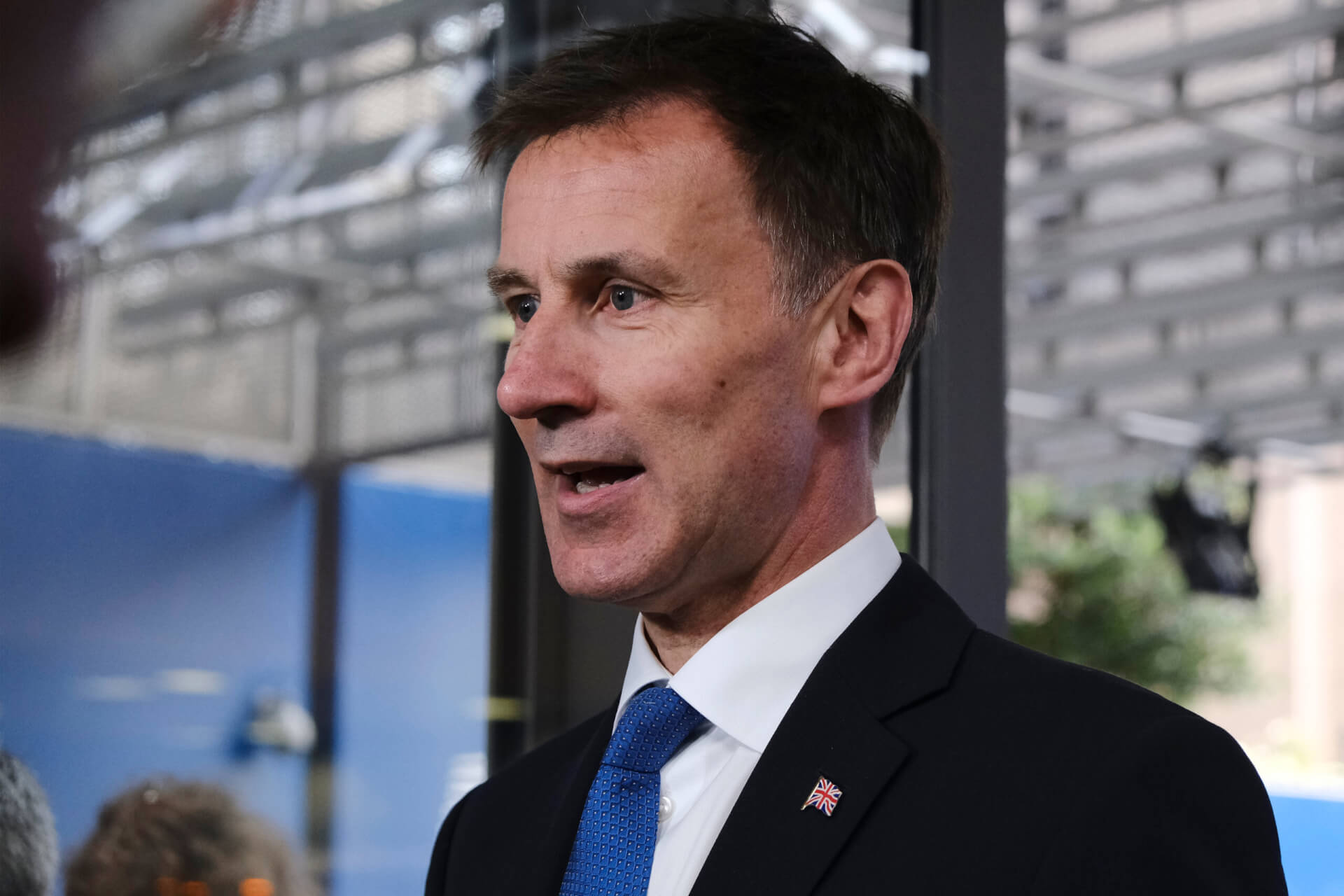
The property industry has come out in force to respond to chancellor Jeremy Hunt’s autumn statement, reacting angrily to plans to raise the standard business rates multiplier by 6.7%.
The increase in the multiplier was part of a sweeping set of reforms announced in his autumn statement, during which he also confirmed that business rates relief for the retail, hospitality and leisure sector would be extended for one more year.
In addition to unveiling a range of different tax cuts for individuals and businesses, the chancellor announced the government was making £4.5bn available to strategic manufacturing sectors such as life sciences from 2025 for five years.
Hunt also pledged to reform the planning system to allow for faster planning applications, with local authorities able to recover the full cost of ‘major’ planning applications in return for meeting guaranteed faster timelines.
He also confirmed the establishment of three advanced manufacturing investment zones in Greater Manchester, East Midlands and the West Midlands, extended freeport tax reliefs and launched a new £150m Investment Opportunity Fund to support investment zones and freeports.
Industry responses:
Mark Allan, chief executive officer of Landsec: “We’ve been campaigning for a focused approach to planning reform to unlock the huge potential of brownfield urban regeneration. The measures announced today, combined with a plan to provide proper resourcing of the planning system, should move us in the right direction to generate more growth, more homes and more jobs around the country.”
John Webber, head of business rates at Colliers: “By adding the CPI inflation figure to the existing multiplier, he has grabbed even more cash from hard pressed retailers. For these businesses, the multiplier will be 0.546 – meaning business rates is heading towards being a 60% tax! The chancellor’s actions will be a massive hit to the high street. Although most businesses in the retail and hospitality sectors have benefited to some extent from the 2023 revaluation, the sectors are still under pressure, facing higher occupational costs across the board as energy, employment and insurance costs soar – yesterday’s rise in the national living wage only adds to the pressure. Nowhere else in Europe do businesses pay approaching 60% of the rental of their premises in property taxes and at current levels this is unsustainable and deters new investment in businesses, despite the chancellor’s claims. This is a damning indictment for the Conservative government who have failed their manifesto promise to reduce this tax.”
Peter Mace, head of Central London retail at Cushman & Wakefield: “In reality, today’s announcement on business rates is only eating at the edges of a fundamentally flawed system. Business rates are arguably the most pressing issue facing the retail, hospitality and leisure sectors. While some smaller businesses will feel the impact of the extended relief, larger businesses will not, forced to pass on this pain to consumers at a time when prices are already high. There are now many instances where the rates payable for a shop far exceeds rent, and today’s announcement does nothing to address this.”
Rob Hopwood, partner, planning, Bidwells: “While it’s welcome to see the chancellor double down on the government’s ‘science superpower’ ambitions in today’s autumn statement, achieving such status will be impossible without more purpose-built laboratory space. Cambridge – a region where UK life sciences has a critical mass and where pharma giants like AstraZeneca call home – needs a step change in the delivery of offices and laboratory space. But make no mistake, this isn’t a potential problem – it is here and now. In fact, research from Bidwells has revealed that there is currently 1.2m sq ft of demand for life sciences facilities in Cambridge; just 7,000 square feet is available. This means the unicorns of tomorrow are being locked out of the market.”
Keith Cooney, national head of business rates at Knight Frank: “In the face of a weak and uncertain economy, the chancellor has decided to impose a 6.4% increase in the business rates tax burden on the key businesses that are driving our fragile economy. This increase was based on the inflation rate for September, which has already started to fall, and it is surprising that the full amount was imposed. This is in stark contrast to small businesses with a rateable value below £51,000, where there will be no increase in rates. His extension of the 75% relief for retail, hospitality and leisure sectors is welcome, but this is capped at £110,000 per business, so it again offers almost no support for those key businesses in our economy.”
Olivia Harris, chief executive of Dolphin Living: “The challenges of renting within London have never been greater, especially for those critical workers who support our public services and are at the forefront of driving the economic growth we desperately need. While increase to the national minimum wage and other measures are welcome, housing costs simply remain far too high and are only likely to increase as supply dwindles with the collapse in new housing starts in London. What we really needed was a targeted investment package matched by private sector funding to deliver a programme of discount to market rented accommodation to support economic recovery and build London’s attractiveness for key industry sectors, such as life sciences, by increasing the attractiveness of the city for workers on all income levels.”
Louise Ward, partner at Charles Russell Speechlys: “The life sciences sector will be pleased to remain at the forefront of the government’s mind, having been handed £520m in Jeremy Hunt’s statement. The announcement that ‘full expensing’ will be made permanent will renew confidence for businesses in the sector, which typically invest millions of pounds in state-of-the-art machinery to support their work. It’s also positive news for the real estate sector, which is investing more and more heavily in delivering the right space for life sciences occupiers, with multiple new developments in the Golden Triangle of Oxford, Cambridge and London coming in the next couple of years. As the countdown to the next election gathers momentum, we expect to see both main political parties jockeying for position as the lead supporter of this vital growth sector for the UK.”
Vivienne King, chair of the Shopkeepers’ Campaign: “In the current economic climate, raising the standard multiplier by 6.7% should never even have even been considered. Business rates bills are already far too high, and they are now at their highest ever level. The Conservatives, who promised to reduce them for retail in 2019, have fundamentally broken their promise. While I am pleased to see the chancellor extend the retail, hospitality and leisure relief for one more year, it is disappointing to see that the cap has not been extended to some support of the larger retailers that provide essential products and services on our high streets. This relief is an acknowledgement that business rates are too high and capping it at £110,000 means that retailers beyond the threshold are still having to pay rates in full.”
Simon Green, head of business rates at Gerald Eve: “The chancellor’s business rates measures are ‘smoke and mirrors’. They are designed to win him plaudits for protecting businesses from rates increases while still raking in an extra £8bn in rates revenue. Around 89% of all properties will indeed benefit from the freeze announced, but it is larger businesses – paying rates for some 220,000 properties, which pay over 75% of all rates next year – upon which this stealth tax will fall. The 6.7% increase adds a massive £1.66bn to their rates bills next year and more than £8bn over the next five years. All this from a government that in its 2019 manifesto promised to cut the burden of tax on businesses by reducing business rates.”
Nicola Gooch, planning partner at Irwin Mitchell. “We have a promise of full cost recovery for major business-related planning applications – provided that the application is determined within the statutory timescales. If not, then there would be an automatic fee rebate. This will require yet another amendment to the fees order, which is a little surprising given that it is about to be amended, with increased planning fees coming into effect on 6 December 2023. The ‘prompt service or your money back’ guarantee does not appear to relate to residential planning applications, so will likely only affect a very small proportion of planning applications in any one local planning authority. If these changes to planning fees are limited to non-residential applications, then there could be unintended consequences. It could result in commercial applications being prioritised over housing schemes, where the planning application fee would not be set on a costs recovery basis and the risk of a refund would be lower.”
Heather Powell, partner, head of property and construction at Blick Rothenberg: “Business rates reform has been ducked again. This thistle is going to have to be grasped one day, but the tenants and landlords of properties used in the leisure, hospitality and retail industries will be pleased that they will benefit from another year of 75% relief from rates.”
James Owens, planning partner at Rapleys: “The announcement by Jeremy Hunt, that he will allow local authorities to recover the full costs of major planning applications in return for being able to meet guaranteed faster timescales, with those fees being refunded automatically if the authorities fail, will be broadly welcomed by the development industry. The chancellor’s idea of a ‘prompt service or your money back’ is eye-catching and one that will be welcomed in principle. However, until the increased funding feeds through to better resources, there is unlikely to be much change in reality.”
David Parker, head of rating at Savills: “The renewal of the retail, leisure and hospitality relief, which will benefit some shops, pubs, restaurants, gyms, etc, is welcome news. The relief has become a necessity since Covid struck, and continues to be required as we collectively face the cost pressures that energy, the cost of borrowing and inflation have brought with them. The disappointing aspect is the continued cap on the benefit at £110,000 per business as most medium to large businesses will see relatively little benefit from the relief. The financial pressures faced in the retail, leisure and hospitality sectors are not unique to small operators. Larger venues and portfolios, as well as ancillary businesses supplying those sectors, are also impacted, yet the relief doesn’t extend to them. As the sectors as a whole are impacted by these ongoing financial pressures, extending the relief to larger operators and supporting businesses would avoid further casualties and ease the pressure on the wider participants in these markets.”
Kate Pix, regeneration director at Genr8 Kajima Regeneration: “Although it is great to see that the government recognises the significance of financial autonomy for the West Midlands and Greater Manchester regions, we need more powers for other metro mayoralties. For example, places like Huyton in Liverpool City Region, where Genr8 Kajima Regeneration supports the council’s transformational development plans, urgently seek clear and sustained government support. In the residential sector, this financial autonomy would enable more opportunities for required affordable housing, while fostering local innovation and supporting sustainable projects. The momentum for levelling up must not be lost or weaponised for political gain; we need transparent funding guidelines, timely assistance, and a commitment to collaboration for the benefit of local communities.”
Alistair Watson, UK head of planning and environment at Taylor Wessing: “Today’s announcement in the autumn statement is an attempt to get the real estate sector excited about minor planning reform that would only come into effect sometime in 2024, if at all; allowing local authorities to recover the full costs of major business applications in return for being required to meet guaranteed faster timelines. If councils fail to meet those timelines? The planning fees would be refunded automatically, and the application would be processed free of charge. There are more questions than answers. ‘Full costs’ – that will need defining. ‘Major business applications’ – are what? Faster timelines – just how quick?, and presumably there will be get-out clauses for councils.
Wayne Douglas, managing director at City & Country: “The UK government needs to create an environment where private and in particular SME housebuilders can thrive. Government controls taxation and legislation and that is a large part of the environment we operate in. Looking ahead to the next 12 months, I think buyers will get used to the higher mortgage interest rates and therefore are more prepared to accept them, so we need to turn our attention to incentivising those buyers that are often forgotten about which are those on the ladder and looking to move. Upsizers make up a large part of the market and initiatives to oil the wheels on that part of the market via taxation changes could benefit the housing market in the short, medium and long term. Ahead of the general election next year, the government needs to engage with our industry to get development off the ground quicker and support demand for new homes across our country consistently rather than use it for short term political gain.”
William Matthews, head of commercial research at Knight Frank: “With high inflation having first lifted government receipts, and falling inflation now driving expectations of base rate cuts next year, it was always going to be tempting for the chancellor to use some of this headroom to ease the tax burden. For commercial real estate a few macro announcements stand out. First, a number of business-friendly measures should be supportive of future investment and, ultimately, occupational demand for real estate. Second, increases to benefits and pensions above inflation, and the national insurance cut, add to consumer spending power. Third, while light on detail in the speech, the focus on increasing FDI, in line with the recommendations of Lord Harrington’s recent report, could help attract more capital to the UK. Much has been made of the improvement to government finances and improving growth prospects for the UK, but it should be recognised that this backdrop and outlook is changeable, and subject to global macroeconomic shifts that are not always in any chancellor’s gift to control.”
Stephanie Hall, partner, Davitt Jones Bould: “Acknowledging that it takes too long to approve infrastructure projects and business planning applications, the chancellor confirmed that as of next year, the system will be reformed to enable local authorities to recover the full costs of processing business planning applications, provided that they are determined within a guaranteed time frame. Failure to do so will result in the fees being automatically refunded and the application being determined at no cost to the applicant. This proposal essentially takes the planning performance agreement (PPA) and puts it on a mandatory footing. PPAs were introduced to encourage cooperation between applicants and local authorities, to agree timescales, actions and resources for determining large and complex planning applications. In my experience, PPAs have been used sparingly by applicants and local authorities, perhaps in part due to their lack of teeth. The chancellor’s proposals would introduce a strong incentive for local authorities to determine applications in an agreed timeframe.”
Anthony Aitken, head of planning at Colliers: “The government refers to the ‘UK’s outdated planning system’ but does little to reform it, despite having undergone a significant consultation at the beginning of the year, with promises of reform in the summer, autumn and now before the end of the year. The sector is a convenient crutch to kick, but it’s up to the government to take action and deliver. Today’s headline announcement of a premium planning service for major planning applications fails to address the more substantive issue of under-resourced local authority planning departments, and instead increases the pressure on these departments which are buckling under the demands from residents as well as developers and big business – the £32m package to unblock this system will barely touch the sides.”
Jennet Siebrits, head of research, CBRE UK: “Today’s autumn statement contained some surprises. The cut in national insurance was larger than expected, down from 12% to 10%. On the other hand, despite being mooted, there was no change to stamp duty to help home buyers. We were pleased to see significant funds committed to investment in AI, life sciences and other growth sectors, which will support the government’s ambition to ensuring the UK is a technology powerhouse. While it is encouraging to see the chancellor commit to reviewing the planning system to speed up the time for major applications, it is not clear how major applications will be defined and how much residential development will be covered by the definition.
William Poole-Wilson, founder of workplace design and strategy architects, WILL+Partners: “We labour under a planning system which, love it or loath it, is no longer fit for purpose. However, local authorities have insufficient resources to dedicate to an expensive planning system that has built up a level of bureaucracy which means that large applications need to be delivered in a van. At present, most local planning authorities don’t have the technical competency to know whether a design is missing an opportunity or has a technical flaw. Therefore, some significant upskilling will be needed to help ensure that all major projects are vetted on a like for like basis nationally, helping to remove inconsistencies in the system.”
Emily Roberton, national head of rating at BNP Paribas Real Estate: “Buoyed by recent economic figures, an ebullient chancellor of the exchequer introduced today’s autumn statement as the ‘autumn statement for growth’ in which he pledged to reduce debt, cut taxes and reward work. The tone was however, tempered as he increased business rates. Jeremy Hunt confirmed that the Uniform Business Rate (UBR) – the rate in the pound that is multiplied against a property’s rateable value in order to calculate a liability – could not be frozen for a fourth year in a row. From 1 April 2024, the multiplier is expected to increase from 49.9p to 53.2p in £1, reflecting the annual CPI figure at September 2023 of 6.7%. He also confirmed that the Small Business Rate Relief multiplier – which is added to the UBR of ‘large’ properties in order to pay for the relief granted to ‘small’ occupiers – is to be frozen at 1.3p. This means that premises with a rateable value of £51,000 or more will attract a multiplier of 54.5p in £1. Premises in Greater London with a rateable value of £70,000 or more attract an additional 2p in £1 for the ‘Cross Rail’ supplement, which will mean their bills are based on 56.5p in £1. The City of London has unique powers to set its own rate and this is currently 1.2p, meaning a typical city office will pay 57.7p in £1 from 1 April. Whilst on the face of it this is disappointing news, it was expected. In last year’s autumn statement the chancellor delivered a number of positive pledges, including the abolition of downwards transitional relief. These measures are all part of the wider piece, being the introduction of three yearly revaluations from April 2023 and further planned changes to the business rates system.
Jo Davis, principal, managing director place, UK executive chair at Avison Young UK: “The autumn statement emphasises the pivotal role of resources, skills, and development in the planning sector. While the idea of incentivising a quicker planning process with a money-back guarantee sounds appealing, its implementation poses considerable challenges. The timely delivery of planning decisions is not solely within the gift of local authority planners. Virtually every application, and especially larger and more complex applications, requires the input of statutory consultees, local politicians, and often a judicial review process, all of which requires coordination. The extensively documented planning crisis in the UK necessitates a substantial financial commitment. However, the allocated £32m realistically for each local planning authority equates to same amount as average major planning application fee. Effectively addressing the planning crisis demands a sustained, long-term commitment. This involves repositioning the sector as an aspirational career path, where value is placed on placemaking and the planning profession. Only through such measures can we hope to attract and retain the right talent.”
John Ord, UK&I energy business director, Stantec: “Running through this year’s autumn statement was an ambition to meet the UK’s potential to become a green energy and advanced manufacturing superpower. These are sectors we’ve long known can drive growth and where we are well placed to succeed – but there have traditionally been significant barriers, from access to grid capacity and challenges raising finance and investment, to fundamental questions over the government’s commitment to transforming the UK’s energy and sustainability industries. The chancellor has aimed to grow confidence by tackling these concerns – and our sector will welcome the commitment to improve the planning system, financial support for green industries and renewable energy, and generally more long-term, cross-department strategic thinking. It will now be essential to lock in this positive progress, work as a sector with government to develop the details of the long-term strategy, and secure commitment that this will be maintained and supported by current and future administrations.”
Peter Canavan, partner in Carter Jonas’ Oxford office: “As with the King’s Speech a few weeks earlier, the autumn statement fell short of expectations, with little for the planning and development sector to get excited about. Any hope now rests with the revisions to the NPPF – which have been imminently expected for the best part of a year. That said, the autumn statement has fuelled speculation that a general election may be planned for early next year. And if that is the case, what likelihood is there that the government will make controversial changes to its primary planning policy document? In reality, it may be that very little positive change has been achieved over the last five-year term, contrary to the radical planning reforms promised back in 2019.”


