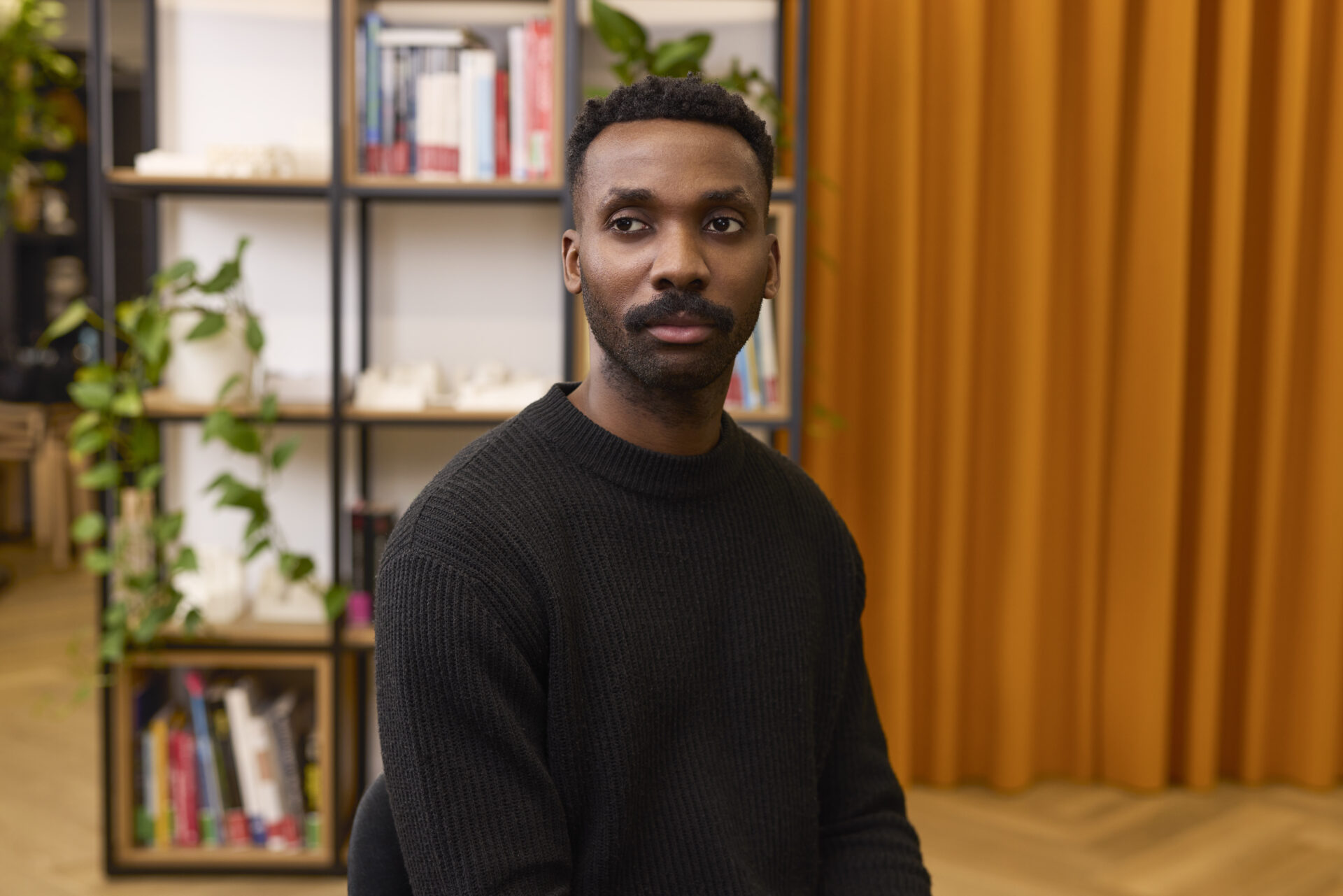
Name: Derin Fadina
Job Title: Architect, Barr Gazetas
What I do: I work as an architect on retrofit and commercial refurbishment projects, often in and around Westminster, London. I’m also an occasional writer and lecturer and have contributed to architectural publications including the Architects Journal, Architectural Review, and the RIBA Journal.
Why I got into the construction industry: I liked technical drawing at a very young age, so I somewhat arbitrarily decided to become an architect when I was about 12 years old and only came to understand the decision in retrospect. Architecture’s cross disciplinary nature offers creative exploration, which, when coupled with the myriad social, technical and legal considerations, makes it the perfect combination of my interests.
How I did it: My academic and professional journey has been incredibly rewarding, despite it feeling like a seemingly endless route at the time: I got my BA (Part 1) at the University of Brighton, then my masters (Part 2) at University of Westminster where I also completed my final qualifications (Part 3), all interspersed with work placements and assistant positions in practice.
My first proper job: My first proper job was as a Part 1 Architectural Assistant in a small Brighton-based practice, Shape Architecture. I cut my teeth on domestic extensions and loft conversions, and the odd community project. I remember it fondly. We were a very small team and, in the summer, we would enjoy long lunches on the terrace of our local pub. Seaside views, cold beer, and some of the best calamari I’ve ever had.
My first big break: Starting at Barr Gazetas felt like the proper start to my architectural career: bigger, more complex projects with greater involvement and responsibilities. As a writer I would say my exhibition review of the British pavilion at the 18th Venice Architecture Biennale for the Architects Journal, much of my written work came about following that commission.
My inspiration(s): My mother. The bravest person I know.
The biggest challenge I’ve encountered to date: Finishing my Part 3 qualifications, balancing the course with working full-time and personal responsibilities was a challenge. I failed the first attempt at one of the units of study and suffered a huge blow to my self-confidence. I was consoled by the fact that so many people in the industry, many of whom I respect and admire, told me they too similarly stumbled in their time – par for the course.
My greatest achievement/proudest moment to date: The most pertinent would have to be qualifying as an architect, which was a challenging process and journey where I discovered a lot about myself both professionally and personally. Although it feels like reaching the mountain top only to find you are at the base of yet another, even steeper mountain. For me this has meant continuing to grow professionally, and exploring new opportunities in the workplace.
The biggest misconception people have about the construction industry: With architecture specifically: that we’re all millionaires. People tend to be mystified by the discrepancy between the years of study and the poor remuneration. The problem is systemic, and requires concerted effort from architects, clients, and regulatory bodies alike to recognise the value that we bring to the construction industry.
My biggest bugbear about the industry/the one thing I would change: The industry tends to be reactive rather than proactive. We wait for tragedy and crossing points of no return before we recognise our responsibilities. On a fundamental level, we should be embodying the codes of conduct that underpin our work as architects, ensuring we are carrying out our duties ethically and competently. We should also be going beyond this, striving wherever possible to improve the lives of the people who inhabit our structures.
Why I’m so passionate about DE&I: Buildings and public spaces must accommodate all kinds of people of various cultures, abilities, and identities. So it stands to reason that practitioners should reflect the richness and diversity of the people they serve. I do all I can within my practice to not only represent, but champion initiatives aimed at improving diversity, equity and inclusion through our CPDs, social events, and charitable endeavours.
Why I’m so passionate about ESG: ESG represents the three pillars of responsibility corporations have to people and the planet. Architecture practices – given the construction industry’s role in the climate emergency – are uniquely positioned to incorporate ESG principles into their practices. B Corp is an increasingly popular certification for businesses to showcase their ESG commitment. Last year, Barr Gazetas got an especially high score for an architecture practice, and working here I can see why.
Where I’d like to be in five years’ time, career-wise: Outside my comfort zone.
Who I’d invite, living or dead, to a dinner party: Kurt Vonnegut, Franz Fanon, Toni Morrison, Martin Luther King, Ingrid Bergman and Rory Stewart.
What I do in my downtime: I watch films. I also read and exercise but probably not as much as I should.
The job I’d be doing if I was not doing this: Filmmaker. I probably could still do that in some capacity. Time will tell.
My advice for someone just starting out: Be inquisitive, and be kind.
My motto/mantra: I don’t have one. I don’t think that my – or anyone’s – guiding philosophy can be summed up in a pithy phrase. I suppose I just try to show up and be accountable.