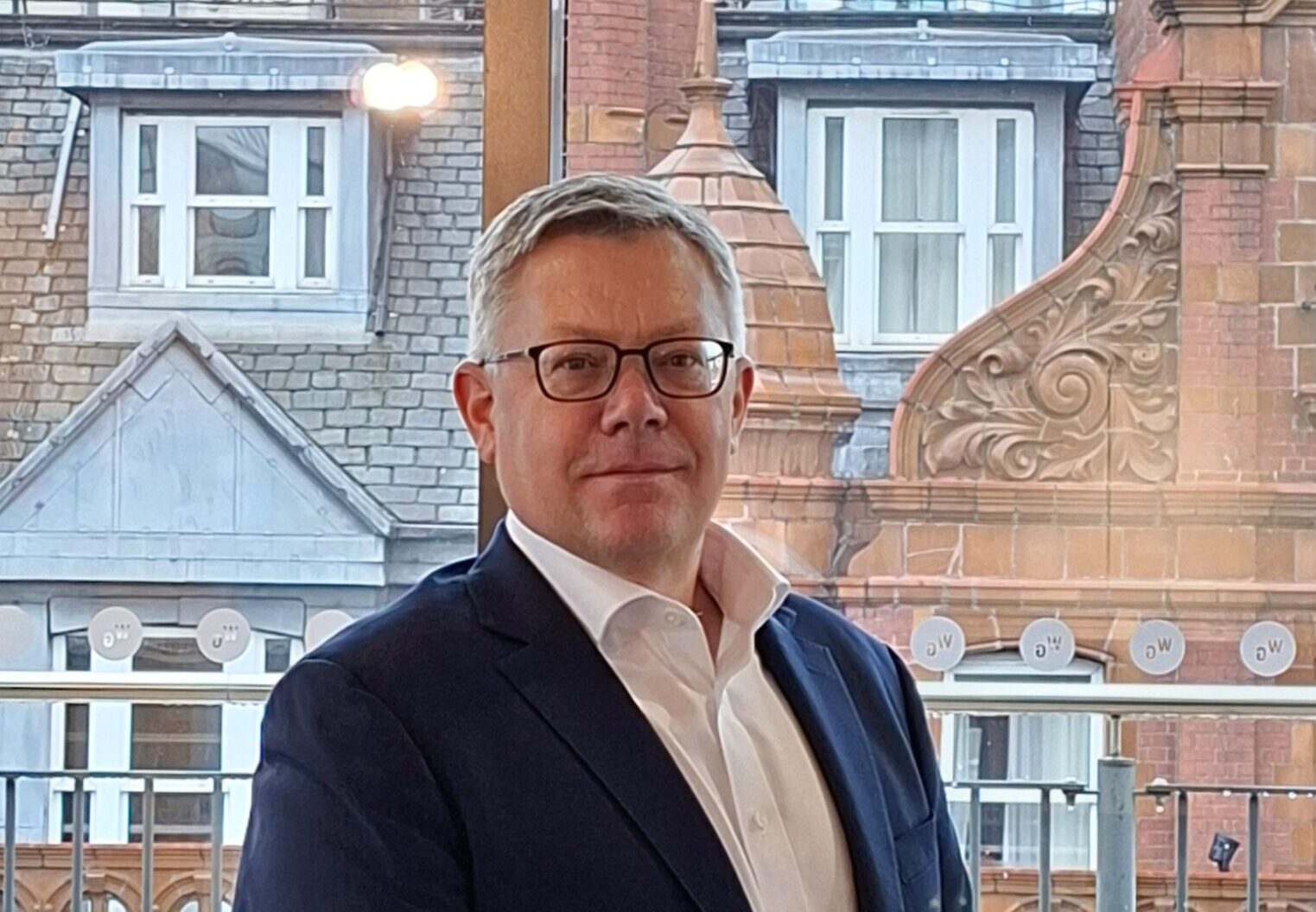
Name: Mark Ainger
Job title: Director of structures – London, Clancy Consulting
What I do: At Clancy, I lead the expansion of civil, structural and heritage engineering services from the London office, supported by divisional directors, Andrew Moffatt and Claudio Corallo.
Why I got into the property industry: My dad was an architect, so being aware of what he did for a job was the first thing that inspired me to go into this line of work. When I was younger, I got to join him on some projects and got some first-hand experience of a live site. When the time came, I studied for a degree in civil engineering at Loughborough University. I graduated in 1996 with first class honours and quickly took my first steps towards a technical career in the built environment.
How I did it: With more than 25 years experience in structural engineering, I’ve built a diverse BE career across both the UK and the Middle East. I began my time in the industry as project engineer for Allott and Lomax. I then moved to Cameron Taylor in London as a senior engineer, rising to technical director and leading a team of over 60 engineers on a variety of complex projects, including mixed-use developments, listed buildings, and deep basements. The senior team at Cameron Taylor mentored me from day one – they were fully invested in supporting my growth within the company, and encouraged me to pursue projects that would develop my skills and leadership capabilities. It’s something I’ve always been thankful for.
In 2009, I relocated to the Middle East, holding senior management roles at global firms such as Scott Wilson, AECOM, WSP, and Atkins/Faithful+Gould (now AtkinsRéalis). During my time in the region, I worked on high-profile state buildings, luxury residential and hospitality projects, high-tech industrial and defence schemes, major infrastructure and healthcare facilities across the Middle East. I returned to the UK in 2020 to join HDR’s London office as a director, before moving to Ayesa (formerly Byrne Looby), where I led their buildings business and oversaw business development, project delivery, and staff growth. The culmination of all this experience brought me to Clancy Consulting in my current role, where I am proud to lead our London-based operations with a highly skilled, dedicated team around me.
My first proper job: Once qualified, I started my career as project engineer for Allott and Lomax, which was incorporated into the Babtie Group way back when. I was initially based in Birmingham then I relocated to London. It was a real eye-opener to the real world of engineering: I was involved in a diverse range of projects, including railway work (station redesign and survey work), restoration of the Grade II* listed UCL Cruciform Building, and other major urban mixed-use developments. A great experience out of university!
My first big break: Definitely at Cameron Taylor, where I was trusted and mentored to grow with the company, and develop my skills by being entrusted to work on flagship projects.
My inspiration(s): As mentioned above, the managing director and others at Cameron Taylor were major early inspirations for me. They had an uncompromising, client-first way of working, balanced with a drive for unwavering technological excellence. It was contagious – and I’ve carried this approach with me ever since.
The biggest challenge I’ve encountered to date: Prioritising time to continuously learn and understand new technologies sufficiently to understand their importance and effectiveness within a fast moving dynamic industry, combined with ever changing internal and external market priorities. Being able to respond and embrace this especially in the current environment of rapidly accelerating technological change.
My greatest achievement/proudest moment to date: Early on in my career, at Cameron Taylor, I was involved with 40 Holborn Viaduct – a complex and prestigious commercial office project. The 230,000 sq ft development is situated immediately next to a listed viaduct and has three basement levels adjacent to a listed highway viaduct. With a spiralling ground level across two floors around the site, and an almost entirely column-free floor plate at all levels, it certainly provided a few challenges.
The biggest misconception people have about the property industry: I guess there is a misconception that major building projects rarely face surprises. I’d argue, we get ahead of surprises by considering every potential outcome; each aspect of design and build is meticulously mapped out to ensure we have robust plans and timelines that can meet anything unexpected head on.
The one thing I would change about the industry: The industry seemed to take a step away from collaboration during the pandemic, for obvious reasons, which isn’t what we’re about as engineers. This profession and what we do thrives by working closely with our partners. We now have huge advancements in technology and communication at our disposal, which makes it easier. The key to success is achieving joined-up thinking and action, both in day-to-day operations and across internal and external stakeholders. We always need to have this in mind.
Why I’m so passionate about DE&I: Engineering thrives when diverse perspectives and inclusive cultures are in the room. Broader representation strengthens problem-solving, reflects the communities that different projects serve, and helps attract and retain talent in a skills-constrained sector. For me, DE&I is about creating a fair, supportive workplace while ensuring the industry evolves to be more innovative, equitable and resilient. Diversity also means looking to recruit people from different education pathways – directly on the ground via apprenticeships, for example. Not everyone is an academic; this industry is about recruiting for potential. The right skills can be invested in and built on a person’s initial talent or passion for the work.
Why I’m so passionate about ESG: For me, ESG is not a nice to have, it’s a pre-requisite. It also isn’t theoretical: it’s embedded in the technical decisions my team and our entire company make every day and is central to delivering responsible, future-focused developments. Ultimately, the built environment directly shapes environmental and social outcomes. From low carbon design and retrofit to brownfield regeneration and housing delivery, at Clancy our projects influence sustainability, community wellbeing and long-term value. The question is how far are we willing to go above and beyond minimum requirements in pursuit of buildings that truly contribute to a sustainable, responsible future?
Where I’d like to be in five years’ time career-wise: In five years’ time, I see myself continuing to lead a high-performing, collaborative team that is at the heart of industry-leading work.
Who I’d invite, living or dead, to a dinner party: Dame Ellen MacArthur – she’s achieved incredible feats in life.
What I do in my downtime: I play hockey, go out cycling, and I spend my life being busy with the family.
The job I’d be doing if I was not doing this: A park ranger, out and about in nature with no office distractions.
My advice for someone just starting out: Have confidence, work hard, ask questions, listen to advice and soak up every opportunity you can to grow and develop.
My motto/mantra: Trust and support the people on your team.