
Urban & Civic chief executive Nigel Hugill reveals what was involved in preparing Stratford for its retail future, and the 2012 London Olympics
It is what the public don’t see when they shop at Westfield Stratford or visit the Queen Elizabeth Olympic Park that Nigel Hugill is most proud of.
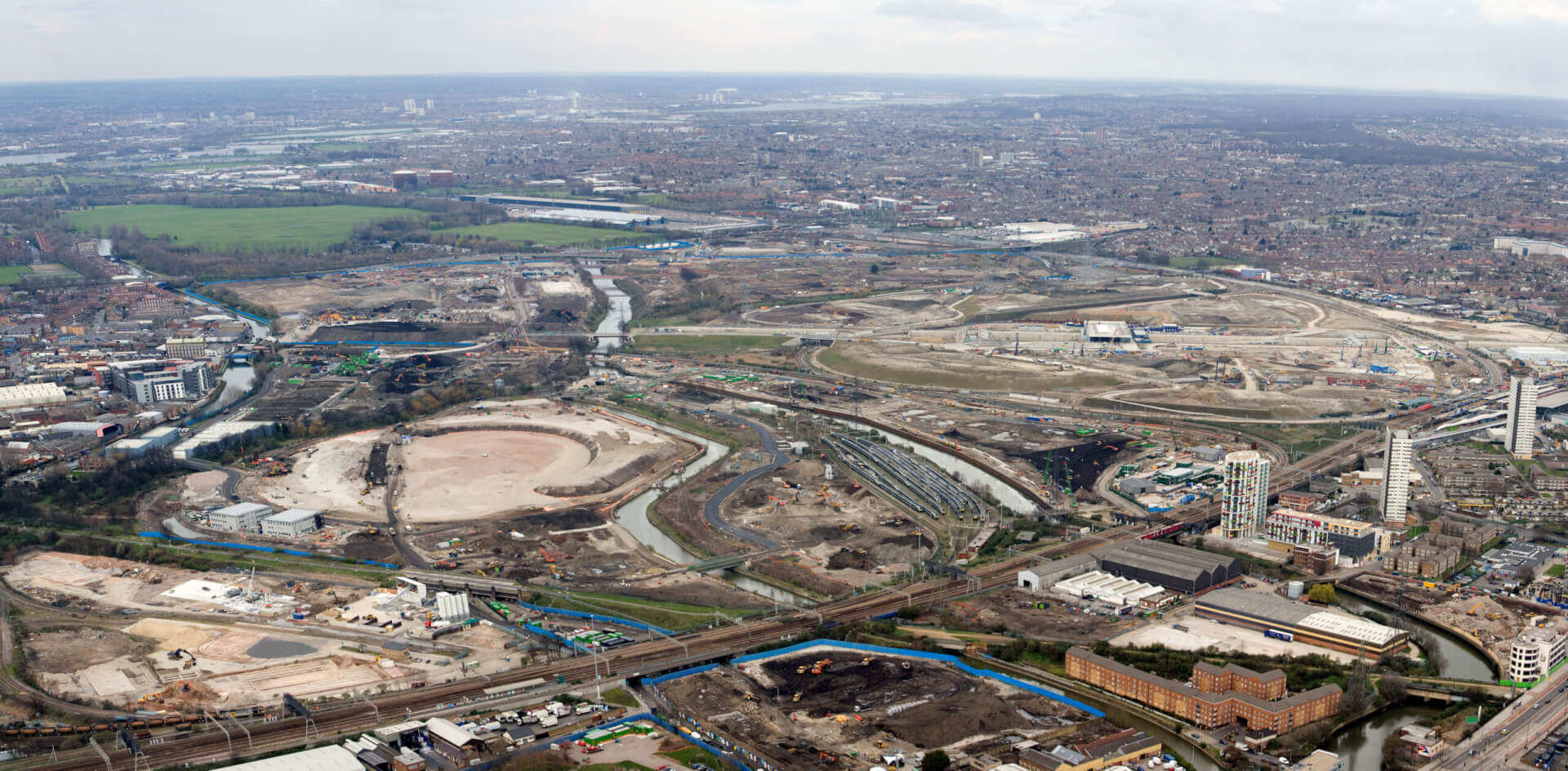
“The successful thing at Stratford is the way the levels work and the integration of the canals. When you come out of Stratford underground station to the north you don’t know whether you’re on terra firma or a new artificially created level,” says Hugill in an interview with BE News to mark the 10th anniversary year of the London 2012 Olympic Games. “We put a huge amount of thought into those levels, so in a way the thing I’m most proud of is the thing nobody even notices.”
Now CEO of Urban & Civic, Hugill was formerly chief executive of developer Chelsfield, which in 2004, along with Stanhope, secured one of London’s largest ever planning permissions for the 182 acres of derelict railway sidings, north of the existing town centre in Stratford. London & Continental Railways was the third partner involved in the £3bn urban regeneration project known as Stratford City, which would bring a world class retail centre, homes, jobs and then the Olympics to east London.
The story of the transformation of the site that today houses Westfield Stratford, the QEOP, East Village – the former athlete’s village, and Chobham Academy school, dates to the mid-1990s and owes much to the building of the Channel Tunnel Rail Link.
A formal competition between 1995 and 1996, held by CTRL developers London & Continental Railways, gave rise to two large development projects: King’s Cross, which was won by Argent, then headed by co-founder, Peter Freeman, now chair of the Homes England, and Stratford, which was won by Hugill’s Chelsfield.
Strong transport links
“I always knew Stratford was a fantastic site,” Hugill recalls. “The policy we had at Chelsfield was to pursue any major London site with strong public transport connections. The consensus was that these sites were extremely difficult and time consuming, and they were, but it was the same at Bankside and Paddington Basin (the four-hectare, mixed-use scheme also redeveloped by Chelsfield) and, subsequently, at Lendlease’s [then Lend Lease’s] Elephant & Castle and Greenwich Peninsula schemes. The scale of continuing long-term build-out has been enormous.”
East London needed a premier shopping hub as the closet retail destination was Oxford Street. “At that time, the most exciting retail locations were the West End, Lakeside, and Bluewater. Putting a strong retail centre into east London was compelling from all sides: reducing travel, presumption for reasonable employment and the confluence of public transport connection,” says Hugill.
Chelsfield had a proven retail track record in securing planning and delivering projects of significant scale. Land was bought in west London in 1995 by Chelsfield for the White City redevelopment, which it was hoped would ‘unlock a new retail and public transport experience’. The £1bn-plus project was under construction at the time consent was granted at Stratford.
Hugill says he wasn’t fazed by the how complex the Stratford City project was going to be because: “I knew that was the fundamental precondition… the intention at Stratford, before the Olympics, was always that we would improve the connection and put a lot of money into Stratford station.”
That was the deal with then deputy prime minister, John Prescott, and London Mayor Ken Livingston. “In relation to getting planning consent there, this was a significant decision for retail of metropolitan scale,” says Hugill.
Big bang development
That is an understatement. The masterplan spanned 14m sq ft and was the largest submitted since the Second World War, and the new retail centre was of a scale only seen in two previous examples since 1945, at Brent Cross, and Chelsfield’s White City. As well as the massive shopping centre, it comprised office space, residential and leisure facilities. “You simply couldn’t develop the site on an incremental basis. It had to be a big bang development, partly to help fund it.”
The consent also attracted the attention of Australian retail centre operator, Westfield, which in 2005 bought both Chelsfield sites, following through – to a large extent – on the Chelsfield vision.
But when it came to actual development of the Stratford City site there were issues, because the old rail lands were below the flood plain. Tunnelling for the CTRL provided the answer. “They had to put the spoil somewhere,” says Hugill, noting that more than half went east to Stratford, where the level of the land was raised by three meters.
“It was a corollary, a consequence of building the CTRL,” he elaborates. “To make Stratford developable, you had to raise the levels: you wouldn’t have been able to bring that much soil into east London; that simply would have been impractical. Huge rafts would have had to be put in above [ground].”
Pylon pain
That was challenging enough, but it was another development issue that became a self-confessed obsession for Hugill: moving the multitude of pylons.
“I spent a lot of time ranting about pylons,” he says. “We managed to get them buried all across the Olympic site and down to Canning Town immediately upon announcement of the decision to award the 2012 Games to London.”
In 2003, the first section of CTRL from Folkestone to north Kent opened and it was announced that London was bidding for the 2012 Olympics. Hugill was an early advocate for the brownfield railway land being used for the Games.
The capital duly won in 2005, propelling the Stratford site onto the world stage and sparking a building frenzy for sports arenas, athlete accommodation and infrastructure. Ten years after being held, the Games of the XXX London Olympiad is still held up as a showcase of how to organise a global sporting event.
Nearly 30 years have passed since the Stratford site was first identified and the park now boasts a growing community, as well as a retail and leisure destination that continues to evolve. Adjacent developments such as the new UCL campus and Stratford Waterfront, where the Victoria & Albert Museum is due to relocate its reserve collection next year, are set to bring more people into the area.
Hugill is still involved in the Olympic site through his sponsorship of the Chobham Academy school. Located in the heart of the site, it is another highlight for Hugill. “I’m very proud of that school, just as I’m very proud of the core elements [of the site],” he says.
“The integration of the bottom of the Lea Valley Park, the way the housing works in relation to the park and the integration of the canals… it is all much more successful than people often give it credit for. They just take those for granted – but all of that was created.”
And with it was created a lasting legacy for east London.



The demise of the REITs