The majority of office occupiers are looking to reduce their real estate footprint, according to a new global survey of occupiers conducted by Cushman & Wakefield in partnership with CoreNet Global.
The survey of firms from more than a dozen countries across the Americas, EMEA and Asia Pacific, found 63% of occupiers intend to reduce the size of their offices as most were running their offices at occupancy levels lower than 45%.
Central business districts (CBD) remain the preferred location for headquarters buildings, with 57% of survey respondents citing a preference for HQs located in CBDs and 12% opting for emerging creative urban areas. The survey found 80% of firms have not considered moving offices out of the CBD and only 8% of respondents see that type of shift as a trend.
According to the survey, cost, talent and operational excellence are the top three strategic drivers that inform real estate decisions.
Dimitris Vlachopoulos, partner and head of total portfolio and location strategy at Cushman & Wakefield, said: “Occupiers consistently identify cost, talent, and operational excellence as the top drivers of their real estate strategy and decisions. The exact order of these has shifted some in 2023; talent continues to be very important – and remains number one in the Americas -but cost has risen in importance. This is not surprising given the elevated uncertainty since mid-2022 as inflation peaked and, in response, interest rates began to rise.”
ESG considerations have also become a key driver of office space demand, with occupiers willing to pay a premium for sustainable workspaces.
Sonali Tare, vice president, strategic content at CoreNet Global, said: “Companies are working hard to adapt to an evolving landscape and shifting priorities post pandemic. Finding the right balance is critical to making smart decisions about their workspace needs, and also for attracting and retaining the right talent, in the right location. There is no one-size-fits-all solution – what works is using data and metrics to devise a solution on an office-by-office basis.”
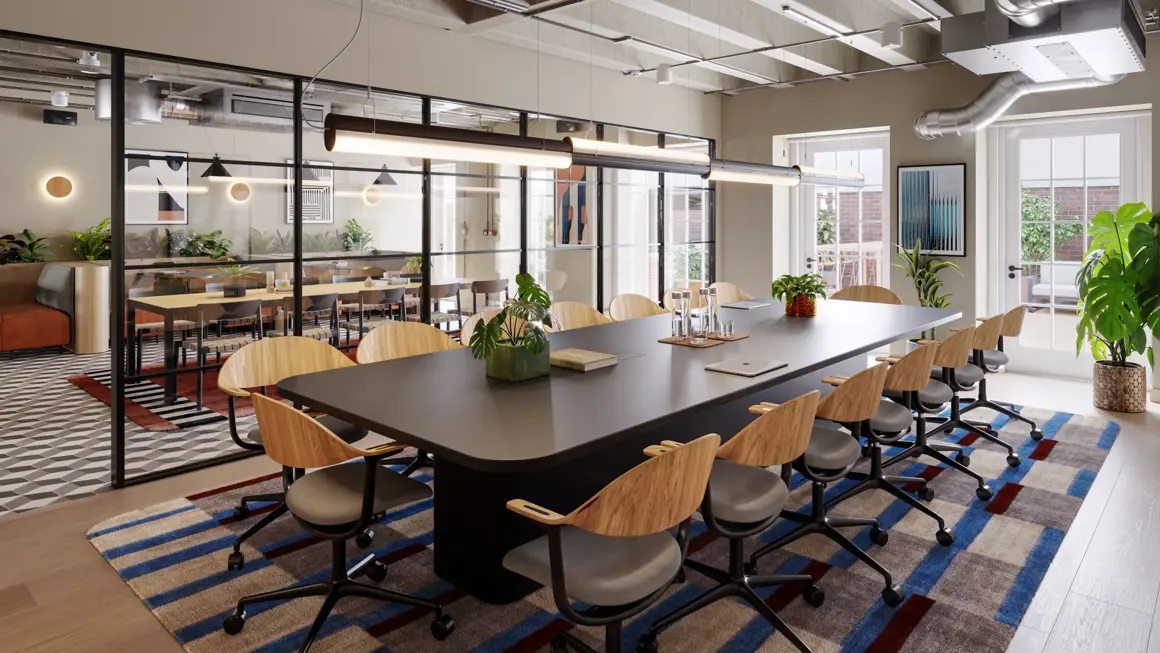
The survey also found occupiers had doubled the amount of communal space within buildings compared with pre-pandemic levels, with 89% of respondents seeing the office as a place for “creativity, innovation, osmosis and a planned meeting point”.
David Smith, head of Americas insights, global research, at Cushman & Wakefield, said: “The purpose of the office is clearly changing but occupiers have not yet fully adapted to this new way of working. The office is not about keeping tabs on people, nor is it required for many workers to be productive. It is, in fact, a meeting point with clients, a place for creativity, innovation and synergies, as well as a place for learning and development. Right now, approximately half of occupiers believe their offices provide for these purposes; the remaining 45% still have work to do.”