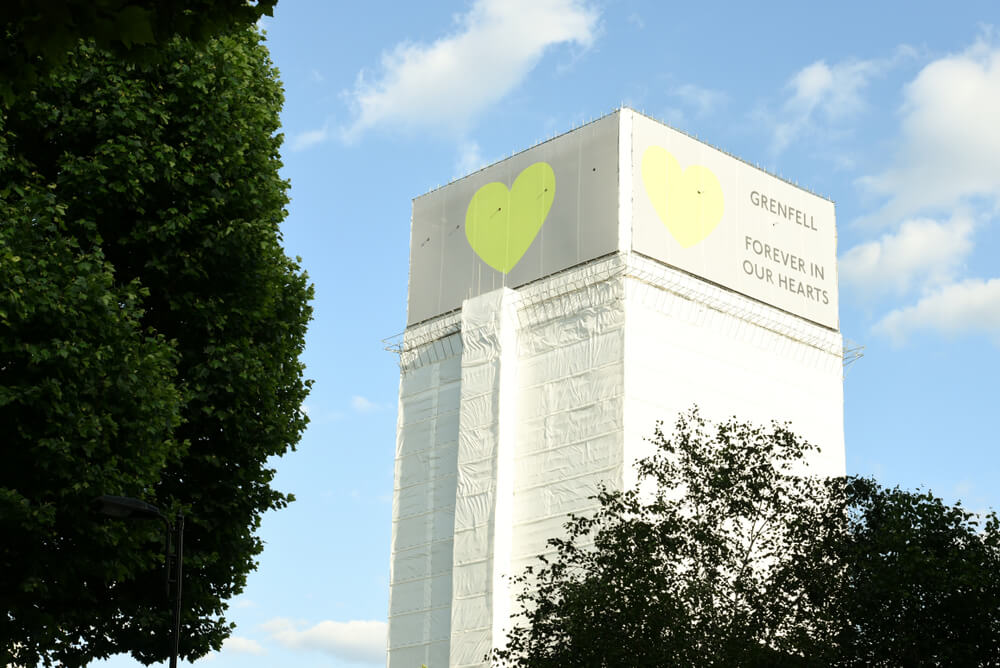
The Grenfell fire, which led to the loss of 72 lives in 2017, was the product of “decades of failure”, according to the Grenfell Inquiry’s final report.
The 1,700-page report of the six-year public inquiry into the fire, which was published earlier today, identified a series of failures across the public and the private sector.
The report by retired High Court judge Sir Martin Moore-Bick, said experts raised concerns about cladding fires in the early 1990s following a fire at the 11-storey Knowsley Heights tower in Huyton, Merseyside.
However, flammable cladding was not banned, despite a committee of MPs repeating concerns about cladding following another fire at a building in North Ayrshire, because the cladding had already been classed as meeting a British safety standard.
Despite a coroner calling for a review of building regulations following another fire in 2009 at the high-rise Lakanal House in South London, which claimed the lives of six people, the inquiry found the request was “not treated with any sense of urgency.”
The inquiry said the 2010 coalition government continued to ignore the risks presented by flammable cladding and accused the then housing department of being “poorly run”.
The report said the privatisation of the Building Research Establishment in 1997 had compounded matters and alleged manufacturers and distributors of the cladding had displayed “systemic dishonesty”.
The inquiry said Grenfell’s refit was poorly managed by contractors and the Royal Borough of Kensington and Chelsea’s tenant management organisation and there had been a “merry go round of buck-passing” during the refit.
The inquiry said senior officers at the London Fire Brigade had also been complacent and lacked the skills to recognise problems and address them and claimed the way building safety is managed in England and Wales is “seriously defective”.
The report included a number of recommendations including the creation of a single regulator, answerable to a government minister, so that officials and the industry can be held to account.
In response to the findings, David Savage, partner at Charles Russell Speechlys, said: “Following the release of the Grenfell Tower Inquiry Phase 2 report, it is interesting and noticeable that Sir Keir Starmer has referenced the idea of personal evacuation plans, as these have previously not been taken forward under either the Fire Safety Act 2021 or the Building Safety Act 2022.
“On first look, the focus on the ethical shortcomings of the construction product manufacturers in the report is very striking, especially given the lack of their involvement in funding remedial works to date. In that context, it is also important to acknowledge the distinction between construction industry failings that can be attributed to ‘incompetence’ as opposed to those that flowed from ‘dishonesty and greed’. This report, as with its predecessor, is a vital read for the wider construction sector, politicians and businesses more broadly, asking what must be done ensure such a tragedy can never happen again.”
Andrew Parker, head of the construction disputes and building safety practices at law firm Forsters, added: “A key finding is that government was given plenty of warning as far back as 1991 of the risks of combustible cladding panels and insulation, particularly on higher-rise buildings, and so had opportunities to take action but failed to do so.
“The arrangements for procuring works to higher-risk buildings have been found to be deficient. There is a clear message that the way key members of the construction industry have been regulated and trained needs to change and guidance provided by government for compliance with the relevant legislation needs to be improved. Regulation of the construction industry has become too complex and fragmented. There will be tighter regulation of fire engineers and contractors which, depending on the timescale for implementation, may squeeze an already resource-starved area of the industry.
“Although no express requirements have been placed on architects, the ARB and RIBA have been encouraged to review the changes they have already implemented for the education and training of architects and when taken in the context of the Inquiry’s finding that there may have been a “widespread failure” among the architectural profession, the review that has been recommended may well lead to tighter regulation of architects as well. There are no additional requirements being placed on clients who commission building work, but we can expect the already-introduced compliance statement signed by clients to be strictly enforced following its endorsement by the inquiry.”