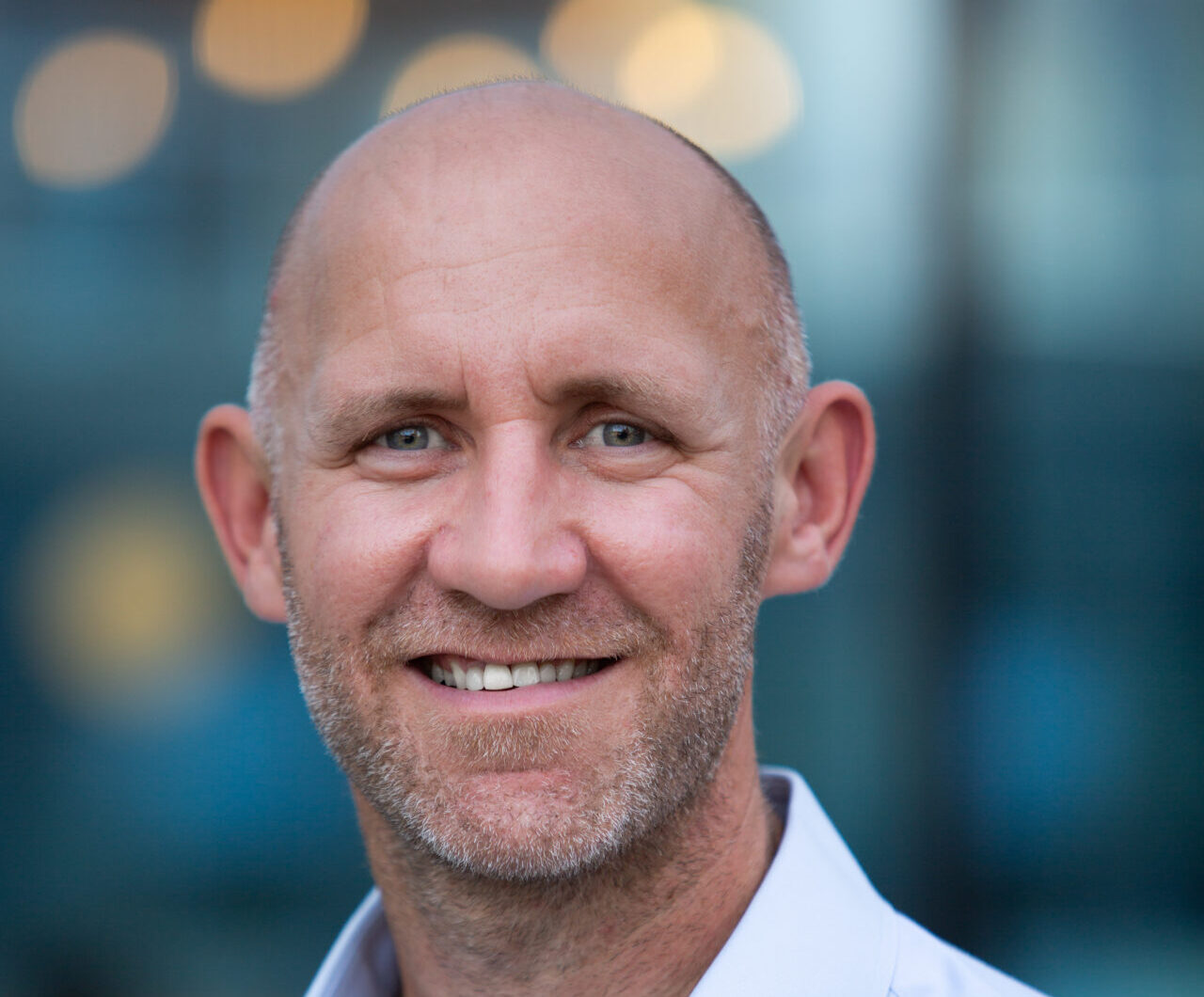
Name: Paul Silver
Job title: CEO of Dorchester Group
What I do: I trained as a chartered accountant and began my career in finance as a strategic consultant at Ernst & Young. From there, I moved into mergers and acquisitions, advising the housebuilding sector at Deutsche Bank and Citigroup. I set up Dorchester Regeneration in 2003, helping to reposition the business toward new-build developments and establishing its project finance arm, which acted as a joint venture partner to many of the UK’s largest housebuilders. This gave me a front-row seat to some of the UK’s most ambitious regeneration schemes, helping developers fund and deliver high quality places at scale.
In 2008, we had the opportunity to acquire Heyford Park, a former RAF base in Oxfordshire, from Persimmon and Taylor Wimpey. What started as a bold regeneration vision has since become a thriving community with 1,200 homes delivered at Heyford Park so far, along with a range of community amenities, including Heyford Park School, a hotel, restaurant, pharmacy, a Sainsbury’s Local and a growing commercial quarter.
Building on that success, we’ve since expanded into Hampshire, where we’re transforming part of the former Prince Philip Barracks at Bordon into a vibrant new neighbourhood. There, we’re delivering 2,400 homes, new schools, green spaces and extensive community infrastructure as part of one of the South East’s most ambitious regeneration projects. Today my role is focused on steering the next phase of our masterplan and championing a holistic approach to placemaking – one that balances innovation with social value.
Why I got into the property industry: I’ve always been drawn to the idea of creating lasting impact through the built environment and community building. While working in finance, I found myself gravitating toward the housebuilding and regeneration projects, helping to deliver major schemes across the UK. That experience gave me a deep understanding of what it takes to shape places, not just buildings, which ulitmately led me to my work now at Dorchester Living.
How I did it: I’ve always believed in the legacy of place – how the built environment can shape lives over generations. My experience in the housebuilding and construction sectors gave me both the commercial foundation and the conviction to steer the business in a new direction. That led to the creation of Dorchester Regeneration and Dorchester Living – two vehicles designed to deliver thoughtful, community-focused development at scale.
We’re now entering the next chapter at Heyford Park, with a masterplan that sets out an ambitious vision for an additional 9,000 homes, including 30% affordable housing, assisted living options and dedicated homes for key workers. But it goes far beyond housing. The plans will transform the former runway into a new civic spine, lined with schools, shops, healthcare and cultural spaces. We’re integrating sustainable transport – cycle highways, autonomous shuttle buses, EV charging throughout – and investing in infrastructure that supports community health, learning and enterprise.
Crucially, our goal is to make Heyford Park the UK’s first energy-surplus town, powered by a new energy centre combining solar, wind, ground source and battery technology. It’s a bold vision, but one rooted in the same principles that have guided us from the start: placemaking that’s innovative, inclusive and built to last.
My first proper job: Working as a chartered accountant for Ernst & Young.
My first big break: Moving into M&A for Deutsche Bank and Citigroup was a game changer. It gave me the chance to work with CEOs of major global companies, building business plans and structuring deals. It was fast-paced and high-stakes, but the exposure I had was invaluable – and it ultimately gave me the tools to go out on my own.
My inspiration(s): It has to be a place. Bournville, established by the Cadbury family, is a fantastic example of a well-designed community that aimed to create a better quality of life for its residents.
The biggest challenge I’ve encountered to date: Navigating the complexities of the planning system has been one of the greatest challenges, as it can significantly slow down the delivery of high quality places. Market conditions have also tested our resilience, requiring us to remain agile, structure deals carefully and work closely with major landowners to stay ahead.
My greatest achievement/proudest moment to date: Taking Heyford Park from a disused RAF base to a thriving, multi-generational community has been the most rewarding part of my career so far. Heyford Park has grown into a balanced, community – offering everything from starter homes to bungalows, shops and commercial space for local businesses. Alongside this, founding a new school, which I chaired for the first eight years. It’s easy in this industry to focus on unit numbers and margins, but the proudest moments are quieter: seeing families settle in, businesses take root and a genuine sense of place emerge.
The biggest misconception people have about the property industry: That it’s all about bricks and mortar. At its best, this industry is about people – understanding their needs, aspirations and how they live their lives. There’s also a tendency to assume that regeneration is synonymous with gentrification. But done right, it can be inclusive, sustainable and genuinely community-led.
My biggest bugbear about the industry/the one thing I would change about the industry: The short-termism. Too often, decisions are made on the basis of quarterly returns rather than long-term value. I’d like to see more developers take a longer view, especially when it comes to sustainability and social infrastructure. The built environment has a huge role to play in addressing everything from housing inequality to climate resilience – but we need to shift the mindset to get there.
Where I’d like to be in five years’ time career-wise: I want to be focused on regenerating places and continuing the momentum at Heyford Park, Bayswater (a joint venture with Christ Church) and Whitehill & Bordon leaving behind a lasting legacy. Our long-term masterplan is designed to integrate future-focused technology, sustainable transport, green energy and high quality design, while creating real opportunities in education, employment and community life. I want to see these sites fully realised as a blueprint for 21st-century placemaking – somewhere that’s not only sustainable and well-connected, but also vibrant, inclusive and built to last.
Who I’d invite, living or dead, to a dinner party: My brother, he is simply the best cook!
What I do in my downtime: You will typically find me spending time with my four kids, staying active through skiing and boating or enjoying the arts – particularly opera and electronic music. I’ve always believed in the importance of maintaiting a healthy work-life balance.
The job I’d be doing if I was not doing this: I genuinely love and am passionate about what I do and couldn’t see myself doing anything else.
My advice for someone just starting out: Back yourself. Build your skills, find mentors, and don’t be afraid to bring your own voice to the table. This industry needs fresh perspectives, so if you think something can be done better – say so. Authenticity goes a long way.
My motto/mantra: Housebuilding is about more than just buildings; it’s about creating communities. People make places, so the focus should always be on what makes them thrive.