Imagine an office that seamlessly adapts to your needs – a space that promotes creativity, inclusivity, and innovation, with smart, touch-free experiences and flexible user-centric designs. Imagine an office with an AI personal assistant who can synch your day according to your sleep cycle, or an app that can tailor your workspace to your menopause symptoms in real time. These are just some of the concepts explored by finalists in the British Council for Offices (BCO) Ideas Competition showcase.
Organised by the BCO London NextGen Committee, led by Chair Oliver Hall, and hosted at ING Media, industry members gathered to consider the future of workspaces and ask the big question: how do we get there?
Developed in 2022, the event challenges the BCO’s NextGen members to showcase their boldest, most innovative and creative ideas for the way we design and operate workspaces.
The 2024 finalists approached the challenge from a variety of angles – AI, inclusivity, amenities, and connectivity were recurring themes. While the office as we know it remains very much a product of 2024, the event highlighted how workspaces must evolve to meet the changing demands of businesses and employees alike.
This year’s six finalists presented a vision where the office is no longer simply a nine-to-five workspace, but a dynamic environment that inspires creativity, fosters collaboration, and supports diverse needs.
A key takeaway from the showcase was that the office of the future has to work harder. It’s no longer enough to provide four walls and a desk; workspaces need to spark creativity and act as hubs for individuals from all walks of life.
Two projects that placed a particular on inclusivity came from Ashleigh Love of Space Solution and Kiymet Shevket of Foster & Partners, who proposed models to address the needs of neurodivergent and menopausal workers, respectively. Both presentations underlined the importance of providing a range of work environments tailored to different needs, from areas with low or high sensory stimulation to temperature-controlled spaces and ergonomic seating.
Highlighting how promoting the wellbeing of often-overlooked workers promotes the overall wellbeing of the workplace, the finalists consistently called for environments that give employees the tools and freedom to succeed.
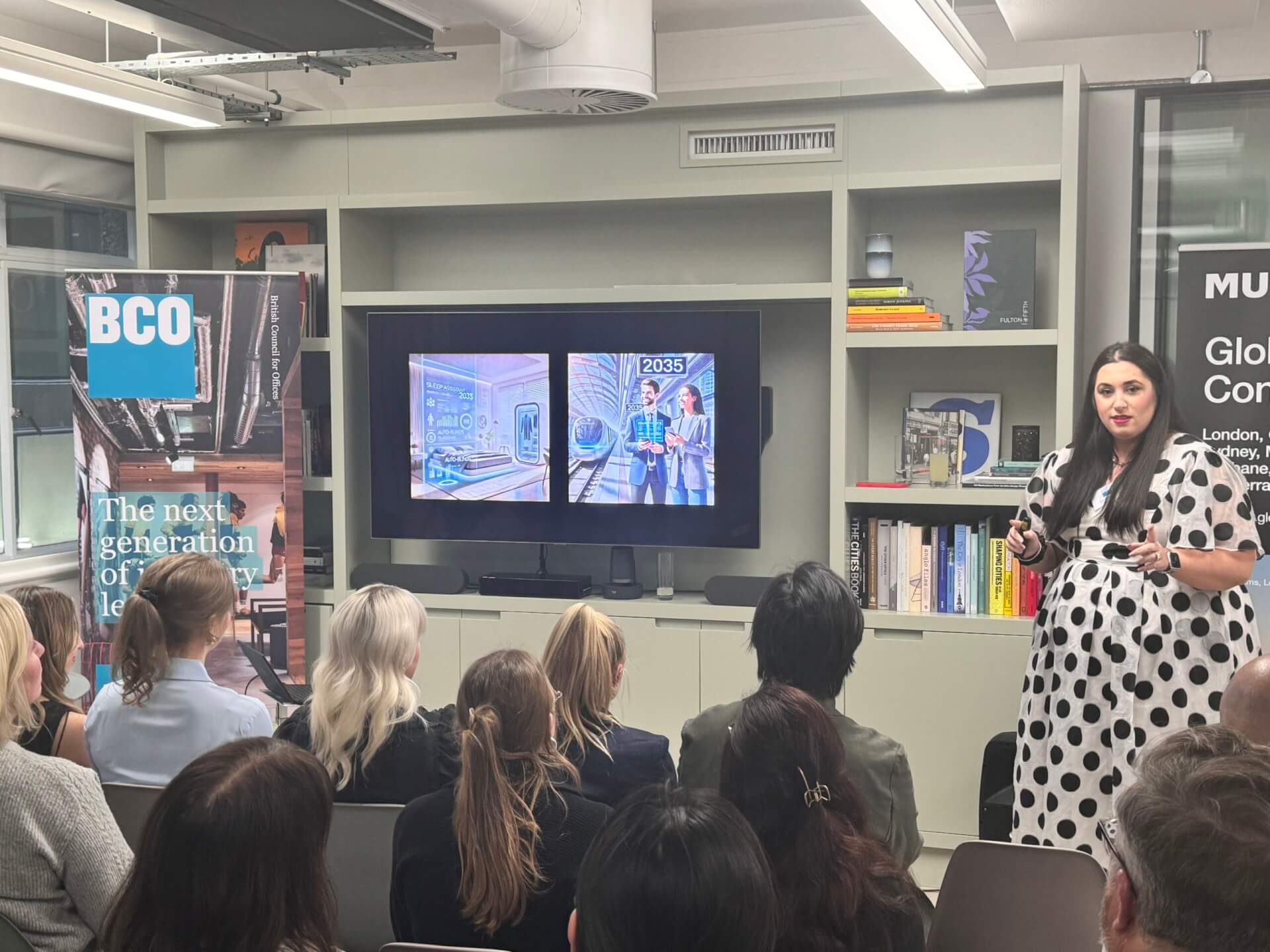
A consistent response to this was through the integration of AI in the workplace. Both Kevin Leung of Fletcher Priest Architects and Lina Mutanhaurwa (pictured) of Turner & Townsend outlined visions for a futuristic office where AI handles routine tasks and allows the office itself to adapt to workers’ needs, freeing up employees to focus on creative and strategic work in an environment that works for them. This change in working patterns translates into a shift in office design. Moving away from traditional desks to immersive amenity spaces, the office of the AI age blurs work and leisure in the aim of sparking innovation by encouraging moments of relaxation and reflection, which research suggests can lead to “eureka moments”.
In addition to AI integration, the finalists questioned how offices could be further integrated into our broader social ecosystems. Inspired by the 15-minute city model, Laura Hennessy of Mcbains’ project proposes the vision of an amenity-rich, community-centred workspace, designed to improve work-life balance. By incorporating amenities such as gyms, healthcare, and crèches within walking distance of workspaces, this concept aims to make the office an integral part of urban regeneration.
This objective resonated with Robin Ellis of Graven’s ‘SwapCity’ project, which proposed a space-swapping model where underutilised city centre offices are repurposed for affordable housing, while suburban homes are transformed into coworking spaces. In addition to the sustainability benefits of retrofitting underutilised buildings, this project explored how offices can bring new activity to high streets or be relocated to suburbs to further integrate with other essential infrastructure, creating new opportunities for collaboration between businesses and communities.
The BCO’s NextGen competition fosters the curiosity needed to imagine these bold ideas, but the event also served as a reminder that action is crucial. While it’s important to dream about what the future holds, the ideas presented by the finalists also show that the office of the future requires immediate steps – from more inclusive designs to flexible, sustainability-driven solutions.
With the creativity and forward-thinking approach of the BCO’s NextGen, we can look forward to a future where these concepts become the new norm, transforming workspaces into places that not only meet the requirements of today’s workforce but anticipate the needs of tomorrow’s.