Artificial intelligence (AI) firms leased more London office space in the first half of 2026 than they did during the whole of last year, according to new data from Knight Frank.
In H1 2026, Knight Frank tracked 661,068 sq ft of AI office take-up, surpassing the 500,000 sq ft recorded across the whole of 2025. Since the start of last year, AI companies have now committed to nearly 1.2m sq ft of London office space.
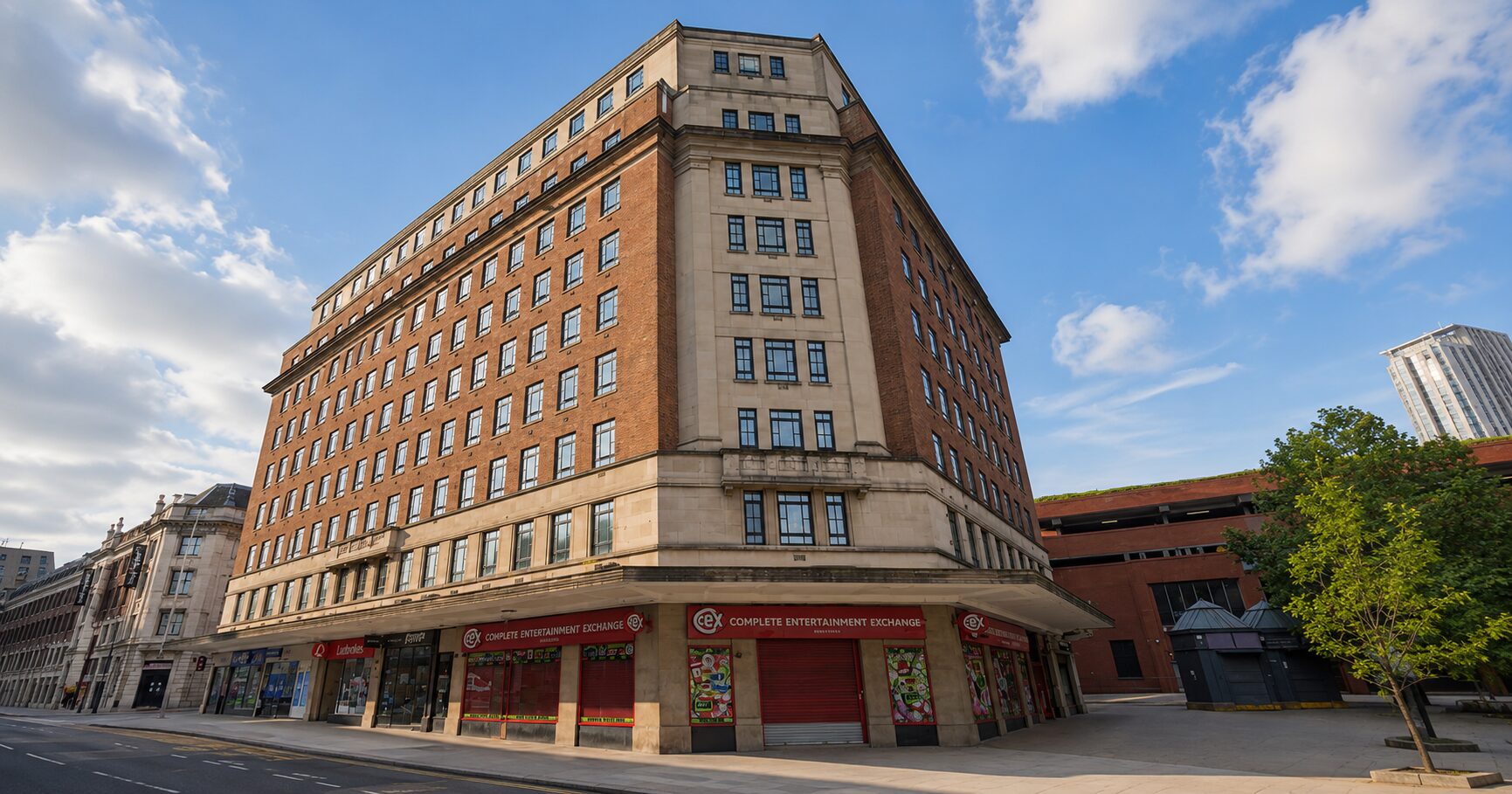
The average AI office transaction size in H1 2026 was 22,795 sq ft, lifted by a series of landmark deals, including Anthropic, the AI company behind Claude, taking 158,000 sq ft at One Triton Square, Regent’s Place, Euston (pictured).
Knight Frank said it is currently tracking 610,000 sq ft of active AI office requirements across the capital with 240,000 sq ft currently under offer, putting London on course to record around 1m sq ft of AI office take-up in 2026.
Philip Hobley, head of London offices at Knight Frank, said: “AI companies are no longer a footnote in London’s office market. They have become one of the defining new sources of demand. It is not just the volume of space being leased, but the speed at which this occupier group is maturing. These firms are moving from flexible and early stage space into substantial, permanent headquarters because they are securing funding, growing revenues, building teams and making long-term commitments to London.
“They are also competing for the same best-in-class buildings as banks, law firms, hedge funds and major technology companies. That matters because London is already facing an acute shortage of prime space and AI demand is adding another layer of pressure to an already tight market. Real estate is becoming an earlier strategic decision in the AI growth cycle.”
Chris Dunn, commercial research associate at Knight Frank, added: “The data shows that AI demand is now visible in signed leases, not just sentiment. The largest deals have clustered around King’s Cross, Euston and Fitzrovia, where occupiers can access transport, universities, research institutions, policy networks and the wider technology ecosystem.
“Proximity to talent and knowledge infrastructure is becoming as important to these firms as floorplate size or building specification. For landlords and developers, the message is clear. AI is becoming a distinct London office occupier class, with rapid growth cycles, high quality space requirements and a willingness to commit. In a market where new supply is already scarce, that will intensify competition for the best buildings and reinforce rental pressure in the capital’s strongest submarkets.”