The government’s New Towns Taskforce has recommended 12 locations for the next generation of new towns in a new report.
The government said it will begin building at least three new towns in this Parliament and is prepared to progress work on a far larger range of locations if possible.
In its response to the report, the government said that at this stage sites at Tempsford, Crews Hill and Leeds South Bank look the most most promising.
A New Towns Unit will be established by the government to progress development on the new towns and the unit will work with all government departments and their agencies to ensure new towns are a test bed for innovation and to unblock barriers to delivery.
In its report, the taskforce, which is led by Sir Michael Lyons, recommended a mixture of large-scale communities including urban extensions, urban regeneration and standalone greenfield sites should be built.
It said each new town should feature at least 10,000 homes with an ambition for a minimum of 40% affordable housing, half of which will be for social rent.
The government will publish the draft proposals and final SEA for consultation in spring next year, before confirming the locations that will be progressed as new towns soon after. It will issue a full response to the New Towns Taskforce’s report at the same time.
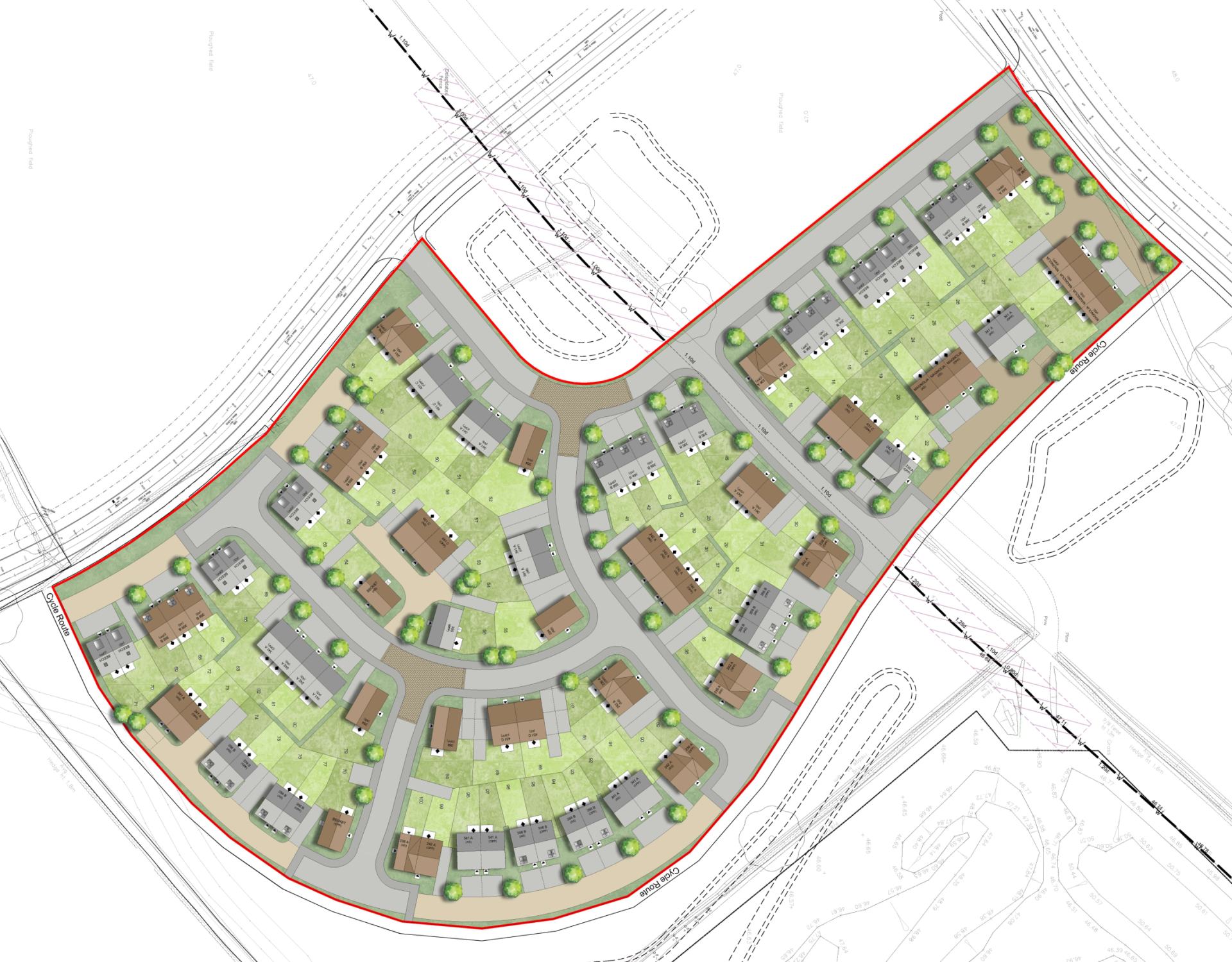
The 12 locations recommended by the taskforce are: Adlington, Cheshire East; a corridor of connected development in South Gloucestershire, across Brabazon and the West Innovation Arc; an expanded development bringing together Chase Park and Crews Hill in Enfield; Heyford Park in Cherwell (pictured); Leeds South Bank; Victoria North in Manchester; Marlcombe, East Devon; a ‘renewed town’ in Milton Keynes; Plymouth; Tempsford; Thamesmead; and an expanded development at Worcestershire Parkway train station.
Senior industry figures have welcomed the report’s findings. Melanie Leech CBE, chief executive of the British Property Federation, said: “The government’s commitment to the new towns programme, and to using all the levers it has to enable investment to be unlocked and public and private sectors to work together is very welcome. Development viability is under severe pressure across the country because of high materials, construction and capital costs, as well as continuing delays in the planning system and regulatory burdens, and we will need targeted and robust interventions to deliver.
“We share the vision for places that are highly sustainable, have strong connectivity and transport links, are aligned to the wider needs of the national, regional, and local economies, drive vibrant and sustainable high streets and offer a broad choice of housing across all tenures and affordability ranges.
“BPF members have been building and managing places for decades, in some cases centuries, and are keen to play their part in building professionally managed homes for long term rent, mixed use developments for modern town centres, and the logistics and other critical national infrastructure that makes places work.”
Justin Young, chief executive of RICS, added: “RICS welcomes the government’s announcement on the next steps to deliver new towns across England. Investment in new places is an important part of the solution to housing shortages. New towns offer an opportunity to unlock economic growth and create vibrant, sustainable communities – with access to green space, public services and transport links. It is vital that infrastructure keeps pace with the building of houses to ensure these new communities can thrive.
“These developments must be backed by long-term public investment and strategic master planning. There continues to be shortages of skilled professionals across the sector including surveyors. Tackling these shortages will be essential to deliver thriving new towns.”
Paul Rickard, chief executive of Pocket Living, said: “This report is welcome at a time when we need to significantly increase the level of new homes. The new towns strategy provides both a medium and longer term housing strategy, something that is to be welcome. More importantly, this is an opportunity to place SMEs at the heart of a national housing strategy by allocating plots within the new towns to local SME developers. This could help reverse the impending extinction of the SME sector and vastly increase the delivery capability of the nation.”
Paul Silver, CEO of Dorchester Living, added: “Being named one of the government’s ‘new towns’ is a transformative moment for Heyford Park and a major endorsement of everything we at Dorchester Living have built here so far. Over the past decade we have worked closely with partners and the local community to regenerate the former RAF Upper Heyford into a thriving neighbourhood, preserving its heritage whilst delivering new homes, schools, green spaces and jobs all with the underlying objective of becoming the UK’s first energy surplus town.
“This designation gives us the platform to accelerate our work, to deliver a fully integrated and sustainable community, future proofed with transport and energy systems, strong local services and opportunities for people to live, work and thrive. As a ‘new town’ we can solidify our plans to create a place where young families can put down roots, where businesses can grow and future generations can enjoy a high quality of life, now with the government’s backing,”
Matthew Evans, a partner in the planning team at Forsters, said: “All the noise will be around the locations, but how they will be delivered is the crucial question. The major question is who is going to fund and deliver the infrastructure to underpin these large housing numbers? The power and the water, already under significant pressure, particularly in the south east, will need securing. The road and rail infrastructure will be crucial.
“A mayoral authority or development corporation is likely to be required in order to have the strategic oversight to deliver this infrastructure. CPO powers will also be required to assemble land and unlock difficult elements of sites. Are those powers going to be robust enough to deliver these homes at speed? The Planning & Infrastructure Bill proposes some tweaks to the procedures, but do they go far enough? This lends more credence to talk of Rachel Reeves considering a second planning bill with more aggressive measures to unlock the system.”
Mark Gauguier, partner at Farrer & Co, added: “The UK is in desperate need of delivering housing at scale and today’s announcement is welcome progress to achieving that aim. That said, this should really on be seen as a starter for 10 and the government will need to go substantially further if it is to redress the balance between quality and affordable housing supply and demand. Starting work on three sites in this Parliament is only a small step in real terms, and the small print will have a direct impact on timing, but perhaps the greater importance is in the potential to provide a new model for successful housing delivery at scale in the UK.”
Nancy MacDonald, regional business lead for infrastructure UK and Ireland at Stantec UK, said: “Perhaps the most striking feature of these sites is how varied they are. While some good common design principles apply everywhere, it is obvious that this new generation of towns cannot be a copy and paste across the country.
“Creating a community needs a bespoke, future-thinking approach to the site at hand and should consider a wide range of specific but evolving requirements. Delivering 10,000 new homes around Plymouth city centre quite clearly requires a different method to a garden settlement approach at Worcestershire Parkway, for instance.
“Our teams have been involved in shaping a number of these sites and we’ve also undertaken research into the public’s attitude around the new towns agenda. One theme which keeps coming up is connection. Connection to green space, to amenities, to public transport links, to healthcare facilities, to job opportunities – and to a genuine sense of community. In basic terms, people want these new settlements to feel like home.”
Dr David Crosthwaite, chief economist at BCIS, added: “The government might be ‘determined to begin building at least three new towns in this Parliament’ but that statement seems unrealistic given the way new housing is delivered and the state of the public finances. The timing of this announcement appears to be more about having something positive to say at the Labour Party conference rather than anything particularly substantive.
“The proposals suggest that each new town should have at least 10,000 homes with an ambition for a minimum of 40% affordable housing, of which half will be for social rent. The big question is who is going to build these new homes and associated infrastructure? Unlike previous new town construction, there are no longer state-run direct labour organisations (DLOs) to deliver projects. New housing is delivered by private sector property developers who are profit maximisers and carefully control supply.
Faraz Baber, chief operating officer at Lanpro, said: “The chancellor’s speech to Labour Party conference rightly put housing and planning at the centre of economic renewal. Reaffirming the government’s 1.5 million homes target is welcome, and it is encouraging to hear planning referenced from the Treasury rather than left solely to the MHCLG. But beyond restating existing pledges, the detail on how this ambition will be met was thin.
“Much of what we heard was a re-packaging of previously announced policies – the £39bn social and affordable housing programme, first revealed in the Spring Statement, and reference to ongoing planning reform. These are important, but implementation and funding mechanisms now matter more than statements of intent.”
Katja Stille, director at Tibbalds, added: “There is huge potential within this programme – not just to deliver housing at scale, but to set new standards for the quality of places and types of homes that we provide for people. New towns will have the critical mass for innovative placemaking: more diverse housing, more medium density housing, better public transport, higher sustainability standards, and a stronger focus on health and wellbeing.
“They must be underpinned by flexible masterplans that start with site-specific approaches and avoid perpetuating today’s unsustainable development patterns. Above all, they must be ambitious for future generations – vision-led, flexible and planned to evolve long-term. The New Towns Taskforce has mapped a clear route through to delivery, addressing challenges while keeping the scale of this opportunity firmly in view. Now government must take up these recommendations and move forward at pace.”