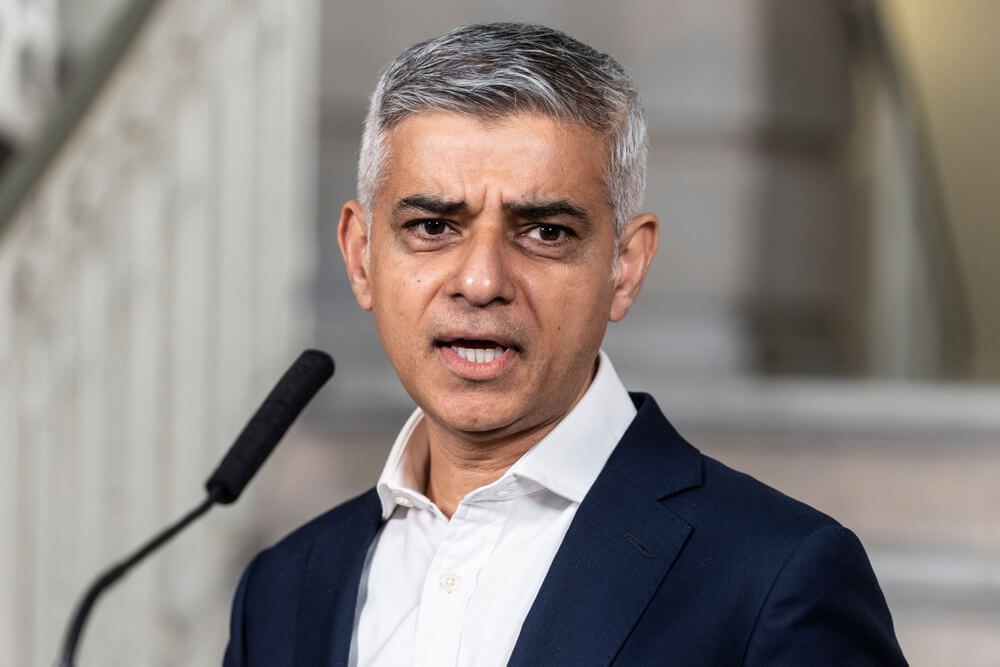
The mayor of London Sadiq Khan has unveiled plans to “actively explore” the release of parts of London’s green belt for development.
In a keynote speech in Greenwich, Khan said his position on the green belt had changed because “bold solutions” were required to fix London’s housing crisis, with the capital requiring 88,000 new homes a year over the next decade.
He added the current approach to only build on brownfield would never be enough to meet the scale of the challenge and that, given the extent of the housing crisis and the nature of much of London’s green belt, the status quo was “wrong, out-of-date and simply unsustainable”.
The announcement comes as the mayor launches a consultation to help shape the next London Plan, which sets out his vision for development in the capital over the next 20 to 25 years.
Khan said: “A generation of Londoners now simply can’t afford to rent, let alone buy a home. We have young professionals stuck living in their childhood bedrooms for years on end; Londoners having to endure cold, damp accommodation that isn’t fit for human habitation; couples reluctantly moving out of the capital to start a family; and London primary schools closing because young families have been priced out of the area. At the sharpest end of this crisis, Londoners are being forced to sleep rough on the streets and over 90,000 children are officially homeless.
“It breaks my heart. The damage the housing crisis is causing is pervasive and profound. We simply cannot let it continue. At stake is the fundamental promise of our city – the promise that if you work hard in London, London will work for you. It goes to the very heart of why I got into politics in the first place: to preserve the ‘London promise’ for future generations and to ensure that all Londoners, whatever their background, get the opportunities they need to reach their potential.”
Khan added: “We clearly face an extraordinary challenge. As mayor, I’m determined to give it everything we’ve got – with a radical step-change in our approach. We’ll be working with councils and others to secure as many new homes as we can on brownfield sites, both large and small, but we have to be honest with Londoners that this alone will not be enough to meet our needs. That’s why I’m announcing that City Hall’s new position will be to actively explore the release of parts of London’s green belt for development.”
The property industry welcomed Khan’s strategy shift. Sarah Hiscutt, partner in planning at Knight Frank, said: “Sir Sadiq Khan’s commitment to ‘actively explore’ building on select green belt land represents a significant and necessary step forward in addressing London’s housing crisis. At Knight Frank, we have long advocated for a balanced approach to green belt policy. A review of poorly performing undeveloped green belt land would serve to identify even greater opportunity beyond previously developed sites.
“According to our recent Residential Development Land Index Q1 2025 research, greenfield land values have edged lower, with housebuilders citing persistent cost inflation and planning uncertainty. The reality facing London is stark – delivering less than half of its 88,000 annual housing target while rents soared by 11.5% last year. Increased planning certainty through clear criteria for appropriate sites that are considered to be performing poorly would be beneficial despite cost inflation remaining high.
“Strategic green belt release would enable greater scope for suburban expansion, supporting the provision of family housing where it’s most needed and where supporting infrastructure is viable and can be efficiently extended. What’s essential now is establishing criteria for identifying appropriate sites and ensuring developments deliver substantial affordable housing, strong transport links, and enhanced public access to truly valuable green spaces.
Freya Turtle, planning director at Turley, added: “The new London Plan consultation pulls no punches in setting out the scale of the capital’s housing and infrastructure challenge. A target of nearly 88,000 homes per year is rightly ambitious – but delivering it will require more than optimism. We welcome the consultation’s proposed pragmatic shift towards a strategic green belt review, greater emphasis on brownfield optimisation and a potential rethink of tall building thresholds. These are bold, if overdue, steps. Similarly, the focus on industrial land and data centre provision shows a serious attempt to future-proof London’s economy.
“The consultation also raises crucial questions: how will we fund the necessary transport improvements? And will local plans adapt quickly enough to avoid conflicting policy frameworks – particularly on affordable housing thresholds? London needs not just a vision, but delivery mechanisms that are flexible, strategic and properly resourced. This consultation is a constructive start, but we now need urgency and alignment across all tiers of government.”
James Clark, partner in the planning and environment team at Foot Anstey, said: “Proposals by mayor Sadiq Khan to selectively release parts of London’s green belt for development represent a significant policy shift. The initiative is a direct response to the capital’s deepening housing crisis and London’s need to deliver 88,000 new homes annually over the next decade.
“The mayor has stressed that any green belt release would be tightly controlled and subject to stringent conditions – including maximising affordable housing. This aligns with recent changes to national planning policy, requiring the affordable housing contribution on land released from the green belt to be 15% higher than the standard requirement, subject to a cap of 50%. However, delivering affordable homes on these sites may prove challenging. There is growing concern over the declining appetite among affordable housing providers to acquire so-called ‘Section 106 units’, which could hinder sites coming forward.
Philip Allin, director, Boyer (London), added: “Today’s announcement by the mayor really has the potential to result in a significant step change in housing delivery, aligning with the approach now being taken elsewhere in the country. There are numerous examples of under performing green belt in highly accessible locations that could now come forward for development as a result of this change, particularly in the outer London boroughs. The key will be ensuring that the benefits of doing so are clearly articulated and delivered with buy-in from the London boroughs, something that is no doubt easier said than done.”