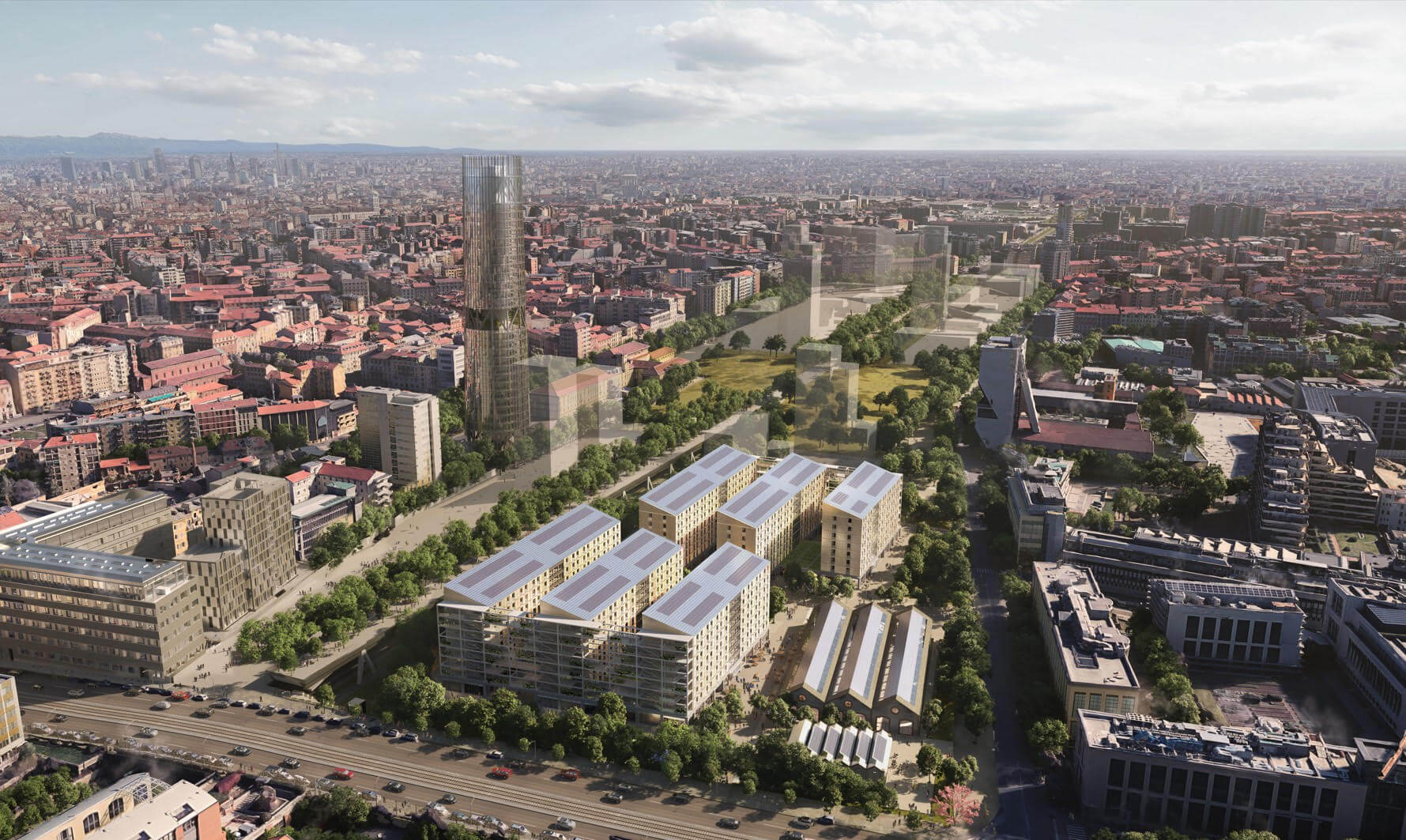
Work on the 2026 Winter Olympic Village in Milan is set to kick off in earnest this month.
The Porta Romana real estate investment fund, managed by COIMA SGR, has secured a planning permit for the development and signed the main construction contract with Impresa CEV SpA, Grassi e Crespi Srl and Milani Impianti Srl.
The investment in the Porta Romana project is understood to be around €1bn. Designed by Skidmore, Owings & Merrill (SOM), the 50,000 sq m (538,000 sq ft) Olympic Village, which will be home to 1,400 athletes and staff during the games, is being developed by COIMA and Covivio and is due to be handed over to the Milano Cortina Foundation in July 2025. The main construction works will start this month and the excavation and bulkhead works will be completed by the end of February.
Early works and excavation were already underway prior to the acquisition of the 190,000 sq m railway yard site in November for €180m from Italian national railway company Ferrovie dello Stato Italiane and the development is four months ahead of schedule.
The development of the Porta Romana railway yard site is being financed by Intesa Sanpaolo, which is supporting COIMA SGR, Covivio and Prada Holding S.p.A. through a sustainability-linked loan related to the project’s sustainability criteria. These include decarbonisation, creation of a resilient community, adoption of a circular approach and support for biodiversity.
Following the games, the scheme will be converted into a mixed-use scheme featuring 1,700 student accommodation beds.
Manfredi Catella, chief executive and founder of COIMA, said: “Great attention has been paid to sustainability. The project will have zero environmental impact, as measured by the Nearly Zero Energy Building requirements. The materials used will be selected for their sustainability characteristics (recyclability, reuse, environmental friendliness); all the buildings will be LEED certified; [most of] the building structures will be permanent and the temporary ones will be reusable.
“More than 30% of the energy will be produced thanks to the installation of systems that exploit renewable sources, such as solar, thermal and photovoltaic systems. The greenery will cover 50% of the neighbourhood and the space will be characterized by the union of co-working, offices and public spaces. The project includes not only green spaces on the ground but also a suspended forest curated by the landscape designer of the New York Highline, Elizabeth Diller, which could become a new major tourist attraction in Milan.”